



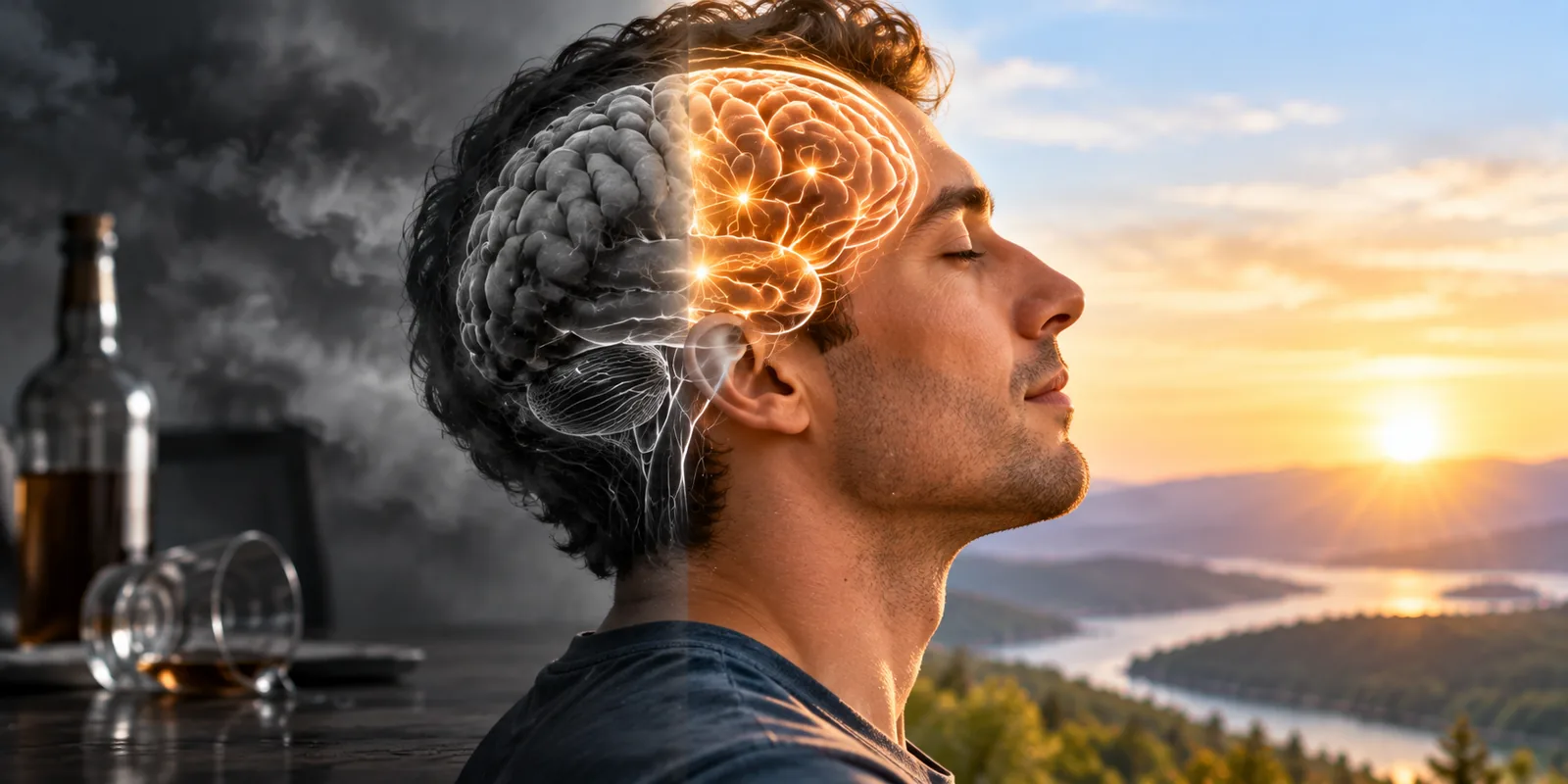


How long does the brain take to heal from alcohol? There is no single timeline that applies to everyone. Some brain changes can begin improving within weeks after drinking stops, while memory, attention, decision-making, mood, and other functions may continue recovering for six months, a year, or longer.
Research on people with alcohol use disorder has found that many areas of cognitive function can improve substantially during the first 6 to 12 months of abstinence. Brain imaging studies have also found measurable structural recovery during sustained sobriety. However, recovery depends on how much and how long someone drank, age, nutrition, smoking, overall health, and whether permanent alcohol-related damage occurred.
The broader sobriety timeline shows why recovery is better viewed as a process rather than a countdown.
What Alcohol Does to the Brain
Alcohol affects several systems involved in memory, judgment, coordination, sleep, emotions, stress, and reward.
With repeated heavy drinking, the brain adapts to alcohol being present. This is one reason someone with significant alcohol addiction may eventually need increasing amounts of alcohol to experience the same effects.
Over time, chronic heavy drinking can be associated with changes in both brain structure and function.
That does not mean everyone who drinks heavily has permanent brain damage.
Researchers have observed increases in brain tissue volume after sustained abstinence, including changes occurring during the first several weeks and continuing for months. Some cognitive abilities also recover at different speeds rather than all at once.
The important message is that stopping alcohol gives the brain an opportunity to recover.
The First Days and Weeks Without Alcohol
Before brain healing can really begin, some people must first get through alcohol withdrawal.
If the brain has adapted to heavy daily drinking, suddenly removing alcohol can cause symptoms such as shaking, anxiety, sweating, insomnia, nausea, agitation, and increased heart rate.
Severe withdrawal may cause seizures, hallucinations, or dangerous confusion.
Someone who drinks heavily should not assume quitting suddenly at home is safe. Professional alcohol detox may be needed, particularly for people with a history of severe withdrawal.
Learning about the phases of alcohol withdrawal can help explain what happens during these first days.
Once acute withdrawal subsides, the brain begins adapting to functioning without alcohol.
During the first few weeks, some people notice clearer thinking and better concentration, while others continue struggling with brain fog, poor sleep, irritability, or anxiety.
Both experiences can happen.
Brain Recovery During the First 3 to 6 Months
The first several months can bring more noticeable changes.
Research suggests that certain brain metabolic and structural abnormalities may begin improving within the first one to three months of abstinence. Some cognitive functions also recover relatively quickly, while more complex abilities may require considerably longer.
By 30 days without alcohol, you may notice changes in sleep, energy, concentration, and daily functioning.
At 90 days without alcohol, the difference can become more obvious.
At six months without alcohol, some people experience significant improvements in attention, memory, emotional regulation, and decision-making.
A systematic review found that many areas involving attention, executive function, perception, and memory showed recovery during roughly the first 6 to 12 months of abstinence, although different abilities recovered at different rates.
Can the Brain Keep Healing After One Year?
Yes.
Reaching one year without alcohol does not necessarily mean brain recovery is finished.
Some changes occur quickly, while others may require much longer periods of sobriety. Research has documented continued improvements in brain structure and cognitive functioning with sustained abstinence, although not every deficit completely resolves in every person.
This is one reason the alcohol recovery timeline extends well beyond withdrawal.
The liver may also be recovering during this period. Long-term heavy drinking can contribute to alcoholic liver disease, and poor liver function can affect overall health. Understanding whether the liver can recover after alcohol abuse is another important part of looking at whole-body recovery.
Recovery rarely involves only one organ.
Can Alcohol Cause Permanent Brain Damage?
Unfortunately, some alcohol-related brain damage can be lasting.
One serious condition is wet brain from chronic alcohol use, also known as Wernicke-Korsakoff syndrome. It is strongly associated with severe thiamine deficiency and can cause confusion, coordination problems, memory loss, and other neurological symptoms.
Age, years of heavy drinking, nutrition, repeated withdrawals, other medical conditions, and continued substance use may also affect how much recovery occurs.
This is why it is impossible to promise that someone’s brain will be “completely healed” after 30 days, 90 days, or even one year.
What we can say is that sustained abstinence gives the brain its best opportunity to recover.
Give Your Brain Time to Heal
So, how long does the brain take to heal from alcohol?
Some improvement may begin within weeks. More noticeable changes can occur over several months. Many cognitive functions may continue improving during the first 6 to 12 months, while additional recovery can extend beyond a year.
There is no exact finish date.
Cravings may also continue while the brain and behavioral patterns adjust. Learning how long alcohol cravings can last after quitting can help you prepare for them rather than becoming discouraged.
Protecting your brain recovery means protecting your sobriety.
Sleep well. Eat nutritious food. Exercise when medically appropriate. Stay connected with supportive people. Seek professional treatment when needed. And learn to recognize relapse warning signs before they turn into drinking.
Long-term addiction recovery gives the brain something alcohol never could:
Time to heal.


