



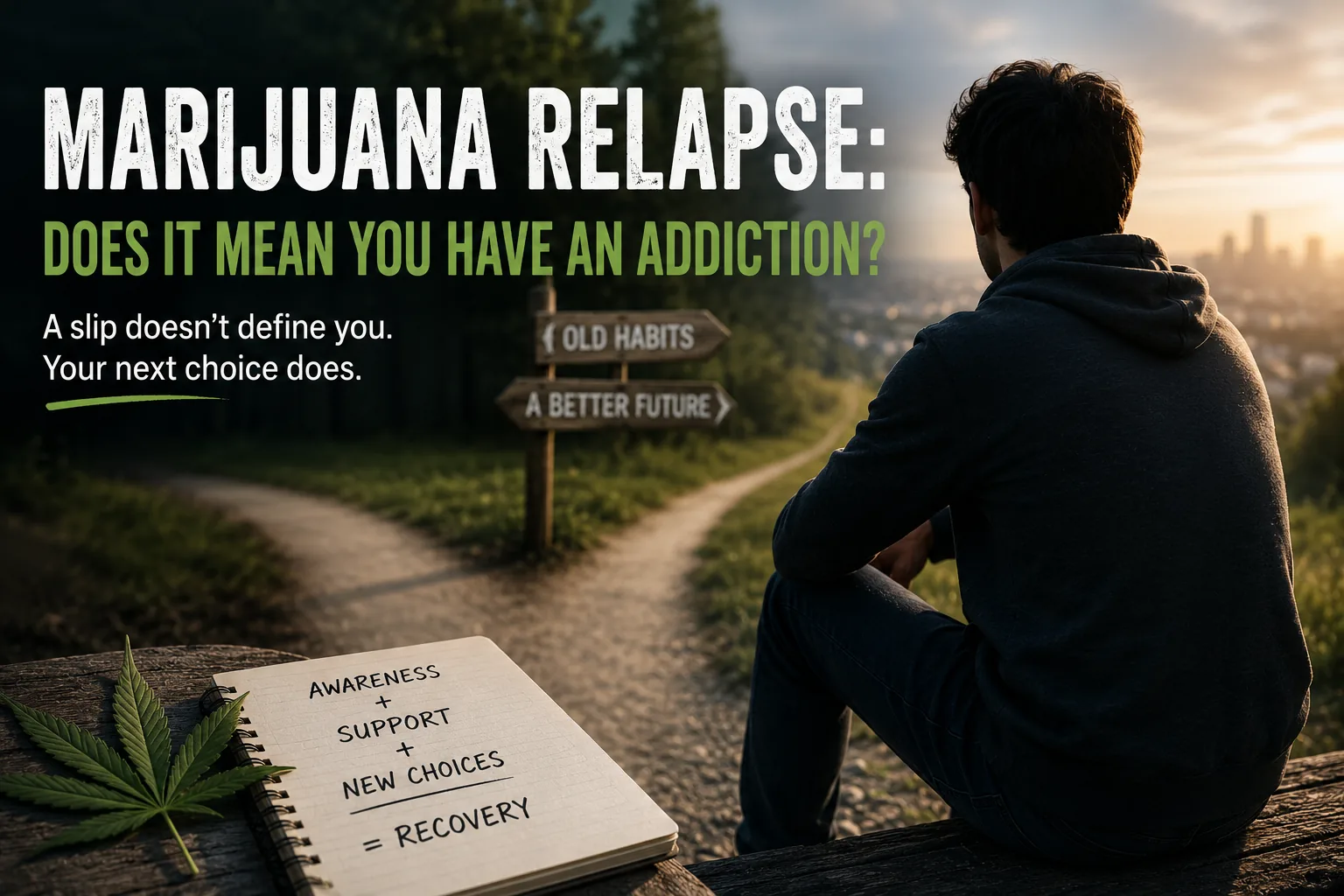


A marijuana relapse does not automatically mean you have an addiction. Someone can return to cannabis after deciding to stop for many reasons: stress, poor sleep, social pressure, boredom, anxiety, or simply being around people and places connected with past use.
What matters more is the pattern surrounding that return to marijuana.
Can you stop again when you want to? Are you using more than you planned? Is cannabis creating problems with work, relationships, motivation, finances, or mental health? Do you keep returning to it even after promising yourself you would quit?
Those questions help separate a single slip from a possible cannabis use disorder, the clinical term for problematic marijuana use.
Cannabis addiction is real, but not everyone who uses marijuana develops it. CDC estimates that approximately 3 in 10 people who use cannabis have cannabis use disorder, with risk increasing among people who begin at a younger age or use more frequently.
One Marijuana Relapse Does Not Diagnose Addiction
Imagine someone stopped smoking marijuana for three months, went to a party, smoked once, regretted it, and returned to their recovery plan the next day.
That one event alone does not prove addiction.
Now imagine someone repeatedly tries to quit but returns to daily marijuana use within days or weeks. They begin missing responsibilities, spend increasing amounts of time getting high, need stronger products, and continue using even though cannabis is causing relationship or mental health problems.
That pattern deserves much more attention.
Cannabis use disorder is based on a collection of behaviors and consequences rather than one episode of marijuana use. CDC lists warning signs such as using more than intended, repeatedly failing to quit, craving cannabis, giving up important activities, and continuing to use despite problems at home, school, work, or in relationships.
The question is not simply:
“Did I smoke marijuana again?”
A better question is:
“What happens when I try to control my marijuana use?”
Signs Marijuana Use May Be Becoming an Addiction
One of the clearest warning signs is losing control.
Maybe you tell yourself you will only smoke on weekends, but soon you are using every evening.
Maybe you decide to take a 30-day break but repeatedly find reasons to start again.
Or perhaps marijuana slowly becomes necessary before eating, sleeping, relaxing, socializing, or handling stress.
Possible signs of cannabis use disorder include:
- Using more marijuana than you planned
- Frequently thinking about getting high
- Strong marijuana cravings
- Trying to quit but repeatedly returning to use
- Spending large amounts of time using or recovering from cannabis
- Using even when it causes relationship problems
- Missing responsibilities because of marijuana
- Giving up hobbies or activities
- Driving or taking other risks while impaired
- Continuing despite physical or mental health problems
- Needing stronger marijuana or more THC to get the same effect
High-potency cannabis may also be important. Today’s cannabis products can contain much higher concentrations of THC than marijuana from previous decades, and products such as concentrates, wax, shatter, and some vape products can deliver very high levels of THC. CDC notes that higher THC exposure may produce stronger intoxicating effects and increase the risk of overconsumption.
Marijuana Withdrawal Can Make Relapse More Likely
People sometimes say marijuana cannot cause withdrawal.
It can.
People who use cannabis frequently may experience symptoms when they stop, including irritability, anxiety, restlessness, sleep problems, decreased appetite, depressed mood, and strong cravings.
These symptoms can create a powerful temptation to start using again.
Someone may stop smoking and then spend several nights unable to sleep. They become irritable and anxious and eventually think:
“I was doing better when I smoked.”
They use marijuana again, sleep better that night, and quickly return to the old pattern.
This does not mean recovery is impossible. It means withdrawal and the reasons behind the cannabis use need to be addressed.
For example, if you were using marijuana primarily to sleep, quitting without developing another plan for insomnia may leave the original problem untouched.
The same is true for anxiety, trauma, depression, loneliness, or chronic stress.
What Should You Do After a Marijuana Relapse?
First, avoid the all-or-nothing thinking that turns one episode into weeks of use.
Do not tell yourself:
“I already ruined my sobriety, so it doesn’t matter anymore.”
It does matter.
Instead, look at what happened immediately before you used marijuana.
Were you around friends who were smoking?
Had you been drinking?
Were you stressed?
Could you not sleep?
Were you bored or lonely?
Had you stopped attending counseling or recovery meetings?
Did you start thinking marijuana was never really a problem?
Identifying the trigger gives you something specific to work on.
Then make it harder to use again. Remove marijuana and smoking supplies from your environment. Delete dispensary promotions. Avoid situations centered around getting high. Tell someone you trust what happened.
If you repeatedly return to cannabis despite wanting to stop, consider speaking with an addiction professional.
Treatment for Cannabis Use Disorder Can Help
Cannabis problems do not have to become severe before you ask for help.
Behavioral treatments can help people understand triggers and build new ways to manage cravings and stress. SAMHSA identifies approaches including cognitive behavioral therapy, motivational enhancement therapy, and contingency management as psychological interventions used for cannabis use disorder.
Treatment may include:
- Individual counseling
- Cognitive behavioral therapy
- Motivational interviewing
- Contingency management
- Outpatient addiction treatment
- Peer recovery support
- Mental health treatment
- Family support
- Relapse-prevention planning
The goal is not merely to remove marijuana. Good treatment asks what marijuana was doing for you and how you can meet those needs in healthier ways.
If cannabis helped you escape anxiety, treat the anxiety.
If it helped you sleep, address the sleep problem.
If it became your main social activity, rebuilding a sober social life matters.
A marijuana relapse is worth paying attention to, but one return to cannabis does not automatically mean you are addicted.
Look at the bigger pattern.
If you can stop and move forward, treat the experience as a warning and strengthen your recovery plan. If you repeatedly lose control, experience withdrawal, continue despite consequences, or cannot stay stopped even though you want to, cannabis use disorder may be present.
Either way, returning to marijuana does not erase the progress you already made.
A relapse can tell you what needs more support. What you do next matters more than the fact that you slipped.


