



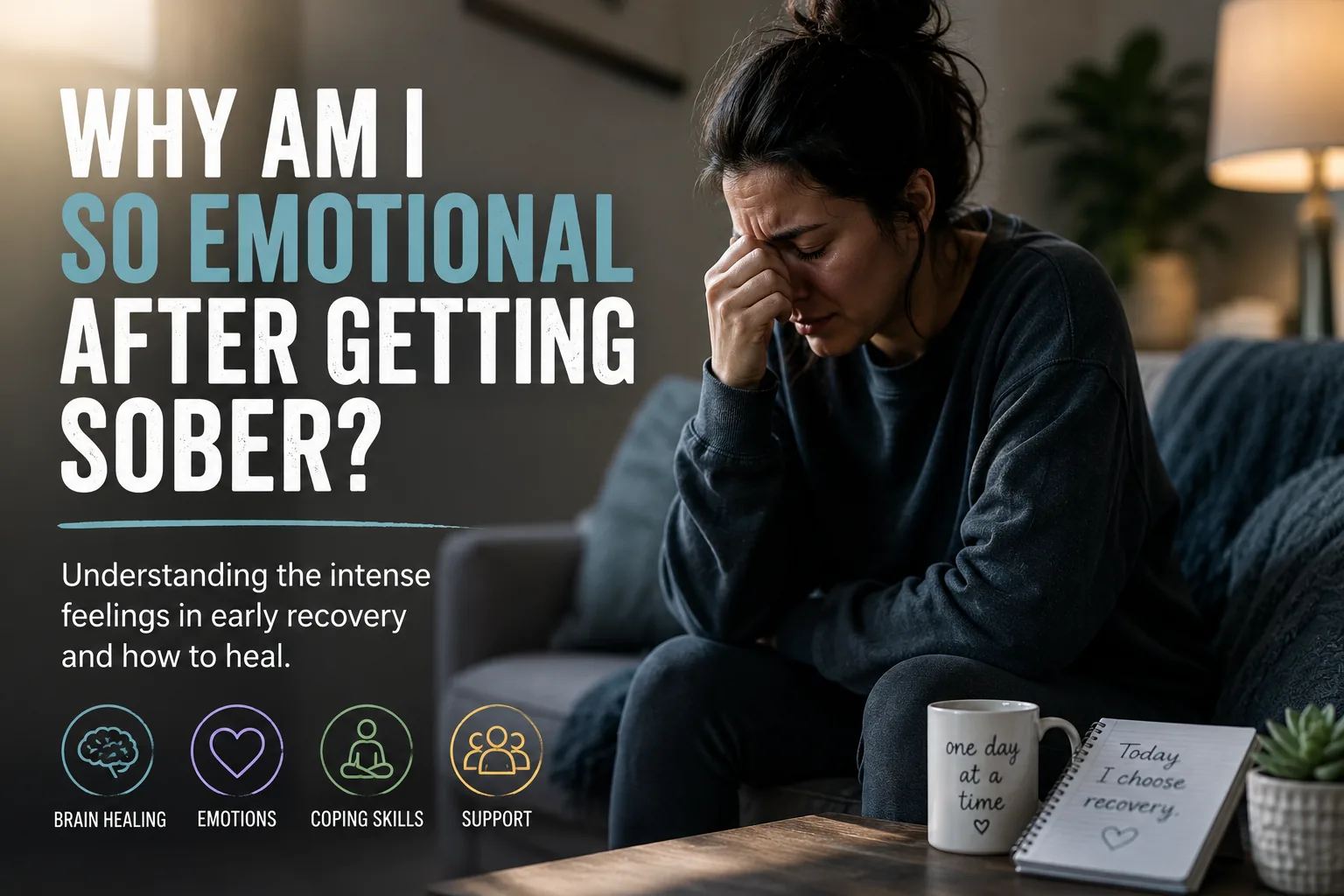


Why am I so emotional after getting sober? It is a question many people ask during early recovery. You may cry over small things, become angry without warning, feel overwhelmed by anxiety, or experience sadness that seems to come from nowhere. One minute you feel hopeful about sobriety. The next, everything feels unbearable.
These emotional swings can be frightening, especially if drugs or alcohol once helped you avoid uncomfortable feelings.
After months or years of substance use, getting sober does more than remove the substance. Your brain, body, relationships, routines, and emotions all begin adjusting.
You are learning how to feel again.
And sometimes that can hurt before it starts feeling better.
Drugs and Alcohol May Have Been Numbing Your Emotions
Many people use substances partly because of what they change emotionally.
Alcohol may temporarily reduce anxiety.
Opioids may create emotional distance from pain.
Stimulants may produce energy or confidence.
Other drugs may make loneliness, trauma, stress, or sadness easier to ignore for a few hours.
Over time, the addicted brain can learn to associate substances with emotional relief.
Stress?
Use.
Sadness?
Use.
Celebration?
Use.
Loneliness?
Use.
Then recovery removes that familiar response.
The emotion is still there, but the substance that once changed it is gone.
This is one reason learning to handle emotions without drugs or alcohol is such an important part of long-term recovery.
You are not simply avoiding substances.
You are learning new ways to respond to life.
Your Brain Is Still Adjusting
Addiction can affect brain systems involved in reward, stress, impulse control, sleep, motivation, and emotional regulation.
When substance use stops, those systems do not instantly return to their previous state.
The brain has to adjust again.
During early sobriety, you may experience:
- Anxiety
- Irritability
- Sadness
- Anger
- Mood swings
- Emotional numbness
- Restlessness
- Strong cravings
- Trouble sleeping
- Difficulty concentrating
The intensity can make you wonder whether something is wrong.
Often, recovery simply needs time.
Our sobriety timeline shows why the first days, weeks, and months can feel very different from later stages of recovery.
If you are also wondering why you feel worse instead of better, that experience is common enough to deserve its own explanation. Early recovery can be uncomfortable even while meaningful healing is taking place.
Anger Is Common After Quitting Drugs or Alcohol
Not every emotion shows up as sadness.
You may become angry.
Small inconveniences suddenly feel enormous.
People irritate you.
You have less patience.
You may even become angry about sobriety itself.
Understanding why anger can happen after quitting drugs or alcohol can help you recognize that irritability may be connected with stress, withdrawal, poor sleep, unresolved emotions, and the loss of a coping mechanism you depended on.
Anger still has to be managed responsibly.
Recovery does not excuse hurting people.
But understanding where the emotion comes from can make it easier to choose what happens next.
Walk away.
Call someone.
Exercise.
Write.
Talk.
Wait before reacting.
A strong emotion does not have to become a destructive action.
Exhaustion Can Make Every Emotion Feel Bigger
You may also be emotionally overwhelmed because you are exhausted.
Sleep can be badly disrupted after substance use stops.
Your body may also be recovering from poor nutrition, chronic stress, withdrawal, and years of unhealthy routines.
Learning why you may feel so tired after getting sober is important because exhaustion affects much more than energy.
When you are exhausted, patience decreases.
Stress feels bigger.
Decisions become harder.
Arguments become easier.
Cravings may become harder to manage.
Sometimes what feels like an emotional crisis becomes much more manageable after food, rest, support, and a good night’s sleep.
Loneliness and Boredom Can Surface in Recovery
Sobriety can also change your social world.
Some people you spent time with may still be using.
Certain relationships may disappear.
Weekends suddenly look different.
You may no longer know what to do with yourself.
That can create loneliness during addiction recovery, even if getting sober was unquestionably the healthier choice.
Boredom can become difficult too.
Someone may wonder why they are so bored after getting sober, especially when addiction once created constant activity, intensity, and chaos.
Over time, you may also need to learn why normal life can feel boring after addiction.
A quiet evening may initially feel empty.
Eventually, it can feel peaceful.
That difference takes time.
You May Miss Drugs Even When You Know They Hurt You
Emotions become even more confusing when you start missing something that nearly destroyed your life.
You may still think about drugs after getting sober.
You may even wonder why you miss drugs even though they ruined your life.
That does not automatically mean you want addiction back.
Your brain remembers relief.
Pleasure.
Rituals.
People.
Places.
Music.
Experiences.
The memory may highlight what felt good while temporarily ignoring everything that went wrong.
That selective memory can increase relapse risk.
When you remember using, remember the entire story.
Not just the first hour.
Remember where addiction eventually took you.
You May Be Grieving Your Old Life
Getting sober can involve grief.
Even unhealthy parts of life can feel familiar.
You may lose friends.
Bars or parties may no longer feel safe.
A relationship may end.
Your identity may change.
You may no longer recognize the person you were—or know who you are becoming.
Grieving your old life after getting sober does not mean you want addiction back.
It can mean you are letting go of a life that was familiar.
That grief deserves to be acknowledged.
Shame Can Make Emotions Even Harder
Once you become sober, you may also remember things you did while using.
Promises you broke.
People you hurt.
Money you lost.
Years that disappeared.
Shame can become overwhelming if you believe your past defines who you are forever.
Learning how to deal with shame and regret after addiction can help turn guilt into accountability instead of self-destruction.
Eventually, recovery may also require learning how to forgive yourself after addiction.
Forgiveness does not mean pretending nothing happened.
It means acknowledging what happened and choosing what kind of person you want to become next.
Emotional Recovery Takes Practice
Being emotional after getting sober does not necessarily mean you are getting worse.
You may simply be experiencing feelings without the chemical escape you once depended on.
At first, emotions can feel enormous.
Then you begin learning.
You feel anger without exploding.
Sadness without using.
Loneliness without calling the dealer.
Stress without drinking.
A craving without obeying it.
Every one of those moments matters.
Recovery is not becoming a person who never feels pain.
It is becoming someone who can experience pain without allowing addiction to decide what happens next.
Your emotions may feel intense right now, but learning to feel them, understand them, and survive them without using is one of the strongest signs that recovery is becoming real.


