



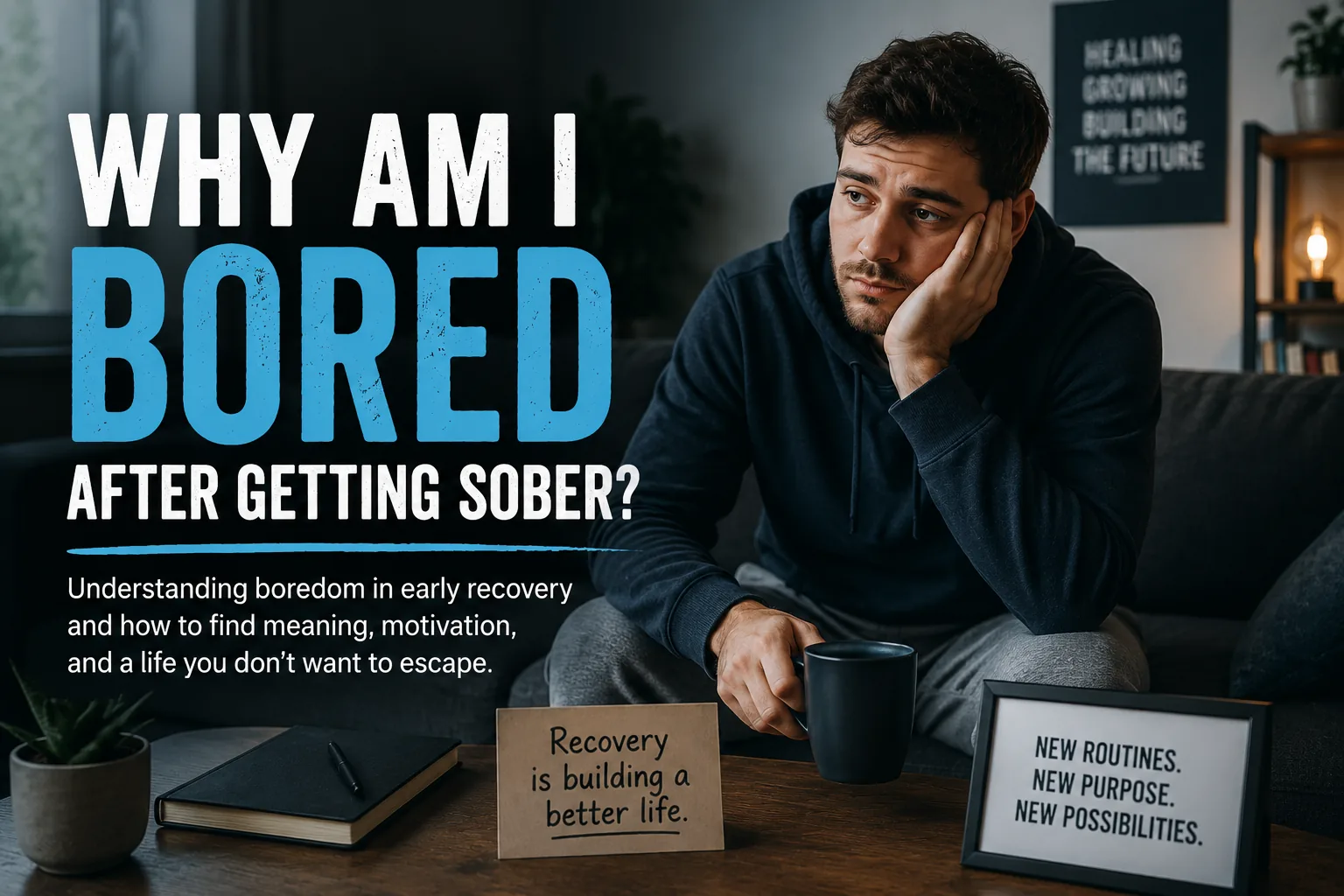


Why am I bored after getting sober? It can be one of the most surprising parts of early recovery. You stopped drinking or using drugs because addiction was hurting your life. You expected sobriety to bring relief, happiness, and freedom.
Instead, everything feels boring.
Weekends seem endless.
Movies cannot hold your attention.
Hobbies do not sound interesting.
You scroll through your phone wondering what you are supposed to do with yourself.
You may even start missing the chaos of addiction.
Boredom after quitting drugs or alcohol does not necessarily mean sober life is boring. Your brain, routines, relationships, and expectations may still be adjusting after prolonged substance use.
You are not simply removing drugs or alcohol from your life.
You are learning how to live without them.
Addiction Can Make Life Feel Constantly Intense
Addiction often creates enormous amounts of stimulation.
Think about how much time may have revolved around substances.
Finding them.
Buying them.
Using them.
Planning when you could use again.
Hiding your use.
Recovering afterward.
Dealing with arguments.
Finding money.
Going to parties.
Trying to fix whatever happened the night before.
It may have been destructive, but it was rarely quiet.
Then you get sober.
Suddenly, there is no crisis to solve at midnight.
Nobody needs to find more alcohol.
You are not waiting for a dealer.
There is no next high to chase.
At first, peace can feel strangely empty.
This helps explain why normal life can feel boring after addiction. Your idea of what feels exciting may have been shaped by months or years of intense stimulation.
Healthy life often moves more slowly.
That takes adjustment.
Your Brain’s Reward System May Need Time
Drugs and alcohol can strongly activate brain systems involved in reward, motivation, and reinforcement.
Repeated exposure can change the way the addicted brain responds to substances and everyday rewards.
That matters when you become sober.
Activities that once seemed enjoyable may initially feel flat compared with the powerful effects your brain learned to associate with drugs or alcohol.
Going for a walk may not compete with getting high.
Cooking dinner may not seem exciting compared with partying.
Watching television may seem painfully slow.
You may even wonder why you cannot feel happy after getting sober.
That does not necessarily mean your ability to experience pleasure is gone.
Recovery takes time.
As your brain and lifestyle adjust, ordinary rewards can begin becoming meaningful again.
A conversation.
A good meal.
Exercise.
Music.
Sleep.
Finishing something you started.
Seeing someone you love.
At first, these experiences may feel small.
Eventually, small things can become the foundation of a satisfying life.
Boredom and Loneliness Often Show Up Together
Sometimes what you call boredom is actually loneliness.
You may have stopped spending time with people you drank or used drugs with.
Your old social routine disappeared, but you have not developed a new one yet.
Friday night arrives and nobody calls.
You sit at home thinking:
“What am I supposed to do now?”
If that sounds familiar, learning why loneliness is common during addiction recovery can help.
Your social life may need to be rebuilt.
That could mean recovery meetings, supportive friends, family, volunteering, sports, classes, hobbies, faith communities, or simply spending time around people who support your sobriety.
You do not need twenty new friends tomorrow.
Start with connection.
Being Tired Can Make Everything Seem Boring
Early recovery can also be physically exhausting.
If you are constantly tired, nearly every activity sounds like work.
You may not want to exercise.
You do not want to socialize.
Cooking seems difficult.
Going somewhere feels like too much effort.
Understanding why you may feel so tired after getting sober can help separate true boredom from exhaustion.
Sometimes you do not need more excitement.
You need sleep.
Food.
Water.
Rest.
And time.
Boredom Can Bring Back Thoughts About Drugs
Boredom becomes especially important when your mind starts offering substances as entertainment.
You may suddenly remember parties.
Music.
Friends.
Excitement.
The first drink.
The beginning of the night.
You may start wondering why you still think about drugs after getting sober.
Those thoughts can become even more confusing if you miss drugs despite knowing how much damage they caused.
Memory can be selective.
It may show you the excitement without showing you the withdrawal.
It remembers the party without remembering the argument.
It remembers relief without remembering what addiction eventually cost.
When your mind romanticizes using, remember the entire story.
Boredom Can Become a Relapse Trigger
Boredom is not harmless if it begins convincing you that using would make life interesting again.
You may think:
“I just want something to do.”
Or:
“One night won’t hurt.”
That is how boredom can become a relapse risk.
You do not need to panic every time you are bored.
Instead, recognize boredom as information.
Your life may need more structure.
More connection.
More purpose.
More movement.
More activities that give you something to anticipate.
Recovery is not about filling every second.
It is about learning the difference between peaceful downtime and dangerous isolation.
You May Be Grieving the Excitement of Your Old Life
Sometimes boredom contains grief.
You may genuinely miss parts of your previous lifestyle.
The nightlife.
The people.
The spontaneity.
The feeling that something was always happening.
That is why grieving your old life after getting sober can be part of moving forward.
You can miss something without returning to it.
You can recognize that certain moments were fun while also recognizing where addiction ultimately led.
Some people even begin regretting the decision to get sober during this uncomfortable transition.
A difficult season of sobriety is not proof that sobriety was the wrong choice.
Learn to Experience Boredom Without Escaping It
Part of recovery is learning to handle emotions without drugs or alcohol.
Boredom is one of those uncomfortable experiences.
You do not always have to eliminate it immediately.
Sometimes you can simply notice it.
“I’m bored.”
Then ask:
“What do I actually need?”
Connection?
Rest?
Exercise?
Purpose?
Something creative?
A change of environment?
A conversation?
Structure?
Try something even if it does not sound exciting yet.
Walk.
Cook.
Exercise.
Call someone.
Volunteer.
Read.
Take a class.
Clean your room.
Learn something.
Attend a meeting.
Make plans for tomorrow.
Pleasure and motivation may return gradually rather than all at once.
The sobriety timeline looks different for everyone, so do not judge your entire sober future by how life feels during the first weeks or months.
Addiction may have trained you to expect intense stimulation.
Recovery gives you the opportunity to discover something different.
Meaning.
Stability.
Relationships.
Purpose.
Peace.
Those things may initially feel quieter than addiction.
But quieter does not mean empty.
Feeling bored after getting sober does not mean sober life has nothing to offer. It may mean you are still learning how to find pleasure, connection, and purpose without needing drugs or alcohol to create them for you.


