



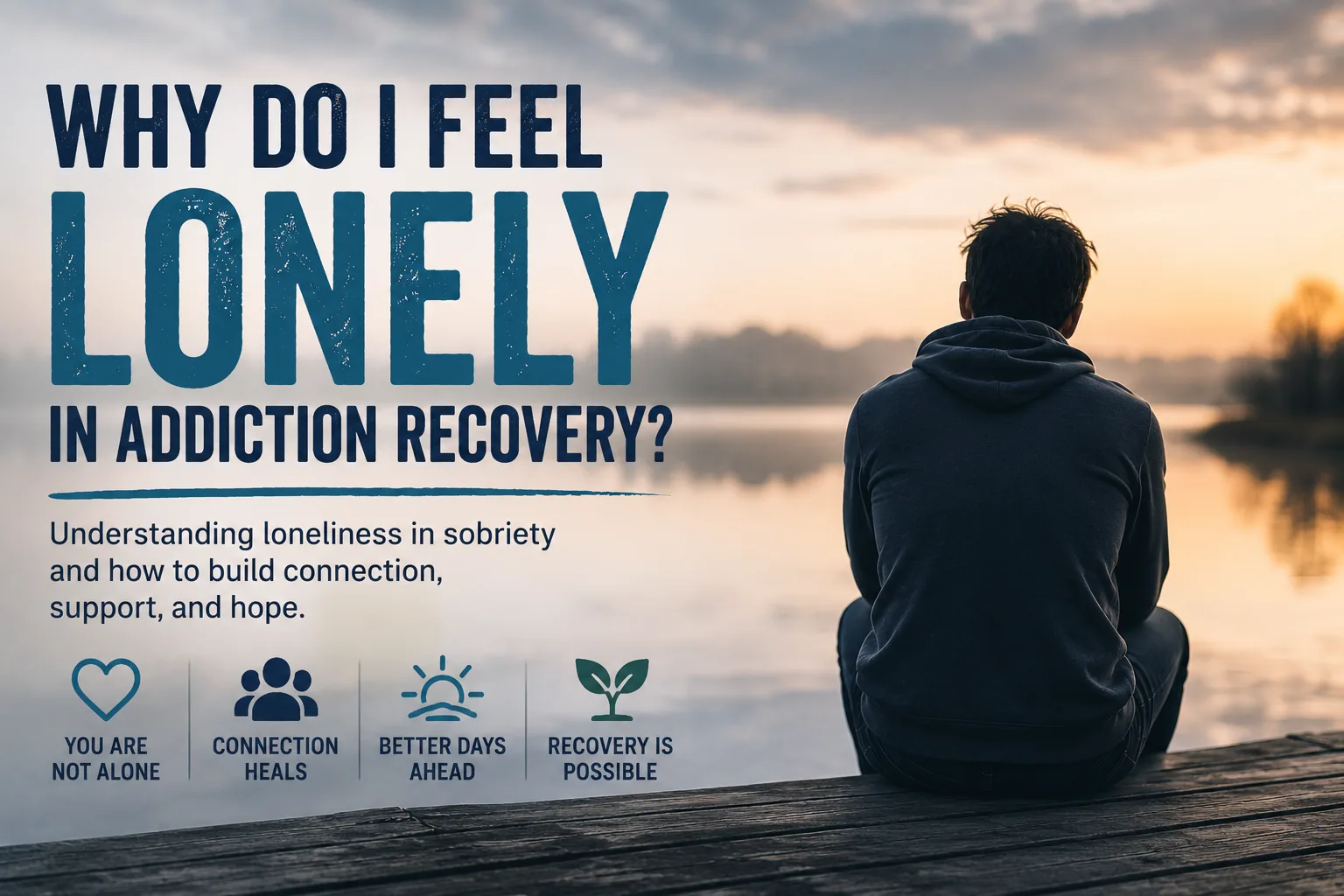


Why do I feel lonely in addiction recovery? It is a painful question, especially when getting sober was supposed to make your life better.
You may have stopped drinking or using drugs, only to realize that many of the people you spent time with are no longer part of your life.
Your phone may be quieter.
Weekends may feel empty.
You may sit at home wondering what everyone else is doing.
Even when you know that recovery is the right choice, loneliness can make sobriety feel incredibly difficult.
For many people, addiction was not only about the substance. It also shaped friendships, routines, relationships, social activities, and identity.
When substance use stops, your social world may change almost overnight.
That can leave a painful empty space.
The important thing to understand is that loneliness during recovery does not necessarily mean you made the wrong decision.
Sometimes it means you are between the life you left and the life you are still building.
Getting Sober Can Change Your Social Circle
Addiction often creates relationships around substances.
You may have had drinking friends.
People you used drugs with.
Someone who always knew where to find substances.
Friends who met at bars every weekend.
Relationships built around partying.
When you get sober, some of those relationships become difficult or unsafe.
You may need distance from people who are still using.
Other people may stop calling because they do not understand your new life.
Sometimes friendships simply disappear once drugs or alcohol are removed.
That loss can hurt even when the relationship was unhealthy.
You may understand logically that someone was bad for your recovery and still miss them emotionally.
Both things can be true.
You May Be Grieving Your Old Life
Loneliness is often connected with grief.
You are not only giving up a substance.
You may also be giving up routines, places, friendships, nightlife, traditions, and a version of yourself that existed for years.
That is why grieving your old life after getting sober can be a very real part of addiction recovery.
You may miss Friday nights at the bar.
You may miss certain friends.
You may miss the excitement.
You may even miss the chaos.
Missing those things does not mean you should return to them.
It means they mattered to you.
Recovery sometimes requires grieving what was familiar before you can appreciate what is becoming possible.
Loneliness Can Make Emotions Feel Stronger
Early sobriety can already be emotional.
Add loneliness to the situation and everything may feel more intense.
You may become sad.
Anxious.
Angry.
Rejected.
Forgotten.
You might wonder why nobody understands what you are going through.
If emotions suddenly feel overwhelming, learning why you may feel so emotional after getting sober can help explain why early recovery sometimes feels emotionally unpredictable.
Some people respond to loneliness with sadness.
Others become irritated.
If you find yourself snapping at people or feeling angry at everyone around you, understanding anger after quitting drugs or alcohol may help you recognize loneliness underneath the frustration.
The emotion you show is not always the emotion you are actually feeling.
Boredom Can Feel Like Loneliness
When you stop using substances, you may suddenly have much more free time.
That can make loneliness feel even stronger.
During addiction, there may have always been something happening.
Finding drugs.
Buying alcohol.
Using.
Recovering.
Partying.
Calling people.
Dealing with the consequences.
Then everything becomes quiet.
You may start wondering why you are bored after getting sober.
The problem may not be that sobriety is boring.
You may simply not know what sober life looks like yet.
Understanding why normal life can feel boring after addiction can help you recognize that your brain and lifestyle may need time to adjust to a slower, healthier rhythm.
A peaceful evening can initially feel empty when you are accustomed to constant stimulation.
Over time, that same evening may feel safe.
You May Still Think About People and Places Connected to Using
Loneliness can make old memories powerful.
You might start thinking about the people you used with.
The parties.
The bars.
The excitement.
The feeling of belonging somewhere.
Those memories can trigger thoughts about substances themselves.
You may wonder why you still think about drugs after getting sober.
Sometimes you may even miss drugs despite knowing how much they hurt your life.
The addicted brain can connect people, places, emotions, and routines with substance use.
When you become lonely, your mind may remember the connection without immediately remembering all the consequences.
Try to remember the entire story.
Not only the fun night.
Remember the morning after.
The arguments.
The money.
The anxiety.
The broken promises.
The reason you wanted recovery in the first place.
Loneliness Can Become a Relapse Trigger
Feeling alone can increase vulnerability to relapse.
You may begin telling yourself:
“Nobody cares what I do anyway.”
Or:
“I just want to feel connected to someone again.”
Then using may begin to look like a shortcut back to people, excitement, or comfort.
That is why loneliness should not be ignored.
You do not have to wait until you are desperate to reach out.
Call someone.
Attend a recovery meeting.
Talk with your treatment team.
Spend time with supportive family.
Join a sober activity.
Volunteer.
Go to the gym.
Try a class.
Connection does not always begin with a deep friendship.
Sometimes it begins by simply being around other people.
Learning to Connect Without Drugs or Alcohol Takes Practice
For some people, substances made socializing easier.
You may have used alcohol to feel confident.
Drugs may have helped you talk to strangers.
Parties may have provided an automatic social environment.
Without substances, you may suddenly feel awkward or unsure of yourself.
That is part of learning to handle emotions without drugs or alcohol.
You may have to learn how to introduce yourself sober.
How to sit through uncomfortable silence.
How to tell someone you are struggling.
How to say no.
How to trust people again.
These abilities may feel uncomfortable at first.
They become easier through repetition.
Shame Can Make You Isolate Yourself
Sometimes loneliness is not only about losing other people.
You may be hiding from them.
Addiction can leave behind regret.
You might feel ashamed of things you said or did.
You may believe people are judging you.
Learning how to deal with shame and regret after addiction can help keep shame from turning into isolation.
You may eventually discover that people have forgiven you while you are still struggling to forgive yourself.
If that happens, read about when everyone forgives you except yourself and the process of learning how to forgive yourself after addiction.
You do not have to become perfect before you deserve healthy relationships.
Your Social Life Can Be Rebuilt
Recovery can temporarily make your world smaller.
But it can eventually make your relationships healthier.
Instead of friendships built around intoxication, you can build relationships around shared interests, honesty, trust, family, recovery, hobbies, work, or simply enjoying another person’s company.
This does not happen instantly.
The sobriety timeline is different for everyone, and rebuilding connection may take months or even years.
Start small.
Send the message.
Go to the meeting.
Accept the invitation.
Call your family.
Stay after treatment and talk with someone.
Try something new.
Loneliness tells you that you are alone.
Recovery asks you to keep reaching outward anyway.
Feeling lonely in addiction recovery does not mean sober life will always be lonely. You may simply be standing in the space between the relationships addiction gave you and the healthier connections recovery is giving you the chance to build.


