



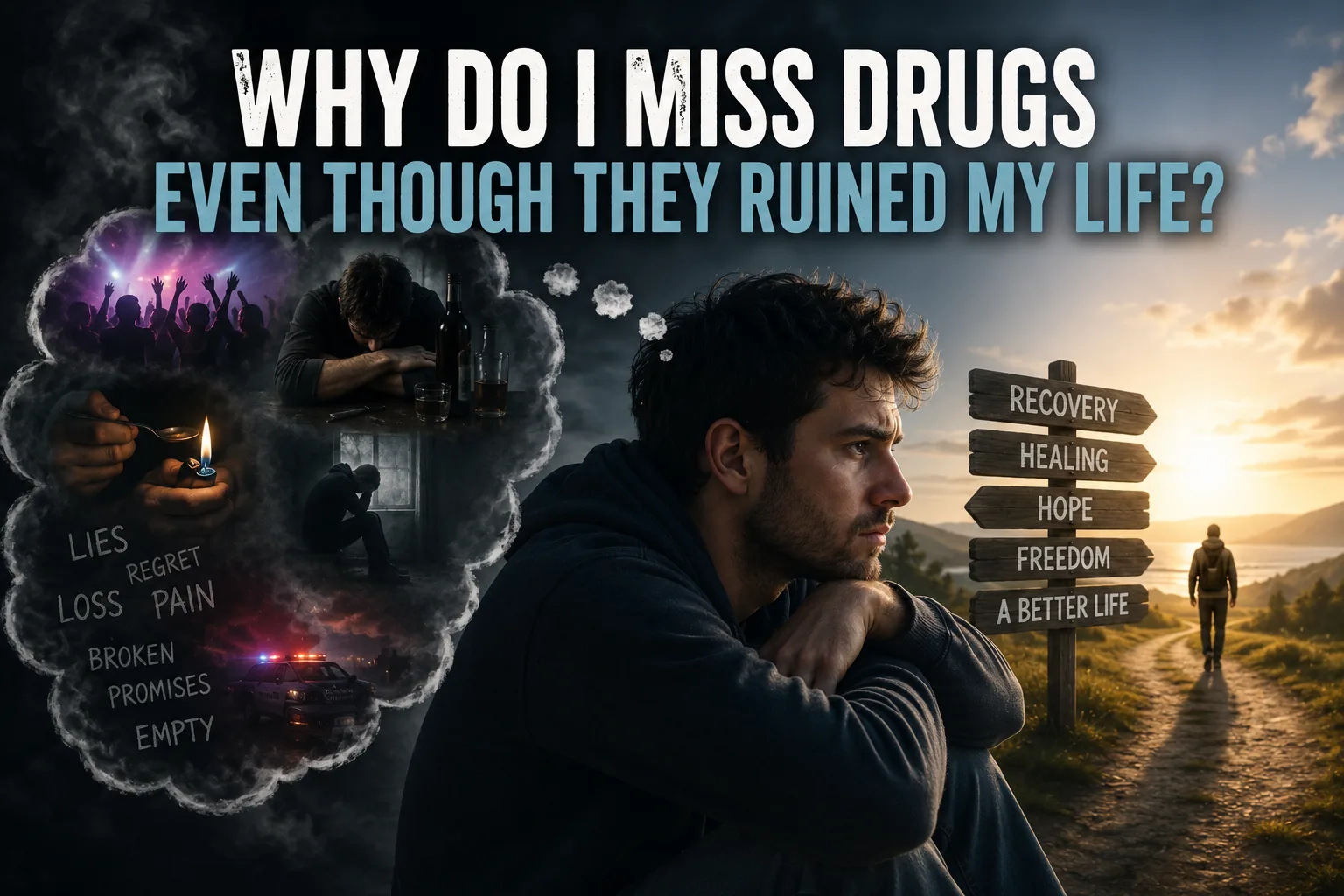


Why do I miss drugs even though they ruined my life? It is one of the most confusing and painful questions people can face in recovery.
You remember the lies.
The money you lost.
The relationships you damaged.
The mornings you woke up sick.
The promises you broke.
Maybe drugs cost you your job, your health, your freedom, or people you loved.
You know exactly how bad addiction became.
Yet sometimes you still miss getting high.
That contradiction can make you feel ashamed or wonder whether you secretly want addiction back.
You may not.
After repeated substance use, your brain can hold onto memories of pleasure, relief, escape, and connection even when you clearly understand the devastation that followed.
Missing drugs does not erase what they did to you.
It means recovery involves more than simply remembering that drugs were bad.
Your Brain Remembers the Reward
Drugs can strongly affect brain systems involved in pleasure, reward, motivation, memory, and learning.
Over time, the addicted brain can learn that a substance is extremely important.
Drugs may have provided something you wanted immediately.
Relief from anxiety.
Energy.
Confidence.
Sleep.
Escape from trauma.
A break from sadness.
A feeling of belonging.
For a few minutes or hours, substances may have worked.
That is part of what makes addiction so powerful.
Your brain remembers those effects even though you also remember what happened afterward.
This helps explain why you may still think about drugs after getting sober.
A memory of using is not the same as a decision to use.
Memory Can Romanticize Addiction
Human memory is not a perfect recording.
When you are lonely, stressed, bored, or exhausted, your mind may replay the parts of substance use that felt good.
The party.
The laughter.
The first drink.
The moment anxiety disappeared.
The rush after using.
It may temporarily leave out everything that followed.
Withdrawal.
Arguments.
Fear.
Debt.
Isolation.
Legal problems.
Broken relationships.
When this happens, addiction can start looking better in your memory than it actually was.
Try to remember the entire experience.
Not simply how using started.
Remember how the night ended.
Remember how you felt the next morning.
Remember why you wanted to get sober.
You May Miss What Drugs Did for You
Sometimes you do not actually miss the drug.
You miss what the drug seemed to provide.
Someone who used stimulants may miss feeling confident and energetic.
Someone who drank may miss feeling comfortable in social situations.
Someone who used opioids may miss feeling emotionally numb.
That distinction matters.
Instead of asking only:
“Why do I miss drugs?”
Try asking:
“What feeling do I miss?”
If you miss connection, you need connection.
If you miss excitement, you may need new experiences.
If you miss relief from anxiety, you need healthier ways to manage anxiety.
Recovery becomes stronger when you identify the need underneath the craving.
Difficult Emotions Can Make You Miss Using
Drugs and alcohol can become an emotional escape.
When that escape disappears, ordinary feelings may suddenly seem overwhelming.
You might discover why you feel so emotional after getting sober.
You may become angry.
Sad.
Anxious.
Restless.
Lonely.
Learning how to handle emotions without drugs or alcohol is one of the biggest adjustments in early recovery.
When something hurts, your brain may still suggest its old solution:
Use.
Recovery gives you an opportunity to create another response.
Talk.
Wait.
Exercise.
Ask for help.
Rest.
Solve the problem.
Let the feeling pass.
Every time you do that without using, you strengthen a different pattern.
Loneliness Can Make the Past Look Better
Getting sober can change your social world.
You may stop seeing people you used with.
Parties disappear.
Your phone becomes quieter.
Old friendships no longer feel safe.
That can create intense loneliness during addiction recovery.
When you feel isolated, you may remember substances as connection.
Maybe drinking gave you somewhere to go every Friday.
Maybe drugs gave you an instant group of friends.
You may not actually miss addiction.
You may miss belonging.
Recovery requires rebuilding that connection without substances.
Boredom Can Make Drugs Seem Exciting Again
Addiction may have been painful, but it was often intense.
There was always something happening.
Getting money.
Finding drugs.
Using.
Partying.
Recovering.
Fixing problems.
Then sober life becomes quiet.
You may wonder why you are bored after getting sober.
You may also struggle with why normal life feels boring after addiction.
During those moments, drugs can begin looking exciting again.
But excitement and happiness are not the same thing.
Chaos and meaning are not the same thing.
Recovery is often about learning to appreciate a different kind of life—one built around stability, relationships, purpose, health, and experiences you can actually remember.
You Can Miss Drugs and Still Regret What They Did
Recovery contains contradictions.
You can hate addiction and miss getting high.
You can love sobriety and have a terrible day.
You can know drinking almost destroyed you and still remember enjoying a drink.
You can even regret getting sober sometimes without actually wanting your old life back.
These feelings do not make you dishonest.
They make you human.
The danger begins when memories turn into romanticizing.
“I miss it” becomes:
“Maybe it wasn’t that bad.”
Then:
“Maybe I can control it now.”
That progression can increase relapse risk.
Pay attention when your memories start rewriting history.
Shame Can Keep You Stuck in the Past
You may feel embarrassed that you still miss something that hurt you so badly.
Then shame begins piling on top of cravings.
“What’s wrong with me?”
“After everything I did, how could I still want this?”
Shame rarely makes recovery easier.
Learning how to deal with shame and regret after addiction can help you respond with accountability instead of self-hatred.
You may also need to work toward forgiving yourself after addiction.
You cannot change what happened.
You can decide what happens next.
Missing Drugs Does Not Mean Recovery Is Failing
Recovery does not erase memories.
The goal is not necessarily to reach a point where you cannot remember why drugs once felt good.
The goal is for those memories to stop controlling your behavior.
The sobriety timeline is different for everyone. As new routines, relationships, coping skills, and experiences develop, thoughts about your old life may become less powerful.
One day you may remember using without wanting to use.
You may remember the old friends without wanting the old chaos.
You may remember how drugs felt while also knowing you would never trade your recovery to feel that way again.
That is progress.
You can miss drugs even though they ruined your life because your brain remembers the relief and reward they once provided. Recovery means learning to remember the whole story—and building a life that gives you fewer reasons to want to escape from it.


