



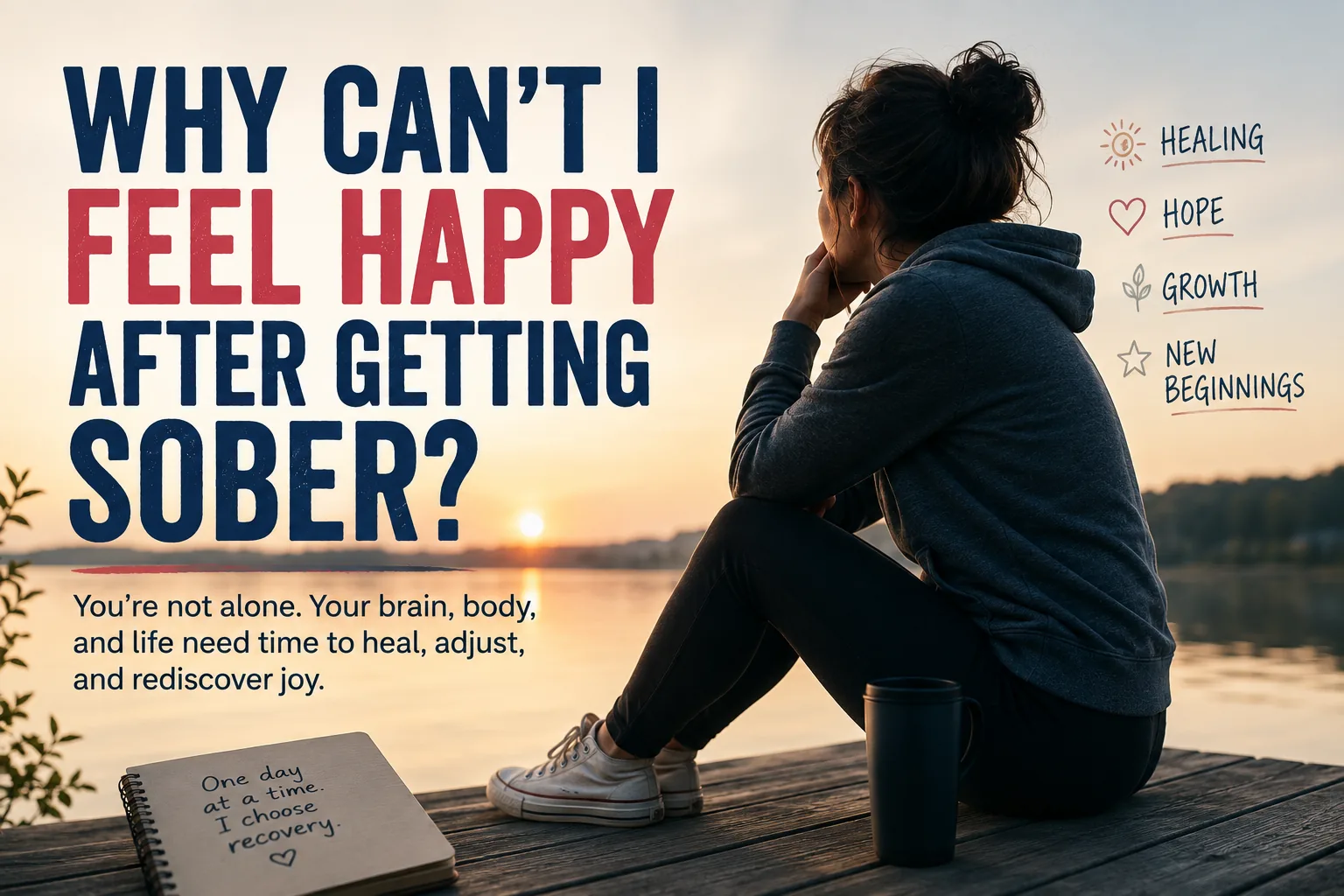


Why can’t I feel happy after getting sober? You gave up drugs or alcohol because you wanted your life to improve. Maybe you imagined waking up clear-headed, feeling grateful, reconnecting with people you love, and finally enjoying life again.
Instead, you feel flat.
Nothing sounds fun.
Things you used to enjoy do not seem interesting.
You may even think, “I got sober for this?”
This can be one of the most discouraging parts of early recovery. But not feeling happy right away does not necessarily mean sobriety is failing.
After prolonged substance use, your brain, emotions, relationships, routines, and expectations may all need time to adjust.
Getting sober removes the substance.
Learning how to enjoy life without it can take longer.
Your Brain’s Reward System Is Adjusting
Drugs and alcohol can strongly affect brain systems involved in pleasure, reward, motivation, and learning.
Over time, the addicted brain may begin treating substances as an extremely important source of reward.
That can change what gets your attention.
What motivates you.
What you look forward to.
And what feels satisfying.
Then you stop using.
Suddenly, the powerful artificial reward is gone.
Normal experiences may initially feel weak by comparison.
A good meal does not create the same rush.
Watching a movie seems dull.
Exercise feels like work.
Talking with friends may not seem exciting.
That does not mean ordinary life will always feel empty.
Your brain may simply need time to adjust to receiving pleasure from normal experiences again.
Early Recovery Can Feel Emotionally Flat
Some people expect overwhelming emotions after getting sober.
Others experience the opposite.
They feel almost nothing.
You may not feel intensely sad, but you also do not feel happy.
You simply feel emotionally flat.
For others, emotions swing dramatically. If sadness, anxiety, crying, frustration, or mood changes are becoming overwhelming, understanding why you may feel so emotional after getting sober can help explain another side of the same adjustment.
Recovery involves learning how to experience emotions without immediately changing them with a substance.
That is why learning to handle emotions without drugs or alcohol becomes such an important part of staying sober.
You are learning something addiction may have prevented you from practicing for years:
How to feel what you feel and keep going.
You May Simply Be Exhausted
It is difficult to feel excited about life when you are exhausted.
Early recovery can involve disrupted sleep, physical healing, stress, withdrawal, nutritional problems, and major lifestyle changes.
If you are constantly drained, you may not have enough energy to enjoy much of anything.
Learning why you may feel so tired after getting sober can help put emotional flatness into perspective.
Imagine someone asking you to enjoy a hobby after you barely slept for three nights.
Even something you normally love may sound exhausting.
Sometimes happiness is not gone.
It is buried underneath fatigue.
Give your brain and body time to recover.
Boredom Can Feel Like Unhappiness
Addiction often creates constant stimulation.
Finding substances.
Using.
Partying.
Hiding your use.
Recovering.
Dealing with problems.
Planning the next opportunity to use.
Then everything becomes quiet.
You may start asking why you are so bored after getting sober.
That boredom can quickly turn into:
“Nothing is fun anymore.”
It can also help to understand why normal life feels boring after addiction.
Healthy life may initially seem less intense.
There is no chemical rush.
No chaos.
No constant emergency.
At first, peace can feel like emptiness.
Eventually, peace can begin feeling like freedom.
Loneliness Can Steal the Joy From Sobriety
You may also be struggling to feel happy because your social world has changed.
Friends you used with may no longer be safe to spend time around.
Relationships may have ended.
You may have stopped going to bars, parties, or places where most of your social life happened.
That can create loneliness during addiction recovery.
Even positive changes can hurt.
You can know someone was unhealthy for you and still miss them.
You can know the bar was damaging your life and still miss the people.
Recovery sometimes creates an uncomfortable space between your old community and the healthier relationships you have not built yet.
Do not mistake that temporary space for your permanent future.
You May Still Miss Drugs or Alcohol
Another uncomfortable truth is that you may still remember substance use as enjoyable.
You might still think about drugs after getting sober, especially when normal life feels disappointing.
You may even miss drugs even though they ruined your life.
That contradiction can be confusing.
But the brain remembers rewards.
It may remember the first drink without immediately remembering the hangover.
It remembers the high without showing you the withdrawal.
It remembers the party without showing you the argument, lost money, anxiety, or shame afterward.
When your mind compares sober life with substance use, make sure it compares the whole experience.
Not just the best twenty minutes.
You May Be Grieving the Person You Used to Be
Sobriety can involve loss.
You may be grieving your old life after getting sober.
Certain friendships may be gone.
Your routine changed.
Your identity changed.
You may not know who you are without drinking or drugs.
Some people even begin wondering whether it is normal to regret getting sober.
It is possible to miss your old life while still knowing you cannot safely return to it.
Grief does not mean recovery was a mistake.
Sometimes grief is part of making room for something new.
Shame Can Make Happiness Feel Undeserved
Sobriety can also make the past harder to ignore.
You may start remembering people you hurt.
Promises you broke.
Money you lost.
Things you said.
Years you wish you could get back.
Learning how to deal with shame and regret after addiction matters because shame can convince you that you do not deserve happiness.
You may even reach a point where everyone forgives you except yourself.
Long-term recovery may require learning how to forgive yourself after addiction.
Forgiveness does not erase accountability.
It allows you to stop using your past as evidence that your future has to be miserable.
Happiness in Recovery May Look Different
Early sobriety may not feel joyful every day.
That is okay.
The sobriety timeline is different for everyone.
At first, progress may look less like happiness and more like stability.
You slept through the night.
You showed up for work.
You laughed once.
You called someone instead of using.
You cooked dinner.
You went for a walk.
You made it through another difficult day sober.
Those small experiences matter.
Over time, pleasure can become less about escaping life and more about actually participating in it.
If you continue feeling deeply depressed, hopeless, unable to function, or have thoughts of harming yourself, seek professional help immediately. Not every emotional problem after getting sober should simply be blamed on recovery.
Not feeling happy after getting sober does not mean sober life will always feel empty. Your brain and life may still be learning something addiction made difficult for a long time: how to find pleasure, meaning, connection, and hope without needing drugs or alcohol to create them.


