



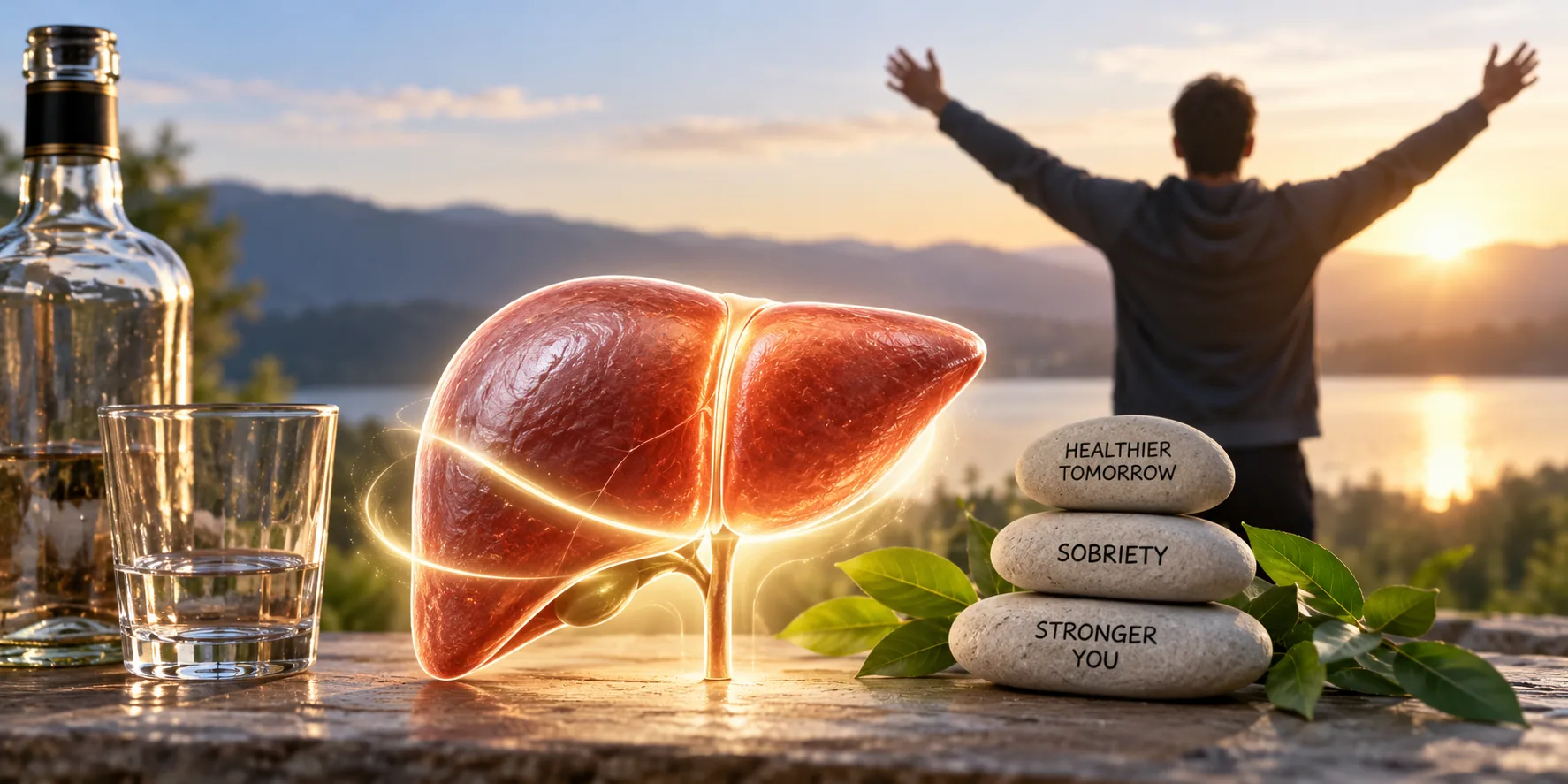


How long does the liver take to heal after quitting alcohol? For someone with early alcohol-related liver changes, improvement may begin within weeks of stopping drinking. More significant liver inflammation or scarring can take months or longer to improve, while advanced cirrhosis may involve permanent damage that cannot completely heal.
The encouraging part is that stopping alcohol gives your liver something it desperately needs: a break.
The liver is responsible for processing alcohol, filtering substances from the blood, storing energy, producing important proteins, and helping with digestion. When heavy drinking continues day after day, the liver may never get enough time to recover.
Quitting alcohol removes that ongoing source of injury and allows physical healing to begin.
How much recovery is possible depends largely on how much damage has already occurred.
What Alcohol Does to Your Liver
Every time you drink, your liver has to process alcohol.
Occasional drinking may not cause noticeable liver damage in many people, but prolonged heavy alcohol use can place increasing stress on the organ.
Over time, alcohol can contribute to several stages of alcohol-related liver disease, including:
- Alcohol-related fatty liver
- Alcohol-associated hepatitis
- Fibrosis
- Cirrhosis
Fatty liver is generally considered an earlier and potentially reversible stage.
Inflammation and fibrosis represent more significant injury.
Cirrhosis involves extensive scarring that can permanently change the structure of the liver.
The sooner alcohol is removed, the more opportunity the liver may have to recover before damage becomes advanced.
Fatty Liver May Improve Within Weeks
Alcohol-related fatty liver occurs when excess fat builds up inside liver cells.
The condition may produce few or no noticeable symptoms, which means someone can have liver changes without realizing it.
Stopping alcohol can allow that fat accumulation to begin decreasing.
For some people with early fatty liver, meaningful improvement may occur over several weeks of abstinence.
That does not mean every person’s liver will be completely normal after a few weeks.
Nutrition, body weight, metabolic health, medications, other substances, and underlying medical conditions can all affect recovery.
The broader process of how your body heals after you stop drinking alcohol also involves changes in sleep, digestion, energy, cardiovascular health, and brain function.
Liver recovery is only one piece of a much larger physical transformation.
Alcoholic Hepatitis and Fibrosis Take Longer
More significant liver injury generally requires more time.
Alcohol-associated hepatitis involves inflammation and injury to liver cells. Mild cases may improve with continued abstinence and medical care, while severe cases can become life-threatening.
Fibrosis occurs when scar tissue begins forming in response to repeated injury.
Some fibrosis may improve over time if alcohol use stops and the underlying liver injury is controlled, but this process can take months or longer.
This is why simply asking, “How many days until my liver is healed?” does not provide a useful answer for everyone.
Two people who drank similar amounts may have very different liver health.
Genetics, nutrition, obesity, medications, viral hepatitis, metabolic disease, drinking history, and other health conditions can influence how much damage develops.
Professional medical evaluation is the best way to understand your individual situation.
Can Cirrhosis Heal After You Stop Drinking?
Cirrhosis is the most advanced stage of chronic liver scarring.
Once extensive cirrhosis develops, the scar tissue itself may not completely disappear.
But stopping alcohol still matters enormously.
Continued drinking can accelerate liver damage, while abstinence can help preserve remaining liver function and reduce additional injury.
In other words, “not completely reversible” does not mean “nothing can improve.”
Someone with cirrhosis may still experience better health outcomes by remaining alcohol-free and receiving appropriate medical care.
Warning signs of serious liver disease may include:
- Yellow skin or eyes
- Abdominal swelling
- Swollen legs
- Easy bruising
- Severe fatigue
- Confusion
- Dark urine
- Persistent itching
- Loss of appetite
- Unexplained weight loss
These symptoms require medical evaluation rather than waiting to see whether sobriety makes them disappear.
Stomach Problems Are Not Always Liver Problems
People who stop drinking sometimes assume every stomach symptom comes from the liver.
That is not always true.
Alcohol can also irritate the stomach lining and contribute to alcoholic gastritis.
Gastritis can cause:
- Burning stomach pain
- Nausea
- Bloating
- Indigestion
- Vomiting
- Poor appetite
Our guide to digestive problems after quitting alcohol explains why bowel habits, appetite, stomach discomfort, and digestion can change during early sobriety.
Vomiting blood, black stools, severe abdominal pain, jaundice, or significant abdominal swelling should never be dismissed as normal recovery symptoms.
Seek medical care.
How to Support Liver Recovery After Quitting Alcohol
The single most important step for alcohol-related liver recovery is remaining alcohol-free.
But your overall lifestyle matters too.
Eat regular, nutritious meals.
Long-term drinking can contribute to poor nutrition, so rebuilding healthier eating habits may support your physical recovery. Our guide to nutrition during addiction recovery can help you get started.
Sleep matters as well.
Many people experience sleep problems after getting sober, but sleep often becomes more stable as recovery continues.
Physical activity can support overall health when it is medically appropriate. Learn more about exercise during addiction recovery.
Most importantly, do not try to “detox” your liver with supplements, cleanses, teas, or extreme diets without medical guidance.
Your liver already performs detoxification.
What it needs most is protection from continued injury.
If you have been drinking heavily, stopping suddenly can also cause dangerous withdrawal. Understanding the phases of alcohol withdrawal is important, especially if physical dependence has developed.
The larger sobriety timeline shows that physical recovery continues long after the first alcohol-free week.
So, how long does the liver take to heal after quitting alcohol? Early fatty liver may begin improving within weeks, while inflammation and fibrosis can require months or longer. Advanced cirrhosis may not completely reverse, but stopping alcohol can still protect remaining liver function and prevent additional damage. Every alcohol-free day gives your liver a better opportunity to recover—and gives the rest of your body a chance to heal with it.


