



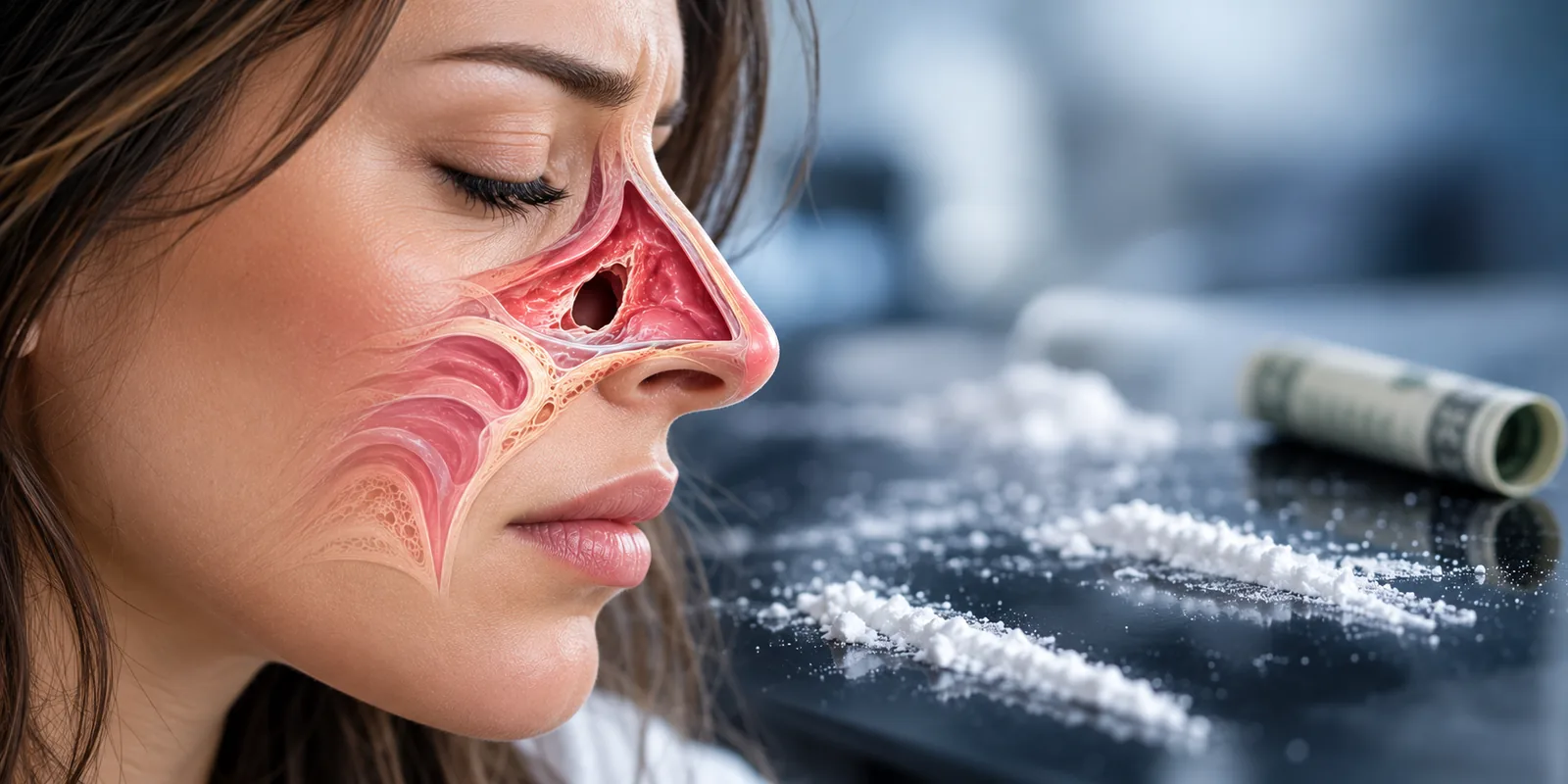


A perforated septum due to cocaine is a hole that develops in the tissue separating the two sides of the nose. It is one of the more serious forms of nasal damage associated with repeatedly snorting cocaine.
The damage does not usually happen overnight. Cocaine can repeatedly reduce blood flow inside the nose while also irritating delicate nasal tissue. Over time, sores may develop, tissue can break down, and the cartilage of the nasal septum may lose the blood supply it needs to survive.
Someone may first notice frequent congestion, crusting, cocaine-related nosebleeds, or irritation. Eventually, a hole can form in the septum.
If you are worried about a hole in your nose from cocaine, stopping further nasal cocaine use and seeing an ear, nose, and throat specialist can help determine how much damage has occurred.
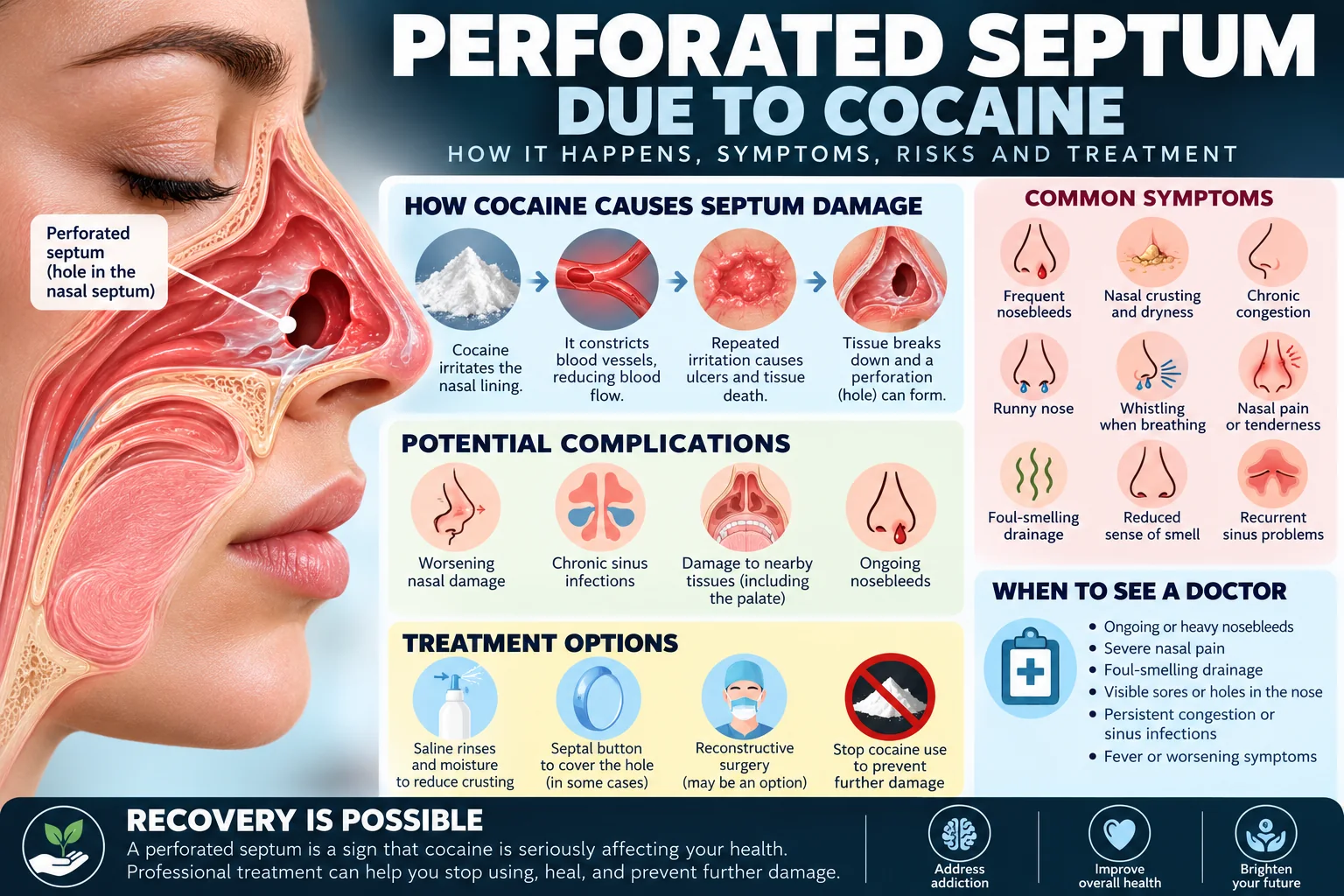
How Cocaine Causes a Hole in the Septum
The nasal septum is made partly of cartilage covered by delicate tissue.
When someone is snorting cocaine, cocaine comes into direct contact with that tissue. Cocaine causes blood vessels to constrict, meaning they become narrower.
Repeatedly reducing blood flow can deprive nasal tissue of oxygen and nutrients.
At the same time, cocaine powder and substances mixed into illicit cocaine may irritate the nose. Repeated trauma, dryness, inflammation, infection, and picking at crusted tissue may add to the damage.
Eventually, tissue covering the septum can ulcerate. If the underlying cartilage dies or deteriorates, a perforation may develop.
This type of damage can be part of the larger collection of symptoms commonly called coke nose.
Continuing to snort cocaine after nasal damage begins can allow the destruction to progress beyond a small hole.
Symptoms of a Cocaine-Related Perforated Septum
Not everyone immediately realizes that their septum has been damaged.
Symptoms of a perforated septum may include:
- Frequent nosebleeds
- Persistent nasal crusting
- Dryness inside the nose
- Nasal pain or tenderness
- Chronic congestion
- A constantly runny nose
- Whistling when breathing
- Recurrent sinus problems
- Reduced sense of smell
- Foul-smelling drainage
- Visible sores inside the nose
A person may also notice persistent coke drip and post-nasal drainage, especially when the nasal lining has become chronically irritated.
One particularly recognizable symptom is a whistling sound when breathing through the nose. Air can pass through the opening in the septum and create the sound.
However, not every perforation causes whistling. Larger holes may actually whistle less than smaller ones.
An ENT specialist can examine the inside of the nose and determine whether a perforation is present.
Can a Perforated Septum From Cocaine Heal?
A true septal perforation generally should not be expected to simply close on its own, especially once cartilage and supporting tissue have been destroyed.
Stopping cocaine use is still extremely important.
Continued cocaine exposure can interfere with healing of the remaining tissue and may cause the hole to become larger. Damage can potentially spread to nearby structures in severe cases.
Treatment depends on the size and location of the perforation, symptoms, continued cocaine use, and the condition of the surrounding tissue.
A healthcare professional may recommend measures to reduce dryness and crusting. Some people can be treated with a septal button, which is a device designed to cover the opening.
Other patients may eventually be candidates for reconstructive surgery.
Surgical repair can be complicated when cocaine has severely damaged the blood supply and surrounding tissue. Surgeons may also require a sustained period without cocaine before considering reconstruction because ongoing cocaine use can dramatically interfere with healing.
Do not attempt to treat severe nasal damage yourself.
Cocaine Can Cause More Than a Small Hole in the Nose
A perforated septum can sound like a local nose problem, but severe cocaine-related damage can become much more extensive.
Long-term intranasal cocaine use has been associated with destruction involving other structures inside the nose and, in severe cases, the palate and surrounding facial tissues.
Warning signs that deserve medical attention include worsening pain, heavy or repeated bleeding, foul drainage, fever, visible tissue destruction, difficulty swallowing, or changes in the shape of the nose.
Cocaine also affects the rest of the body.
It can place significant stress on the cardiovascular and nervous systems. Serious complications can include seizures, abnormal heart rhythms, heart attack, stroke, and cocaine overdose.
Illicit cocaine may also contain fentanyl or other unexpected substances, meaning someone may be exposed to an opioid without knowing it.
If someone develops severe chest pain, trouble breathing, a seizure, loss of consciousness, extreme confusion, or symptoms of a stroke after cocaine use, call 911.
Nasal Damage May Be a Sign Cocaine Use Has Become a Bigger Problem
People sometimes focus on fixing the nose without addressing why the damage happened.
If you continue using cocaine despite nosebleeds, sores, sinus problems, or a perforated septum, it may be time to take a closer look at your relationship with the drug.
Cocaine addiction can involve powerful cravings, binges, repeated attempts to stop, and continued use despite physical, emotional, financial, or relationship consequences.
Stopping may not always feel easy.
Cocaine withdrawal symptoms can include fatigue, sleep changes, depression, anxiety, strong cravings, increased appetite, and difficulty feeling pleasure.
These symptoms can make returning to cocaine tempting even when someone knows it is damaging their body.
Professional addiction treatment can help address cravings, relapse triggers, mental health symptoms, and the behaviors surrounding cocaine use. Someone who needs more structure or has repeatedly struggled to stop may benefit from an inpatient treatment program.
A perforated septum is not simply an embarrassing side effect of cocaine.
It is evidence that tissue inside the nose has been seriously damaged.
The sooner cocaine use stops and the nose is medically evaluated, the better the chance of preventing even more destruction.
You cannot change the damage that has already happened overnight.
But you can stop giving cocaine another chance to make it worse.


