






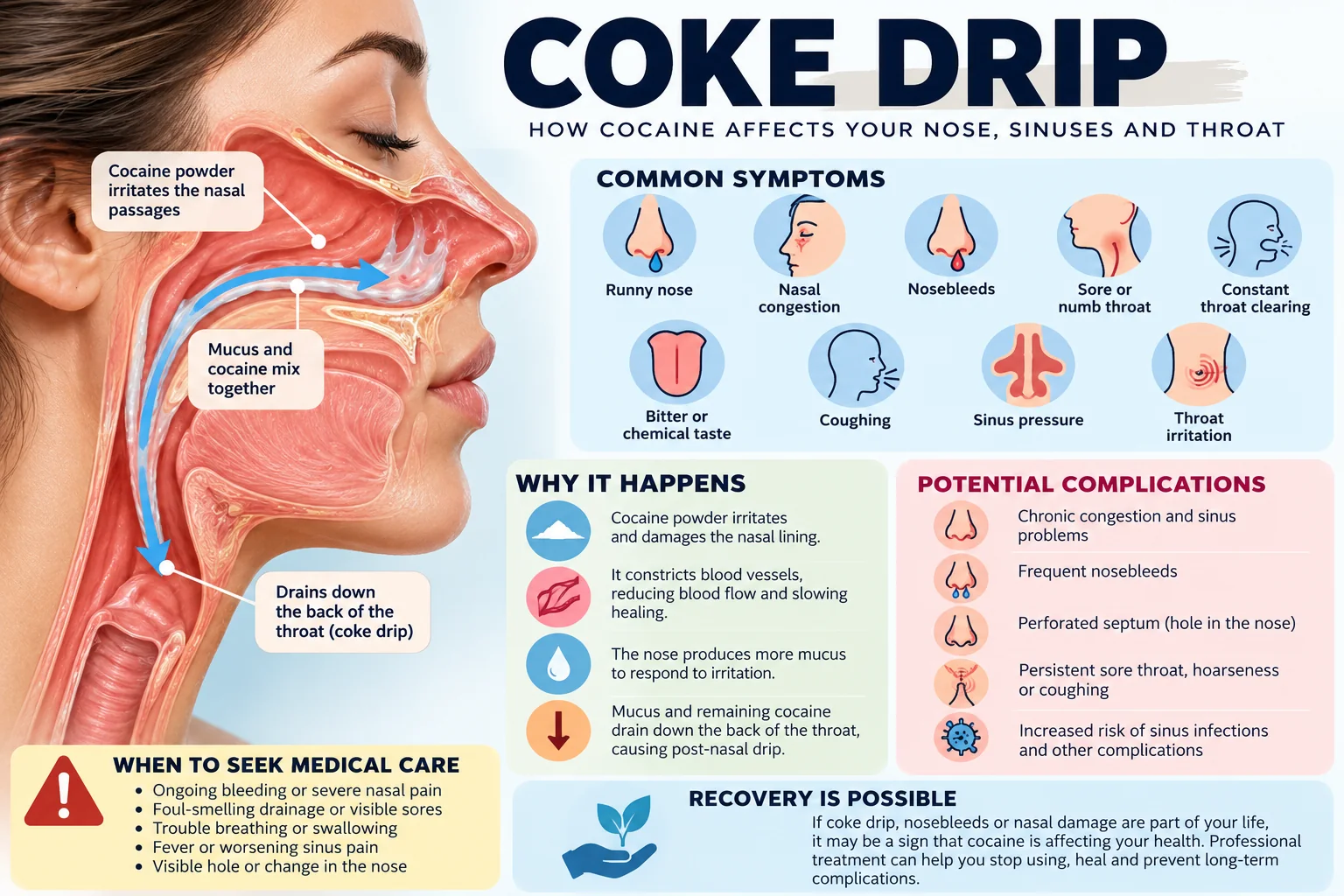
If you have ever heard someone mention coke drip, they are usually talking about the bitter, chemical-tasting drainage that can run from the back of the nose into the throat after snorting cocaine. A cocaine drip may cause a bad taste, numb throat, burning, irritation, coughing, or the constant feeling that something is stuck in the back of your throat.
While some people who use cocaine treat the drip as an expected part of snorting the drug, it is also a sign that cocaine and whatever else may be mixed with it are contacting sensitive tissues in the nose, sinuses, and throat.
Repeated snorting cocaine can damage these tissues over time, and symptoms that initially seem minor can become much more serious.
What Is Coke Drip?
Coke drip happens when cocaine powder, mucus, and nasal secretions move from the nasal passages down the back of the throat. This is a form of post-nasal drainage.
After cocaine is snorted, some of the powder remains inside the nose rather than being absorbed immediately. As mucus moves through the nasal passages, some of that material can travel backward toward the throat.
People may describe the experience as:
- A bitter or chemical taste
- Numbness in the throat
- Burning in the nose or throat
- Constant swallowing
- Throat clearing
- Coughing
- Thick mucus
- Runny nose
- Nasal congestion
The numbness associated with cocaine can sometimes make irritation feel less serious than it actually is.
A person may not immediately recognize how much damage is occurring inside the nose.
Why Cocaine Causes Post-Nasal Drip
Cocaine does more than irritate the nasal passages.
It also causes blood vessels to constrict. Reduced blood flow means nasal tissue receives less oxygen and fewer nutrients while being repeatedly exposed to a harsh substance.
Over time, the inside of the nose may become inflamed, dry, cracked, or ulcerated.
This combination can contribute to what is sometimes called coke nose from repeated cocaine use.
The nose may respond to irritation by producing more mucus. That mucus can then drain toward the throat, creating persistent post-nasal drip.
Someone who frequently uses cocaine may therefore experience congestion and drainage even when they do not have a cold or seasonal allergies.
Coke Drip, Runny Nose and Nosebleeds
A cocaine-related runny nose may seem harmless at first.
However, repeated irritation can make the lining of the nose increasingly fragile.
People may begin noticing crusting, scabs, bloody mucus, or frequent nosebleeds caused by cocaine use.
A person might also experience:
- Difficulty breathing through the nose
- Reduced sense of smell
- Facial pressure
- Sinus discomfort
- Persistent congestion
- Whistling when breathing
- Pain or tenderness inside the nose
Do not assume that persistent symptoms are simply allergies.
If symptoms repeatedly appear after cocaine use—or continue after the cocaine has worn off—the nasal tissue may need medical evaluation.
Can Coke Drip Damage Your Throat?
Yes. Material draining from the nose can irritate the throat, especially when exposure happens repeatedly.
Someone may develop a sore throat, hoarse voice, coughing, excessive throat clearing, or discomfort when swallowing.
Cocaine can also numb tissue. That temporary numbness may hide irritation and make it harder to recognize an injury immediately.
The bigger concern, however, is often what is happening higher in the nasal passages.
Chronic cocaine use can cause progressively more serious damage. In severe cases, tissue separating the nostrils may deteriorate and create a perforated septum from cocaine use.
Once significant tissue damage occurs, simply waiting for the nose to heal may not be enough.
When Coke Drip May Be a Warning Sign
Occasional drainage does not tell you exactly how much damage has occurred, but persistent symptoms should not be ignored.
Consider seeking medical care if you have ongoing bleeding, severe nasal pain, foul-smelling drainage, visible sores that will not heal, fever, worsening sinus pain, trouble swallowing, or a hole or unusual change inside the nose.
Emergency symptoms require faster action.
Cocaine affects much more than the nose. It can place enormous stress on the heart, brain, and cardiovascular system.
Call 911 for symptoms such as severe chest pain, seizures, loss of consciousness, extreme agitation, difficulty breathing, or signs of a possible stroke. Learn more about the warning signs and dangers of a cocaine overdose.
Illicit cocaine may also contain substances the person does not know are present, including fentanyl. This means every use can carry risks beyond cocaine itself.
Coke Drip May Be a Sign It Is Time to Look at Your Cocaine Use
If coke drip, nosebleeds, congestion, or nasal damage are becoming normal parts of your life, the bigger issue may not be how to stop the drainage.
It may be cocaine itself.
Cocaine addiction can develop gradually. What begins as occasional use can become repeated use, binges, cravings, and increasing amounts of time spent obtaining, using, and recovering from cocaine.
Stopping can also bring uncomfortable symptoms. Cocaine withdrawal may involve fatigue, depression, strong cravings, changes in sleep, increased appetite, and difficulty experiencing pleasure.
Those symptoms can make it tempting to start using again.
Recovery is possible.
Professional addiction treatment can help address cocaine use, cravings, mental health symptoms, relapse triggers, and the damage addiction has caused in other areas of life. For people who need more structure or have struggled to stop in their normal environment, an inpatient addiction treatment program may provide a more intensive level of support.
Coke drip might seem like a small side effect.
But your nose and throat are telling you that cocaine is affecting your body.
You do not have to wait for a nosebleed, damaged septum, overdose, or another crisis before deciding that enough is enough.


