



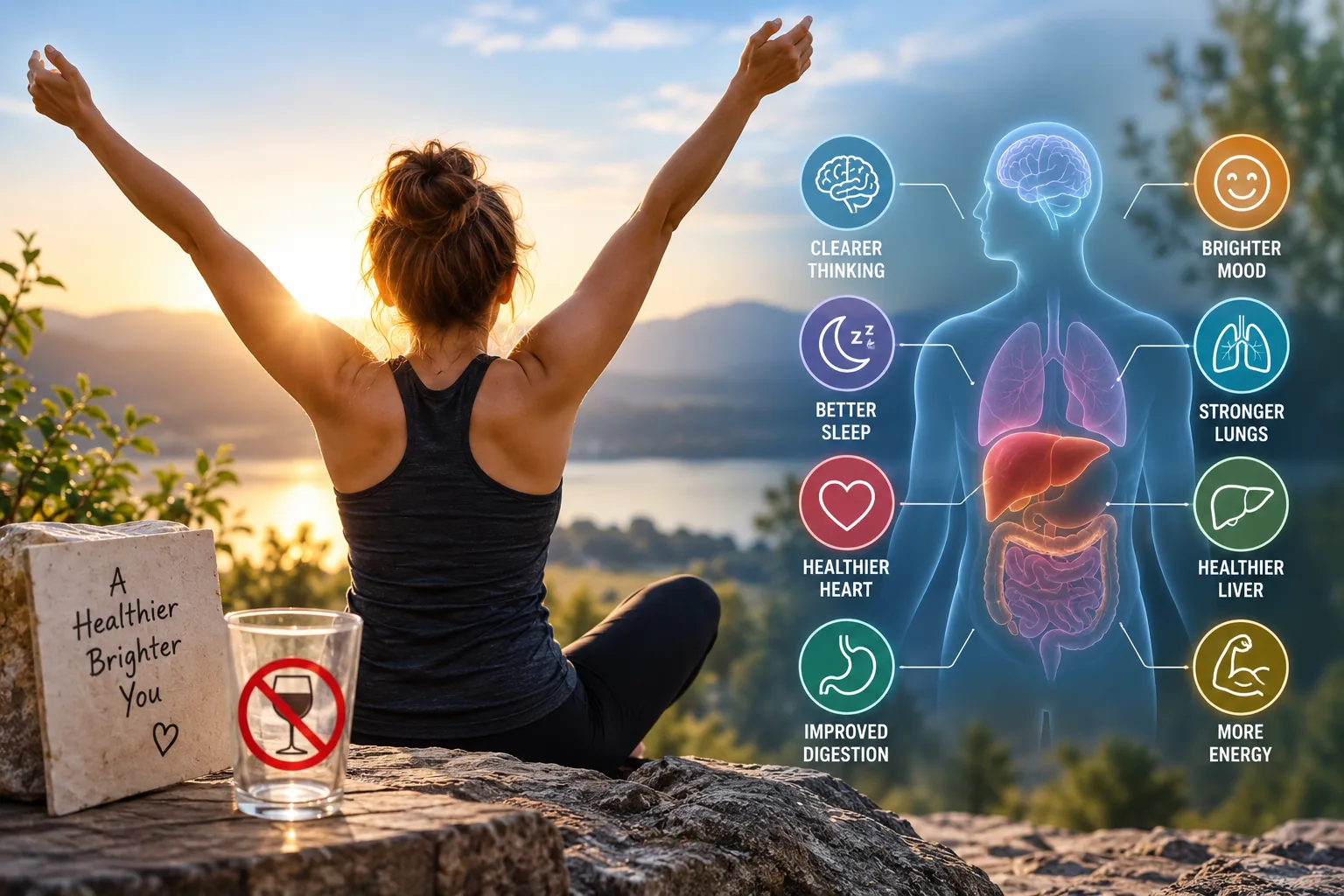


Your body can begin healing after you stop drinking alcohol much sooner than you might expect. Sleep, digestion, energy, blood pressure, hydration, liver function, and brain health may all begin changing as alcohol leaves your system and your body adjusts to sobriety.
But healing does not happen overnight.
How quickly you feel better depends on how much you drank, how long you drank, your overall health, nutrition, sleep, age, and whether alcohol has already caused medical problems.
For someone who has been drinking heavily or regularly, the first concern should be safety. Alcohol withdrawal can become dangerous and, in severe cases, life-threatening. Seizures, hallucinations, severe confusion, or delirium tremens require immediate medical attention.
Once withdrawal is safely managed, however, the body can begin an impressive process of repair.
The First Days After You Stop Drinking
Within the first days of sobriety, alcohol is leaving your bloodstream and your body begins adjusting to functioning without it.
You may experience:
- Changes in sleep
- Sweating
- Anxiety
- Headaches
- Nausea
- Shaking
- Irritability
- Changes in appetite
- Fatigue
These symptoms can be part of the different phases of alcohol withdrawal.
Early recovery can feel worse before it feels better.
That does not necessarily mean stopping alcohol is harming you. Your body may simply be adjusting after becoming accustomed to regular alcohol exposure.
Hydration and eating regular meals can become especially important during this period.
Some people also experience night sweats after quitting alcohol as the nervous system and sleep patterns adjust.
If symptoms are severe or you have a history of heavy alcohol use, seek medical guidance instead of trying to push through withdrawal alone.
Your Liver Can Begin Recovering
The liver performs much of the work involved in processing alcohol.
Repeated heavy drinking can contribute to fat buildup, inflammation, and eventually more serious liver damage.
When alcohol use stops, the liver no longer has to continuously process new alcohol exposure.
That creates an opportunity for healing.
Fatty liver related to alcohol use may improve significantly with abstinence in some people. More advanced liver damage may take much longer to improve, and cirrhosis involves permanent scarring that may not fully reverse.
Our detailed guide on how long the liver takes to heal after quitting alcohol explains why liver recovery depends heavily on how much damage occurred before drinking stopped.
Stopping alcohol can still be extremely valuable even when liver disease is already present.
It may help prevent additional damage and give the remaining healthy liver tissue the best opportunity to function.
Sleep, Digestion and Energy Can Change
Many people assume alcohol helps them sleep because it can make them drowsy.
But sedation is not the same thing as healthy sleep.
Alcohol can disrupt normal sleep cycles and contribute to waking during the night.
After quitting, sleep may temporarily become even more unpredictable before improving.
Our guide to sleep problems after getting sober explains why insomnia, unusual dreams, or restless sleep may continue during early recovery.
You may also need more sleep than expected. Learn more about how much sleep you need in early recovery.
Digestion can change too.
Alcohol can irritate the digestive system and affect appetite, nutrient absorption, and bowel habits. Some people experience temporary digestive problems after quitting alcohol while the gastrointestinal system adjusts.
As sleep and nutrition improve, energy may slowly begin returning.
Appetite, Weight and Sugar Cravings May Change
Changes in appetite are extremely common after quitting alcohol.
Alcohol contains calories, so removing it can significantly change daily calorie intake.
Some people lose weight.
Others gain weight because they begin eating more regularly or replace alcohol with food.
Sweet foods can become especially appealing.
Our guide to why sugar cravings happen after quitting alcohol explains why someone who rarely cared about desserts while drinking may suddenly want candy, soda, or pastries.
Do not panic over every change on the scale.
Early addiction recovery is usually not the ideal time to obsess over perfect dieting.
Instead, focus on building healthier patterns.
Regular meals, protein, fruits, vegetables, whole grains, and adequate hydration can help support physical recovery. Our guide to nutrition during addiction recovery provides more practical guidance.
Exercise Can Help Your Body Rebuild
As energy returns, movement can become an important part of recovery.
Exercise may support:
- Cardiovascular health
- Sleep
- Mood
- Stress management
- Strength
- Energy
- Daily structure
You do not need to suddenly become an athlete.
Walking for 15 or 20 minutes can be a meaningful start.
Strength training, swimming, biking, stretching, and other activities may gradually become options as your health improves.
The key is not overdoing it.
After prolonged alcohol or other substance use, your body may be depleted, sleep deprived, or dealing with medical conditions you do not yet know about.
Read more about the benefits and risks of exercise during addiction recovery before jumping into an intense routine.
If you have heart disease, liver disease, severe weakness, or other significant medical concerns, talk with a healthcare professional about what level of activity is appropriate.
Healing Continues Long After the First Month
Physical recovery does not stop after detox.
Changes may continue for months and years.
Sleep can become more consistent.
Energy may improve.
Nutrition can stabilize.
The liver may continue healing.
Blood pressure and cardiovascular risk may improve when alcohol is removed from the picture.
The brain can also continue adapting after long-term drinking. Our guide to the addicted brain and recovery explains why emotional and cognitive improvements may continue long after alcohol has left the bloodstream.
The broader sobriety timeline also shows how physical and emotional recovery can unfold over time.
You may notice changes gradually rather than dramatically.
One month you realize you are sleeping better.
Later, your stomach feels better.
Your morning energy returns.
Exercise becomes easier.
Your face looks healthier.
You begin thinking more clearly.
Do not compare your recovery with someone else’s.
Your body has its own history.
And remember that stopping alcohol does not automatically reverse every health condition. Persistent abdominal pain, yellowing of the skin or eyes, swelling, vomiting blood, chest pain, severe shortness of breath, confusion, seizures, or other concerning symptoms require medical evaluation.
How your body heals after you stop drinking alcohol depends on where you are starting, but stopping gives your body something it may not have had in years: the chance to recover without alcohol constantly getting in the way. Healing may take time, but every alcohol-free day gives your liver, brain, heart, digestive system, and entire body another opportunity to move toward better health.


