



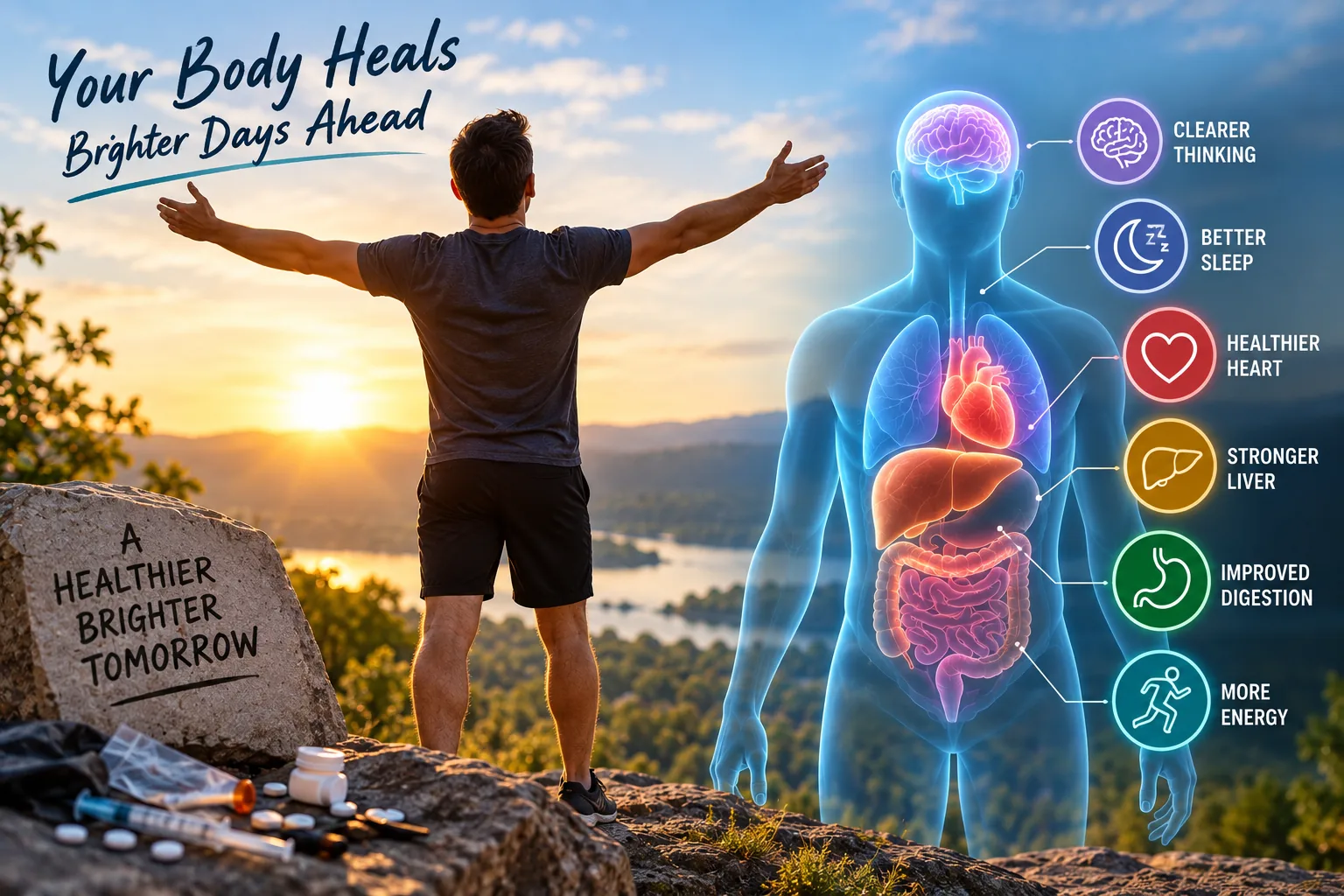


Your body can begin healing after you stop using drugs almost immediately, but full recovery takes time. Sleep, appetite, digestion, energy, heart health, brain function, hormones, and immune function may all begin changing once drugs are no longer repeatedly affecting your system.
At first, however, recovery may not feel like healing.
You may be exhausted.
You may sweat at night.
Your appetite might disappear—or suddenly become intense.
Sleep can become unpredictable.
Your stomach may feel different.
You might wonder why you feel worse after quitting something that was damaging your body.
That early discomfort can be part of the adjustment process after prolonged substance use.
The exact recovery timeline depends on the drug, how long it was used, how heavily it was used, whether multiple substances were involved, and your overall physical health.
Most importantly, some forms of withdrawal can be medically dangerous. Alcohol and benzodiazepine withdrawal can cause serious complications, including seizures. Anyone at risk for significant withdrawal should seek professional medical guidance rather than trying to detox alone.
The First Days Without Drugs
The first stage of physical recovery often involves withdrawal.
Symptoms differ dramatically depending on the substance.
Opioid withdrawal may involve sweating, nausea, diarrhea, muscle aches, insomnia, and intense cravings.
Stimulant withdrawal may cause extreme fatigue, increased sleep, depression, appetite changes, and low motivation.
Alcohol withdrawal may involve shaking, sweating, anxiety, nausea, insomnia, and potentially serious complications. Our guide to the phases of alcohol withdrawal explains why medical supervision can be so important.
You may also experience night sweats after quitting drugs or alcohol as your nervous system adjusts.
The first goal is not to feel amazing.
It is to get through withdrawal safely and allow your body to begin stabilizing.
Your Brain and Sleep Begin Adjusting
Drugs can dramatically change how the brain handles reward, stress, motivation, attention, and sleep.
When drug use stops, those systems do not immediately return to their previous state.
This is why you may feel tired, foggy, emotionally flat, distracted, or unmotivated during early recovery.
Understanding the addicted brain and how it heals can help explain why these changes take time.
Sleep is particularly important.
Some drugs keep people awake for long periods. Others produce sedation but interfere with healthy sleep architecture.
After quitting, you may sleep excessively, struggle with insomnia, experience vivid dreams, or wake repeatedly.
Our guide to sleep problems after getting sober explains why sleep can remain unpredictable.
You may also need more rest than expected. Learn more about how much sleep you need in early recovery.
Your Heart and Other Organs May Begin Recovering
Drug use can place enormous stress on the cardiovascular system.
Stimulants such as cocaine and methamphetamine can increase heart rate and blood pressure. Opioids can suppress breathing and reduce oxygen. Other substances may indirectly affect heart health through poor nutrition, dehydration, sleep deprivation, or infection.
Stopping the drug removes an important source of ongoing stress.
Whether damage can reverse depends on what happened before recovery began.
Our detailed guide asks an important question: can your heart recover from drug abuse?
The liver can also be affected by substance use.
Alcohol is especially damaging with prolonged heavy use. Fatty liver and inflammation may improve after drinking stops, while advanced cirrhosis can involve permanent scarring. Learn more about alcohol-related liver disease and how chronic drinking can affect liver health.
We also explain how long the liver may take to heal after quitting alcohol.
Stopping substance use cannot guarantee that every damaged organ will completely recover, but it can prevent continued exposure and give your body a much better opportunity to heal.
Appetite, Weight and Nutrition Can Change
Addiction can dramatically change eating habits.
Some people barely eat while using stimulants.
Others rely heavily on processed foods.
Alcohol can supply large amounts of calories while contributing to nutritional problems.
Opioid use can affect digestion and appetite.
Once you stop using, hunger may return quickly.
Weight may change in either direction.
Some people experience weight loss after quitting drugs, while others gain weight as appetite returns and eating becomes more regular.
Try not to become obsessed with the scale during the earliest stage of recovery.
Your body needs fuel.
Protein, vegetables, fruits, whole grains, healthy fats, and adequate hydration can support healing.
Our guide to nutrition during addiction recovery explains how better eating habits can support energy, strength, and overall health.
The goal is not a perfect diet.
It is rebuilding a body that may have been neglected for a long time.
Exercise Can Help Rebuild Strength and Energy
As withdrawal improves and energy begins returning, physical activity can become a powerful recovery tool.
Exercise may support:
- Cardiovascular fitness
- Muscle strength
- Sleep
- Energy
- Stress management
- Mood
- Daily structure
You do not need to immediately join a gym and exercise for two hours.
Start where your body is.
Walk.
Stretch.
Ride a bike.
Swim.
Do light strength training.
Our guide to exercise during addiction recovery explains both the benefits and potential risks of doing too much too soon.
If you have significant heart, liver, lung, or other medical problems, talk with a healthcare professional before beginning strenuous exercise.
Healing is not a competition.
Physical Recovery Continues Over Months and Years
One of the biggest mistakes is thinking detox equals complete recovery.
Detox removes the substance.
Healing continues much longer.
Your energy may improve.
Sleep can become more predictable.
Your appetite may stabilize.
Strength can return.
Your heart and other organs may function better when they are no longer repeatedly exposed to drugs.
Your ability to think clearly may continue improving.
The larger sobriety timeline shows how recovery can unfold over months and years rather than days.
There may also be difficult periods.
Pain, fatigue, cravings, poor sleep, or stress can sometimes increase relapse risk. That is why physical healing should be connected to a broader addiction recovery plan that includes support, treatment, healthy routines, and strategies for difficult days.
Seek medical evaluation for chest pain, severe shortness of breath, seizures, persistent vomiting, yellowing of the skin or eyes, severe confusion, suicidal thoughts, or other serious symptoms.
How your body heals after you stop using drugs depends on what you used and how addiction affected your health. Some improvements can begin quickly. Others may take months or longer. What matters is that every day without drugs gives your brain, heart, digestive system, muscles, immune system, and the rest of your body another chance to repair, stabilize, and become stronger.


