



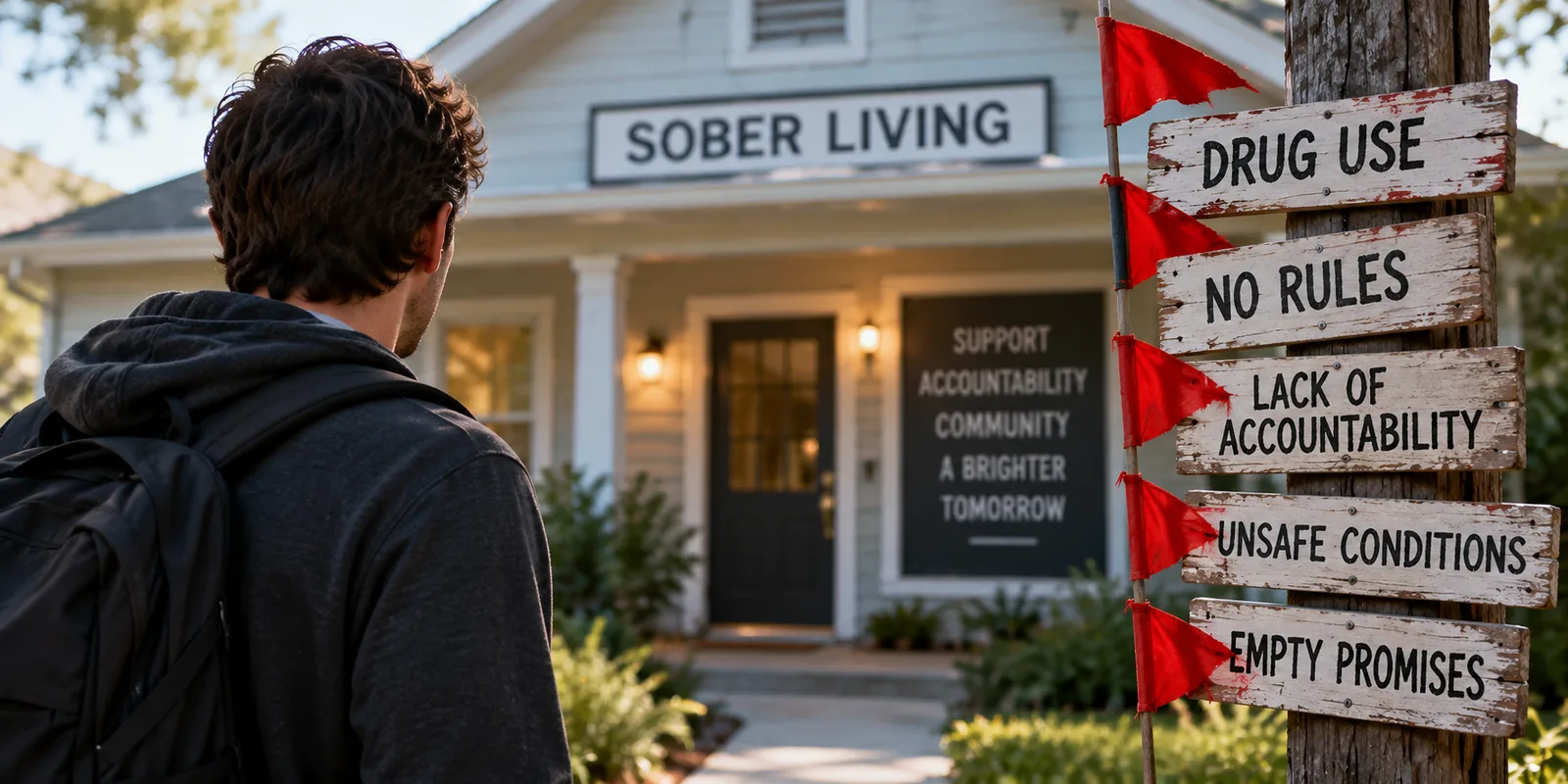


Sober living red flags can tell you a lot about whether a recovery residence is truly safe or simply calling itself a sober home. The right environment can give you structure, accountability, supportive people, and time to rebuild your life. The wrong one can expose you to drugs, financial exploitation, unsafe living conditions, or people who do not take recovery seriously.
If you are considering sober living and recovery housing, do not choose a residence based only on a website, photos, or promises made over the phone.
Ask questions.
Visit the property if possible.
Read the rules.
Understand the fees.
Your living environment can have a major influence on early recovery.
Red Flag #1: Drugs or Alcohol Are Being Used in the Home
A sober living home should provide a substance-free environment.
If residents are openly drinking, using drugs, or bringing substances into the house without consequences, take that seriously.
Someone recovering from crack addiction and compulsive cocaine use, for example, should not be placed in a home where crack cocaine, cocaine, or other substances are regularly present.
That defeats the purpose of recovery housing.
Ask whether drug and alcohol testing is used.
Find out what happens after a positive test.
Review the rules in the sober living home before you move in.
You should know whether the residence actually enforces its substance-free policy.
Promises do not matter much if nobody follows the rules.
Red Flag #2: Fees Are Confusing or Constantly Changing
Financial transparency matters.
Before paying anything, ask for a clear explanation of all costs.
That can include:
- Monthly rent
- Security deposits
- Application fees
- Drug-testing charges
- Transportation fees
- Utilities
- Administrative fees
- Late charges
- Move-out fees
Our guide on how much sober living costs can help you understand what expenses to ask about.
Be cautious if management refuses to explain fees in writing.
Also be careful if someone pressures you to make a large payment immediately because a bed will supposedly disappear within minutes.
A reputable sober home should be able to clearly explain what you are paying for.
You should also understand refund policies before handing over money.
If you leave early or need additional treatment, find out whether prepaid rent or deposits can be returned.
Red Flag #3: The House Is Unsafe or Severely Overcrowded
Sober living does not have to be luxurious.
It does need to be reasonably safe.
Pay attention to:
Broken locks.
Exposed wiring.
Serious plumbing problems.
Fire hazards.
Pest infestations.
Dangerous structural problems.
Extremely overcrowded bedrooms.
Lack of basic cleanliness.
If possible, tour the actual room where you will sleep.
Do not rely only on photos online.
A recovery residence should feel like a home where people can build stability.
Understanding what a sober living home should provide can help you distinguish basic shared housing from an environment that genuinely supports recovery.
Your physical surroundings matter.
Living in constant chaos can increase stress during a period when you are already making major changes.
Red Flag #4: Nobody Can Explain the Rules or Relapse Policy
A good sober living residence should have clear expectations.
If different staff members give you completely different answers, that can indicate poor management.
Ask about:
Curfews.
Visitors.
Employment.
Chores.
Drug testing.
Medications.
Overnight passes.
House meetings.
Relapse.
One of the most important questions is what happens if someone uses drugs or alcohol.
Read about what happens after a relapse in sober living so you know what questions to ask.
Some homes may require immediate discharge.
Others may connect a resident with detox or treatment.
The policy itself may vary.
The red flag is when management cannot clearly explain it.
Relapse policies matter because the home has a responsibility to protect everyone living there.
Red Flag #5: The Home Makes Unrealistic Promises
Be skeptical of anyone who guarantees recovery.
No sober living home can promise that you will never relapse.
Recovery depends on many factors, including treatment, support, environment, personal effort, mental health, relationships, and continued care.
A good home should support long-term addiction recovery.
It should not sell unrealistic claims.
Be cautious of statements such as:
“You will never relapse here.”
“This program works for everyone.”
“You do not need treatment anymore.”
“We can cure addiction.”
Sober living and treatment serve different purposes.
Understanding sober living versus rehab is important.
Sober living primarily provides a recovery-focused home.
Rehab provides treatment.
If someone needs medical, psychiatric, or intensive addiction treatment, a sober house should not pretend that housing alone can replace it.
Red Flag #6: The Home Does Not Help Residents Move Forward
Sober living should help you become more independent over time.
Residents may work, attend school, participate in treatment, save money, and gradually prepare for independent housing.
Many people can work while living in a sober house, which can help rebuild income and daily structure.
A residence should not intentionally keep people stuck.
Ask how long residents typically stay and what happens when someone is ready to move forward. Our guide on how long to stay in sober living can help you think about readiness based on stability rather than a fixed deadline.
You may also want to understand sober living versus a halfway house because different types of transitional housing may have different goals and restrictions.
Before choosing any residence, learn how to find a good sober living home.
Sober living red flags should never be ignored simply because you urgently need housing.
Look closely.
Ask questions.
Read agreements.
Understand the costs.
Learn the rules.
Visit the property.
Find out how relapse is handled.
Pay attention to whether people are actually sober.
Most importantly, ask whether the environment helps residents build a healthier life away from substance use and addiction.
A sober home should provide more than a bed.
It should provide a safer place to practice responsibility, stability, and recovery until you are ready to build that environment for yourself.


