



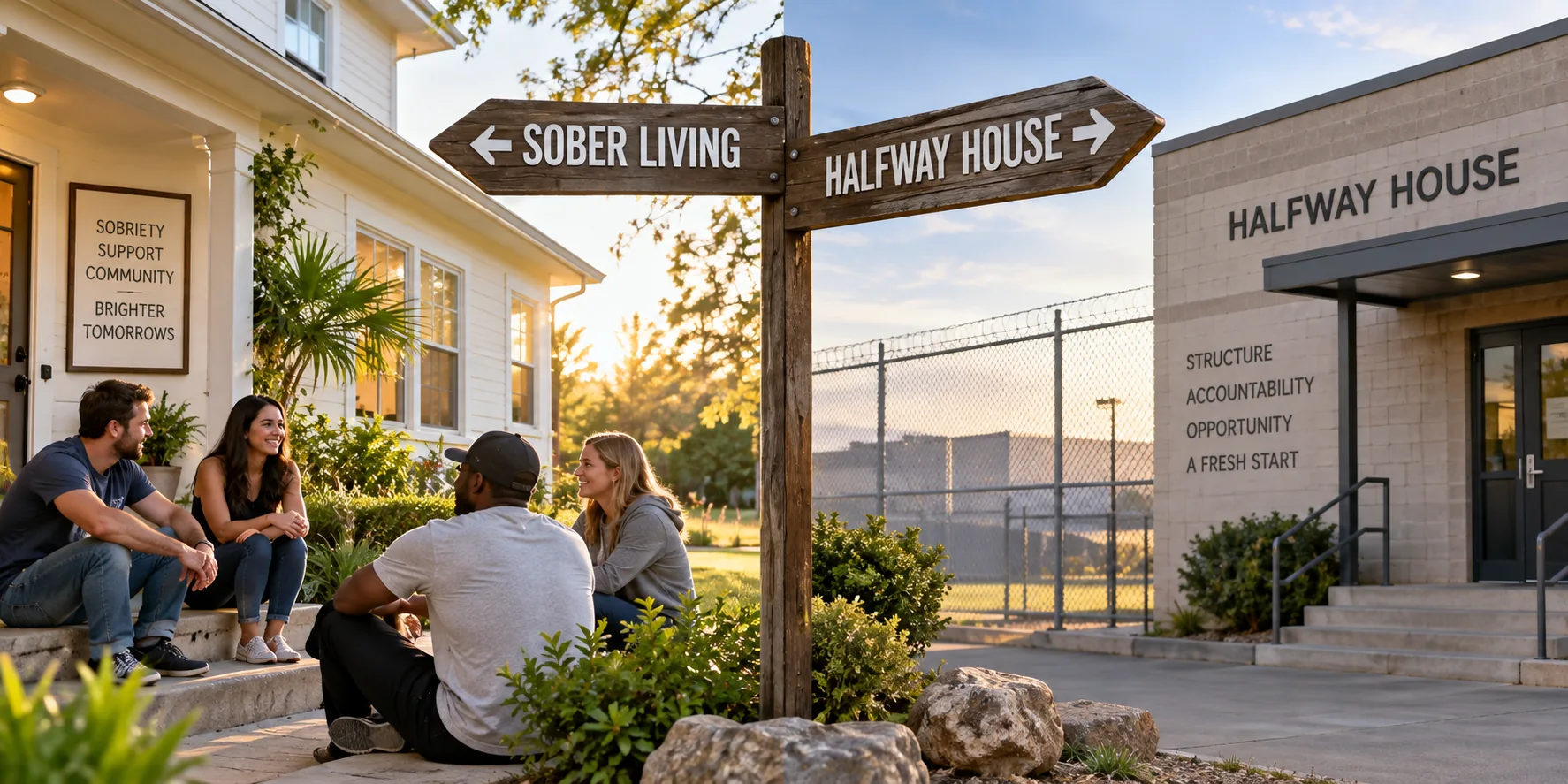


Sober living vs. halfway house: what’s the difference? Both can provide structured housing for people rebuilding their lives after addiction, but they are not always the same. Sober living homes are generally voluntary, recovery-focused residences designed to help people practice independent living without drugs or alcohol. Halfway houses may have more formal requirements and can sometimes be connected with treatment programs, government agencies, or the criminal justice system.
The terminology can vary by state and program, so never rely on the name alone.
The most important questions are what services the residence provides, what rules you must follow, how long you can stay, and whether the environment supports your recovery.
Understanding the difference can help you choose housing that matches where you are in your addiction recovery journey.
What Is a Sober Living Home?
A sober living home is generally a drug- and alcohol-free residence for people working toward long-term sobriety.
Residents often have significant independence.
They may:
- Work
- Attend school
- Attend outpatient treatment
- Go to recovery meetings
- Visit family
- Exercise
- Handle their own transportation
- Manage their own schedules within house rules
The home provides structure without recreating the intensity of residential treatment.
Learning how sober living works can help you understand this balance between independence and accountability.
Residents may be required to follow curfews, complete chores, participate in drug testing, attend house meetings, or remain involved in recovery activities.
The goal is usually to help people practice ordinary life while surrounded by a substance-free community.
What Is a Halfway House?
The term halfway house can describe several different types of transitional residences.
Some serve people leaving addiction treatment.
Others serve individuals transitioning from incarceration back into the community.
Certain programs may receive government funding or operate under contracts with correctional or treatment systems.
Because of this, halfway houses may have stricter requirements than many sober living homes.
Residents might have mandatory programming, employment requirements, curfews, supervision, scheduled activities, or limits on how long they can stay.
Admission may also depend on eligibility requirements or referrals.
This is why the name itself does not tell you everything.
Ask exactly who operates the residence, who qualifies to live there, what services are provided, and whether participation is voluntary.
Sober Living vs. Halfway House: The Main Differences
The biggest differences usually involve freedom, referral requirements, structure, and purpose.
A sober living home is typically focused specifically on maintaining sobriety while residents gradually become independent.
A halfway house may have a broader transitional purpose.
Some key differences can include:
Admission: Sober living may accept people voluntarily, while certain halfway houses require referrals or specific eligibility.
Length of stay: Both can limit stays, but the rules differ by program. If sober housing is your choice, consider how long you should stay in sober living based on your stability rather than rushing toward independence.
Rules: Both may have curfews, testing, chores, and behavioral expectations. Review common sober living house rules before moving in.
Employment: Sober living frequently encourages residents to work. Many people can work while living in a sober house as they rebuild finances and independence.
Cost: Sober living residents commonly pay rent or program fees. Learn how much sober living costs and ask what is included.
Programs vary significantly, so these differences should be treated as general patterns rather than universal rules.
Which Option Is Better After Addiction Treatment?
Neither option is automatically better.
The right choice depends on your needs.
Someone leaving residential treatment may benefit from sober living if they need a substance-free environment but are ready to work and manage much of their everyday life independently.
Someone needing more supervision or participating in a particular transitional program may need a different setting.
The difference between sober living and rehab is also important.
Rehab provides addiction treatment.
Sober living primarily provides a recovery-focused place to live.
For someone recovering from crack addiction and compulsive cocaine use, either environment should be evaluated partly by how well it separates the person from people, places, and routines strongly connected with previous crack cocaine use.
Returning immediately to an environment where drugs are readily available can make early recovery much harder.
Housing should support recovery rather than constantly challenge it.
What Happens if Someone Relapses?
Before entering either type of residence, understand the substance-use policy.
Do not assume every program handles relapse the same way.
Some residences may immediately discharge someone after drug or alcohol use.
Others may require an assessment, increased treatment, detox, or transfer to another level of care.
Our guide to what happens after a relapse in sober living explains why knowing the policy before moving in matters.
It is even better to ask for help before substance use occurs.
Cravings, isolation, dishonesty, reconnecting with people who use drugs, abandoning recovery activities, and thinking frequently about getting high can be part of the addiction relapse process.
Speak up early.
A housing program should encourage people to seek support when recovery starts becoming unstable.
How to Choose the Right Recovery Housing
Do not choose a residence based only on its name.
Tour it if possible.
Ask questions.
Learn who runs it.
Understand the rules.
Find out what happens after a positive drug test.
Ask exactly what you will pay.
Look at the condition of the property.
Talk about medication policies.
Ask whether residents are expected to work.
Find out how much independence you will have.
Our guide on how to find a good sober living home can help you evaluate potential residences. You should also recognize sober living red flags that should not be ignored.
If you are deciding between structured housing and returning to family, compare sober living versus going home after rehab.
Ultimately, the best environment is one that supports safety, accountability, stability, and your continued recovery from substance use and addiction.
The difference between sober living and a halfway house matters, but the label matters less than the actual program.
Find out what the residence really offers.
Understand what it expects from you.
Then choose the environment that gives you the strongest opportunity to build a stable, independent, sober life.


