



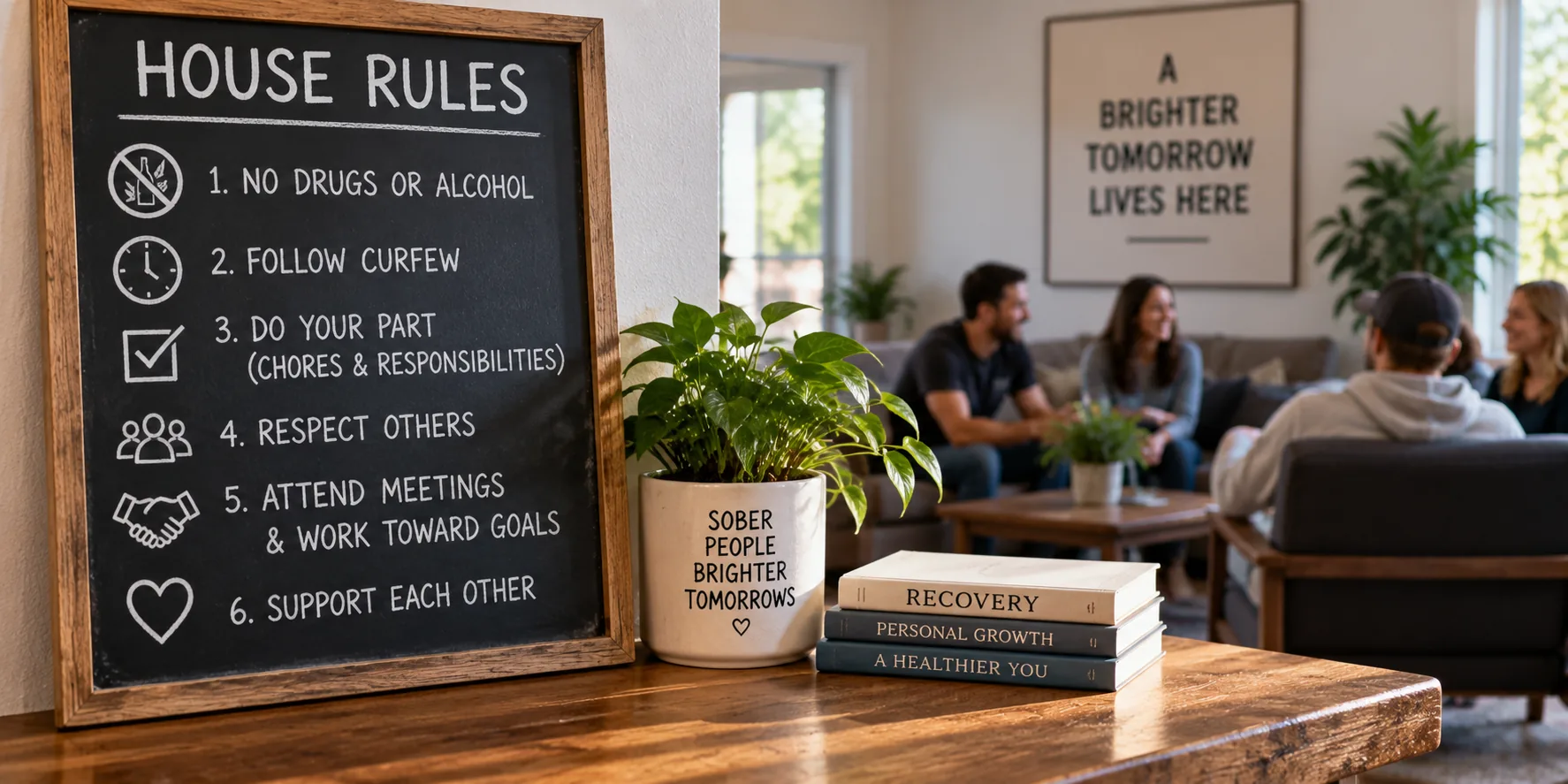


What are the rules in a sober living home? While every residence is different, most sober homes have rules designed to protect sobriety, create accountability, and help residents rebuild healthy routines. Common requirements may include remaining drug- and alcohol-free, following curfews, completing chores, participating in drug testing, respecting other residents, and working or attending school.
These expectations are not supposed to punish you.
They are meant to create structure.
For people transitioning from treatment into everyday life, sober living and recovery housing can provide a middle ground between highly structured rehab and completely independent living.
Before moving into any residence, ask for its specific rules in writing. Policies vary significantly from one sober home to another.
Rule #1: Drugs and Alcohol Are Usually Prohibited
The most important rule is also the most obvious: sober living homes are intended to remain substance-free.
Residents are generally prohibited from possessing or using alcohol and illegal drugs inside or outside the home.
Someone recovering from crack addiction and compulsive cocaine use, for example, should expect a sober residence to prohibit crack cocaine, cocaine, and other non-approved substances.
Many homes also use drug or alcohol testing.
Testing might occur:
- Randomly
- On a regular schedule
- After returning from an overnight absence
- When substance use is suspected
- After certain rule violations
If you are unfamiliar with recovery housing, understanding how sober living works can help explain why substance-free rules and accountability are central to the environment.
Before moving in, ask exactly what happens after a positive test.
Do not assume every home follows the same policy.
Curfews, Visitors and Overnight Rules
Many sober homes have curfews.
A resident may need to return by a certain time each night unless work, school, or another approved responsibility requires different hours.
Curfews can help create routine and reduce late-night exposure to situations connected with previous substance use.
Visitor rules are also common.
A home may restrict:
Visitors who appear intoxicated.
Overnight guests.
People known to be actively using substances.
Visitors entering bedrooms.
The hours when guests are allowed.
These policies protect more than one resident.
You are sharing a recovery environment with other people who may have their own triggers.
A visitor who brings alcohol or drugs into the house could threaten everyone’s safety.
If you work evenings or overnight shifts, talk with management about curfew expectations. Many people can work while living in a sober house, but schedule exceptions should be discussed before problems occur.
Chores, Meetings and Daily Responsibilities
Sober living often includes ordinary household responsibilities.
Residents may be expected to:
Clean shared areas.
Take out trash.
Wash dishes.
Keep bedrooms reasonably clean.
Participate in house meetings.
Respect quiet hours.
Pay rent on time.
These responsibilities may seem small, but they serve a larger purpose.
Addiction can disrupt everyday routines. Recovery often involves learning how to manage ordinary responsibilities consistently again.
Some homes may also expect residents to attend recovery meetings, outpatient treatment, counseling, or other recovery activities.
Others may not require specific programs.
This is one reason it is important to understand what a sober living home is before assuming every residence operates like rehab.
Sober living primarily provides recovery-focused housing.
It does not automatically provide the same clinical treatment as a residential treatment program. Our guide comparing sober living versus rehab explains that distinction in greater detail.
Employment, School and Financial Expectations
Many sober living homes expect residents to work toward independence.
That may mean:
Holding a job.
Looking for work.
Going to school.
Volunteering.
Participating in vocational training.
Attending treatment.
These expectations can help residents develop structure and eventually become financially independent.
Working also helps prepare you for housing after sober living.
You can begin paying bills, creating a budget, saving for a deposit, and rebuilding financial stability.
Residents should understand how much sober living costs before moving in.
Ask about rent, deposits, drug-testing charges, transportation fees, utilities, and other expenses.
Paying fees on time may itself be a house requirement.
The larger goal is not simply following rules.
It is learning how to manage responsibilities without drugs or alcohol controlling your life.
Medication and Relapse Policies Can Vary
Medication policies deserve special attention.
Do not assume that all sober living homes handle prescription medications in the same way.
Before moving in, tell the appropriate staff about prescribed medications and ask how they must be stored or managed.
Do not stop a prescribed medication simply because you are considering sober living without first discussing the situation with the healthcare professional who prescribed it.
You should also understand the home’s relapse policy.
Some residences may require someone to leave after substance use.
Others may require an evaluation or help the resident connect with detox, treatment, or another level of care.
Read our guide on what happens if you relapse in sober living before entering a residence.
Increasing cravings, secrecy, isolation, and abandoning recovery routines may also signal the addiction relapse process before actual substance use occurs.
Ask for help early.
Good Sober Living Rules Should Support Recovery
Rules alone do not make a sober living home good.
A residence can have dozens of rules and still be poorly managed.
Healthy rules should be clear, reasonable, consistently enforced, and connected with safety or recovery.
Before paying a deposit, learn how to find a good sober living home.
Ask:
Can I see the rules before moving in?
What happens after a positive drug test?
What medications are permitted?
What is the visitor policy?
Are residents required to work?
How are conflicts handled?
What are all the fees?
How long can residents stay?
Also learn the sober living red flags you should never ignore.
Unclear fees, unsafe conditions, active substance use inside the residence, inconsistent rules, or unrealistic promises should make you cautious.
If the home is a different type of transitional program, understanding sober living versus halfway houses may also help clarify what rules and restrictions to expect.
So, what are the rules in a sober living home?
Most rules come back to a few basic ideas:
Stay sober.
Be accountable.
Respect the people around you.
Contribute to the household.
Build a productive routine.
Prepare for independence.
You may not enjoy every curfew, chore, meeting, or test.
But the right structure can give you time to practice living differently.
Eventually, the goal is to leave sober living with routines strong enough that you no longer need someone else to enforce them.
That is when house rules begin becoming your own rules for a healthier life.


