



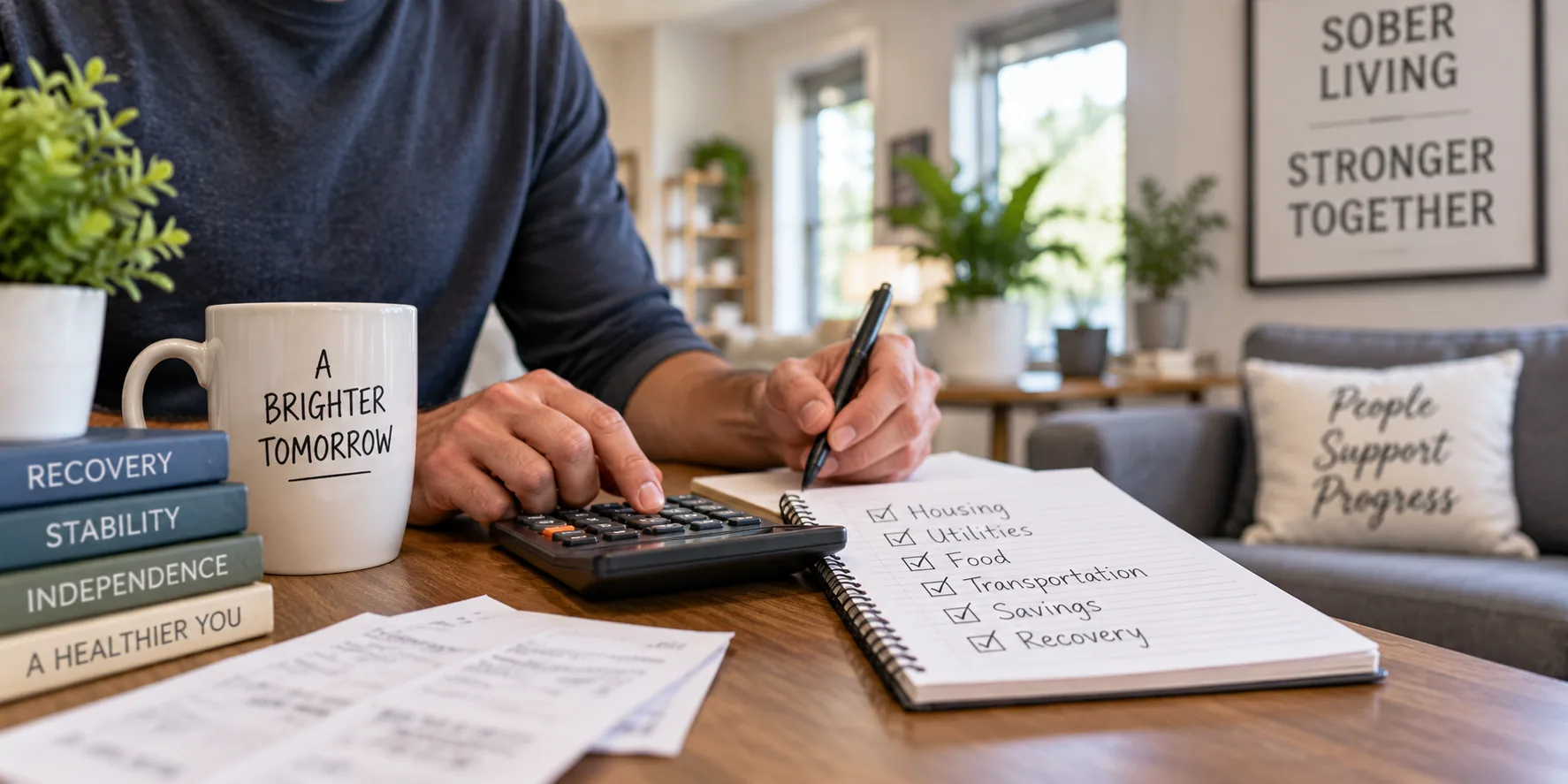


How much does sober living cost? The price can vary widely depending on the location, type of home, room arrangement, amenities, and level of structure provided. Some sober living homes operate like basic shared housing, while others provide transportation, staff support, private rooms, recreational amenities, or other services that increase the monthly cost.
For someone leaving addiction treatment, price matters—but it should not be the only consideration.
A good sober living home should provide a safe, substance-free environment where you can work, rebuild routines, save money, and continue strengthening your recovery.
The cheapest option is not always the best one.
Neither is the most expensive.
The goal is finding a home that is affordable, safe, transparent about its fees, and appropriate for your recovery needs.
What Determines the Cost of Sober Living?
There is no standard price for every sober living residence.
Several factors can affect what you pay.
Location is one of the biggest. Housing in an expensive metropolitan area may cost considerably more than housing in a smaller city or rural community.
Room type also matters. Sharing a bedroom is generally less expensive than having a private room.
Other factors may include:
- Number of residents
- Furnishings
- Utilities
- Transportation
- Drug and alcohol testing
- House management
- Location near employment or public transportation
- Recreational amenities
- Private versus shared bathrooms
- Length of stay
Understanding how sober living works can help you understand what you are actually paying for.
Sober living is generally more than renting a bedroom.
The recovery-focused environment, household expectations, accountability, and separation from active substance use are important parts of its value.
What Should Be Included in Sober Living Fees?
Always ask what your payment covers before signing an agreement or paying a deposit.
Some homes may include utilities, internet, household supplies, or transportation in the monthly price.
Others may charge separately.
Ask directly about:
Rent.
Deposit.
Application fees.
Drug-testing fees.
Utilities.
Transportation.
Food.
Late fees.
Administrative charges.
Move-out fees.
Refund policies.
You should also review the rules of the sober living home before paying.
A residence may have requirements regarding employment, curfews, meetings, visitors, medications, chores, and substance testing.
Knowing these expectations before moving in helps prevent unpleasant surprises later.
Ask for fees and policies in writing whenever possible.
Financial transparency is important.
Is Sober Living Worth the Cost?
For many people, the better question is not simply, “How much does sober living cost?”
It is:
“What am I getting for that cost?”
Early recovery can be vulnerable.
Returning immediately to an apartment where roommates use substances or to a neighborhood strongly connected with past drug use may create additional challenges.
For someone recovering from crack addiction and compulsive cocaine use, living around people who continue using crack cocaine or other stimulants may expose them to powerful reminders of previous substance use.
A supportive environment cannot guarantee sobriety.
But it can remove unnecessary obstacles.
Sober housing may provide other people in recovery, predictable routines, accountability, and a substance-free home while you rebuild independence.
You should still compare your options.
Our guide to sober living versus going home after rehab can help you consider whether returning to family would provide enough stability and support.
For some people, home is an excellent option.
For others, sober living provides a safer transition.
Can You Work and Pay for Sober Living?
Many residents work while living in sober housing.
In fact, employment may be encouraged or required depending on the residence.
Learning about working while living in a sober house can help you plan how employment fits into your recovery schedule.
Working provides more than money.
It can create:
Routine.
Responsibility.
Confidence.
Structure.
Social interaction.
A reason to maintain a regular sleep schedule.
Income also allows you to prepare for the next stage of life.
While living in sober housing, you may be able to save for an apartment deposit, pay down debt, purchase transportation, or create an emergency fund.
How long you remain can affect total cost, so consider how long you should stay in sober living as part of your financial planning.
Leaving earlier just to save money may not be worthwhile if your next living environment threatens your recovery.
Watch for Unexpected Fees and Sober Living Red Flags
Before paying money, research the residence carefully.
Ask questions.
Tour the property when possible.
Speak with staff or management.
Understand exactly where you will sleep and what you will receive.
Learn how to find a reputable sober living home rather than choosing the first available bed.
Also pay attention to sober living red flags you should never ignore.
Be cautious when a residence:
Will not clearly explain its fees.
Demands large unexplained payments.
Has unsafe living conditions.
Appears overcrowded.
Allows obvious drug or alcohol use.
Makes unrealistic promises about recovery.
Cannot clearly explain house policies.
You should also know what happens if someone relapses in sober living, including whether any prepaid rent or deposits are refundable if you must leave.
Knowing the rules beforehand can protect both your recovery and your finances.
Finding Affordable Sober Housing Without Sacrificing Recovery
If sober living feels expensive, compare several residences rather than immediately deciding it is impossible.
Ask whether shared rooms cost less.
Look at transportation expenses.
Consider how close the residence is to your job.
Calculate the entire monthly cost—not just rent.
You may discover that a slightly more expensive home near work costs less overall because you do not need a car or daily rides.
Also understand the difference between sober living and a halfway house and between sober living and residential rehab. Different housing and treatment models may have different funding, eligibility requirements, and expenses.
If you currently have no safe place to stay, homeless shelter and emergency housing resources may help while you explore longer-term options.
Most importantly, do not treat housing as separate from your long-term addiction recovery.
A stable home can influence sleep, employment, stress, relationships, and exposure to substance use and addiction.
How much sober living costs matters, but the value of a safe recovery environment matters too.
Compare prices.
Ask what is included.
Read the rules.
Understand every fee.
Research the home.
Create a budget.
Then choose the option that gives you the strongest combination of affordability, accountability, safety, and independence.
The goal is not to live in sober housing forever.
The goal is to use that time to build a life stable enough that eventually you no longer need it.


