



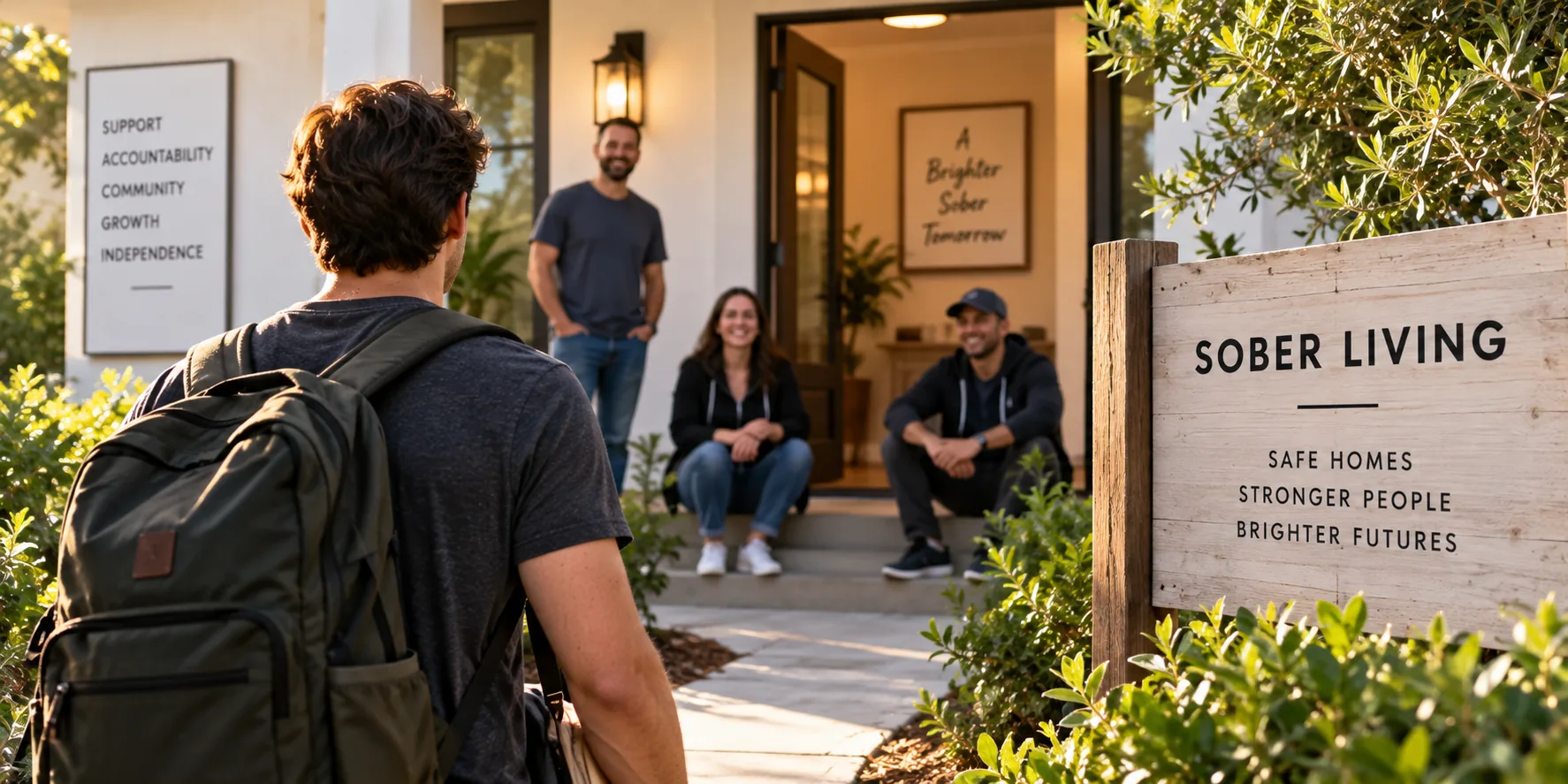


Learning how to find a good sober living home can make a major difference in what happens after addiction treatment. The right residence can provide structure, accountability, supportive people, and a safe place to rebuild your life. The wrong one can expose you to chaos, unclear fees, active substance use, or an environment that does little to support recovery.
Not every home calling itself “sober living” operates the same way.
Before paying a deposit or moving in, take time to investigate.
A quality sober living and recovery environment should help you become healthier and more independent—not simply provide a bed.
The goal is to find a place where sobriety is protected while you work, rebuild routines, save money, and prepare for life on your own.
Start by Understanding What Sober Living Should Provide
Before comparing homes, understand what a sober living home is.
Sober living is generally a drug- and alcohol-free residence for people working toward sustained recovery.
Residents may work, attend school, participate in outpatient treatment, go to recovery meetings, and manage many everyday responsibilities independently.
A good home should provide structure without pretending to be something it is not.
Sober living is not automatically the same as residential addiction treatment. Understanding sober living versus rehab can help you determine whether you need recovery housing or a higher level of treatment.
If you still need intensive clinical support, sober living alone may not be enough.
Ask About Rules, Testing and Accountability
A trustworthy residence should be able to explain its expectations clearly.
Ask for the sober living house rules before moving in.
Common requirements may include:
- No drugs or alcohol
- Drug and alcohol testing
- Curfews
- Household chores
- Respectful behavior
- House meetings
- Visitor restrictions
- Employment or school expectations
- Participation in recovery activities
Rules should be understandable and consistently enforced.
Ask how drug testing works and what happens after a positive result.
This can be especially important for someone recovering from crack addiction and compulsive cocaine use, where returning to an environment with easy access to cocaine or people actively using drugs could quickly threaten early recovery.
You should feel confident that management takes substance use seriously.
Look Closely at the People and the Environment
Pay attention to what you see when visiting the home.
Does it feel reasonably clean and safe?
Do residents appear sober?
Does management know what is happening inside the house?
Are bedrooms dangerously overcrowded?
Is the property maintained?
Do residents seem respectful toward one another?
A sober home does not need to look like a luxury resort.
But it should feel like a place where people can safely live.
Learn the sober living red flags you should never ignore before making a decision.
Be especially cautious if you notice obvious substance use, threatening behavior, unsafe conditions, unexplained overcrowding, or management that seems uninterested in what residents are doing.
The people around you matter.
Early recovery can already involve cravings, emotional changes, and stress.
Living with people who repeatedly bring drugs or chaos into the home can make recovery much harder.
Understand Every Cost Before You Pay
Never hand over money without understanding what you are paying for.
Ask about:
Monthly rent.
Deposits.
Application fees.
Drug-testing fees.
Utilities.
Transportation.
Food.
Administrative charges.
Late fees.
Refund policies.
Knowing how much sober living costs can help you compare homes fairly.
One residence may appear cheaper until you discover that utilities, testing, transportation, and other expenses are charged separately.
Ask for fees in writing.
Be cautious if someone pressures you to immediately provide a large amount of money without clearly explaining the agreement.
Price is important, but do not automatically choose the cheapest bed available.
You are paying for more than a room.
You are choosing your living environment during an important stage of recovery.
Ask What Happens if You Relapse
Nobody enters sober living planning to relapse.
You should still know the policy.
Ask directly:
What happens after substance use?
Is the resident immediately discharged?
Can someone return after detox or treatment?
Does the home help connect residents with treatment?
What happens to prepaid rent or deposits?
Our guide to what happens if you relapse in sober living explains why knowing these answers before a crisis matters.
A good home should maintain boundaries because every resident deserves a substance-free environment.
But the policy should also be clear.
Relapse can be a serious sign that a person’s treatment or recovery plan needs to change.
Increasing cravings, secrecy, isolation, and abandoning recovery routines may also be part of the addiction relapse process.
A healthy residence should encourage residents to ask for help before things reach that point.
Choose a Home That Helps You Move Forward
The purpose of sober living is not simply to keep you there.
It should help you become independent.
Ask whether residents can work. Many people work while living in a sober house, allowing them to rebuild income, create routines, and save for future housing.
Also ask how long residents are allowed to stay.
The ideal length of time in sober living depends on your stability, finances, employment, support system, and readiness for independent housing.
You may also be considering another type of transitional residence. Understanding sober living versus a halfway house can help you compare levels of freedom and structure.
Or perhaps your alternative is returning to family. Comparing sober living versus going home after rehab can help you consider whether your home environment actually supports sobriety.
Learning how to find a good sober living home ultimately comes down to asking questions before making a commitment.
Tour the property.
Read the rules.
Understand the fees.
Ask about drug testing.
Learn the relapse policy.
Talk about medications.
Look at the people and environment.
Find out whether the home helps residents work toward independence.
Most importantly, trust what you see rather than what you are promised.
A good sober living home cannot guarantee long-term addiction recovery.
But it can provide something incredibly valuable: a safer place to practice building the sober life you eventually want to live on your own.


