



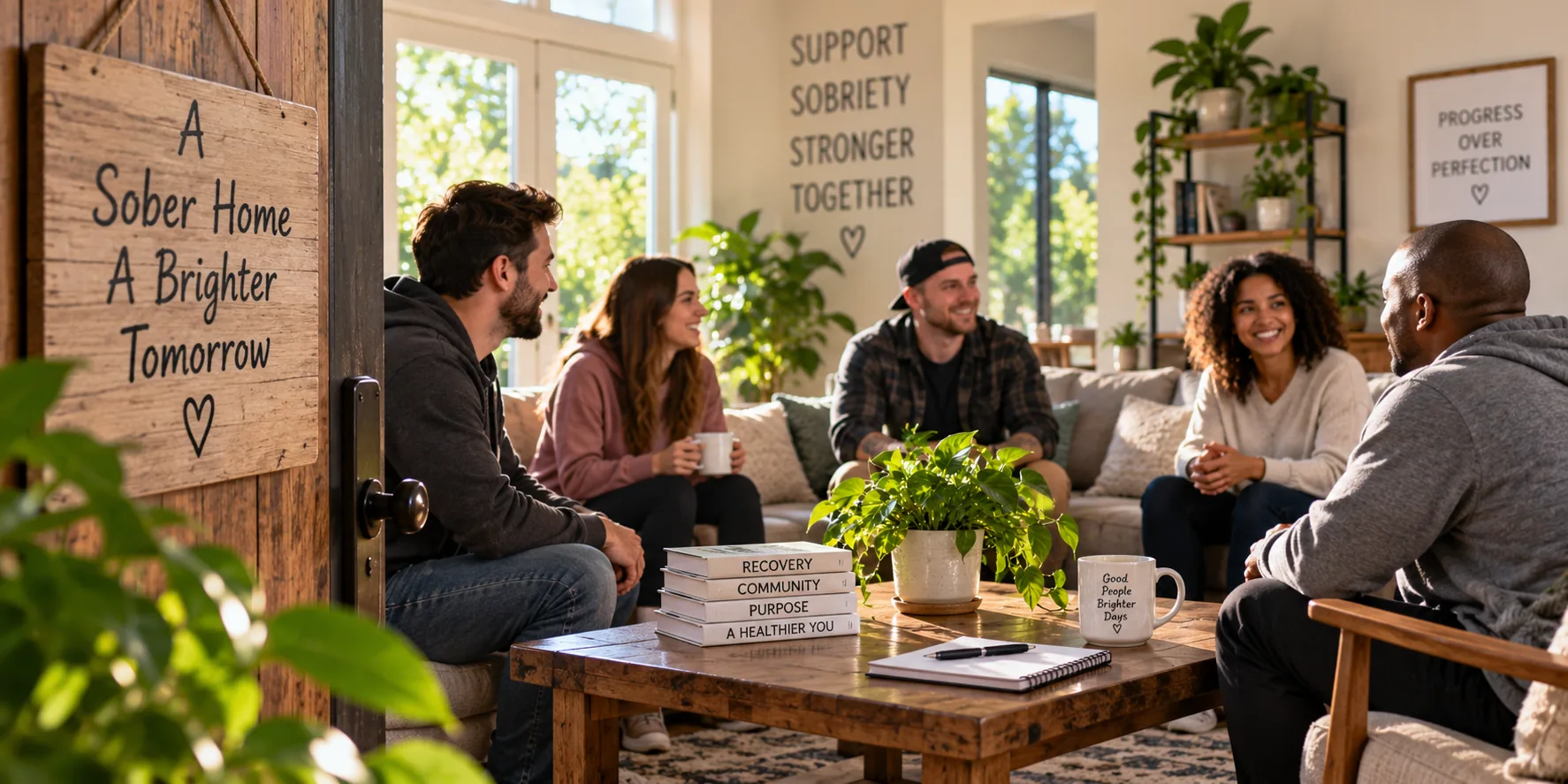


Sober living and recovery can provide a bridge between addiction treatment and fully independent life. Leaving rehab can be exciting, but it can also be overwhelming. Suddenly, you may have to manage work, money, relationships, transportation, cravings, and everyday responsibilities without the structure that treatment provided.
A supportive living environment can make that transition easier.
Sober living homes are designed to provide a substance-free place where people can continue building healthy routines while becoming more independent. They are not the same as inpatient treatment, and they are not simply ordinary apartments.
For many people, sober living becomes one part of a larger addiction recovery journey.
The goal is not to stay protected forever.
It is to build the skills, stability, and confidence needed to create a life that supports long-term sobriety.
What Is Sober Living?
A sober living home is generally a residence where people agree to maintain a drug- and alcohol-free environment while working on recovery.
If you are new to the idea, understanding what a sober living home is can help you decide whether this type of housing fits your needs.
Sober homes can vary widely.
Some are highly structured.
Others provide more independence.
Residents may share bedrooms, kitchens, living areas, chores, and responsibilities with other people in recovery.
Learning how sober living works can make the transition feel less intimidating.
Unlike residential rehab, people living in sober housing usually participate in everyday life outside the home.
They may work.
Attend school.
Go to treatment appointments.
Participate in recovery meetings.
Spend time with family.
Sober living provides a home base while those routines develop.
What Rules Should You Expect in a Sober Living Home?
Most sober homes have rules designed to protect the recovery environment.
Common expectations may include:
- No drugs or alcohol
- Curfews
- Household chores
- Respectful behavior
- Drug or alcohol testing
- Participation in recovery activities
- Employment or school expectations
- Limits on overnight guests
If you are considering a home, review common sober living house rules before moving in.
Rules may initially feel restrictive after leaving treatment.
But structure can be useful.
Addiction often creates chaos.
Sleep becomes irregular.
Responsibilities are ignored.
Relationships become unpredictable.
Sober living can help replace that instability with repetition and accountability.
For someone recovering from crack addiction and compulsive cocaine use, removing access to drug-using environments and establishing predictable routines may be especially important when old people, places, and behaviors are strongly connected with stimulant use.
The purpose of structure is not punishment.
It is stability.
How Long Should You Stay and What Does It Cost?
There is no single correct length of time for sober living.
Some people may need a shorter transition.
Others benefit from remaining in supportive housing for several months or longer.
Our guide on how long to stay in sober living explores factors such as recovery stability, employment, finances, support systems, and readiness for independent living.
Cost also varies.
Location, amenities, staffing, room arrangements, and the amount of structure can all affect price.
Before committing, research how much sober living costs and ask exactly what is included.
Do not choose a home based only on price.
A cheap residence that ignores safety or recovery standards may ultimately cost much more if it exposes you to substances or instability.
You should also understand the difference between sober living and a halfway house, since these terms are sometimes used interchangeably even though housing models and requirements can differ.
Can You Work and Build a Normal Life in Sober Living?
In many sober homes, residents are encouraged or expected to work, attend school, volunteer, or participate in another productive activity.
That is part of the transition back to independence.
If employment is important to you, learn more about working while living in a sober house.
A job can provide:
Income.
Routine.
Responsibility.
Confidence.
A reason to wake up at a consistent time.
Sober living should gradually help you practice ordinary life.
You learn to manage a schedule.
Pay expenses.
Cook.
Clean.
Handle conflict.
Attend appointments.
Balance work with recovery.
That is one major difference when comparing sober living versus rehab.
Rehab is treatment.
Sober living is typically a supportive living environment where recovery skills can be practiced in everyday life.
What Happens if Someone Relapses?
Relapse is serious.
It can also happen.
Different sober homes have different policies.
Some may require the resident to leave immediately.
Others may help connect the person with treatment or a higher level of care.
Before moving in, understand what happens after a relapse in sober living.
Never assume the rules.
Ask.
If cravings begin increasing, do not wait until substance use occurs.
The broader addiction relapse process can begin with changes in emotions, thinking, relationships, routines, and recovery participation before physical substance use happens.
Speak up early.
Tell someone you trust.
Reconnect with treatment.
Increase recovery support.
Relapse should be treated as a serious warning that the recovery plan may need to change—not as proof that recovery is impossible.
How to Choose a Sober Living Home That Supports Recovery
Not every sober home is equally safe or well managed.
Before choosing one, learn how to find a good sober living home.
Ask about:
Rules.
Testing policies.
Staffing.
Fees.
Refund policies.
Curfews.
Transportation.
Employment expectations.
Medication policies.
Visitors.
Relapse procedures.
Also learn the sober living red flags you should never ignore.
Be cautious of homes with unclear fees, unsafe conditions, obvious substance use, no meaningful rules, or promises that sound unrealistic.
You may also be deciding between sober housing and returning to family. Comparing sober living versus going home after rehab can help you think about safety, support, triggers, family conflict, and independence.
For some people, going home works.
For others, returning to the same environment where substance use and addiction were strongest can make early recovery much harder.
If stable housing is not currently available, homeless shelter and emergency housing resources may provide a temporary path toward safety while longer-term options are explored.
Sober living and recovery are ultimately about creating enough stability for healthier habits to become normal.
You may not need sober housing forever.
That is the point.
Use the structure.
Build routines.
Work.
Save money.
Strengthen relationships.
Learn how to handle stress without substances.
Then move toward independence when you are genuinely ready.
A sober living home cannot create recovery for you.
But the right environment can give recovery a safer place to grow.


