



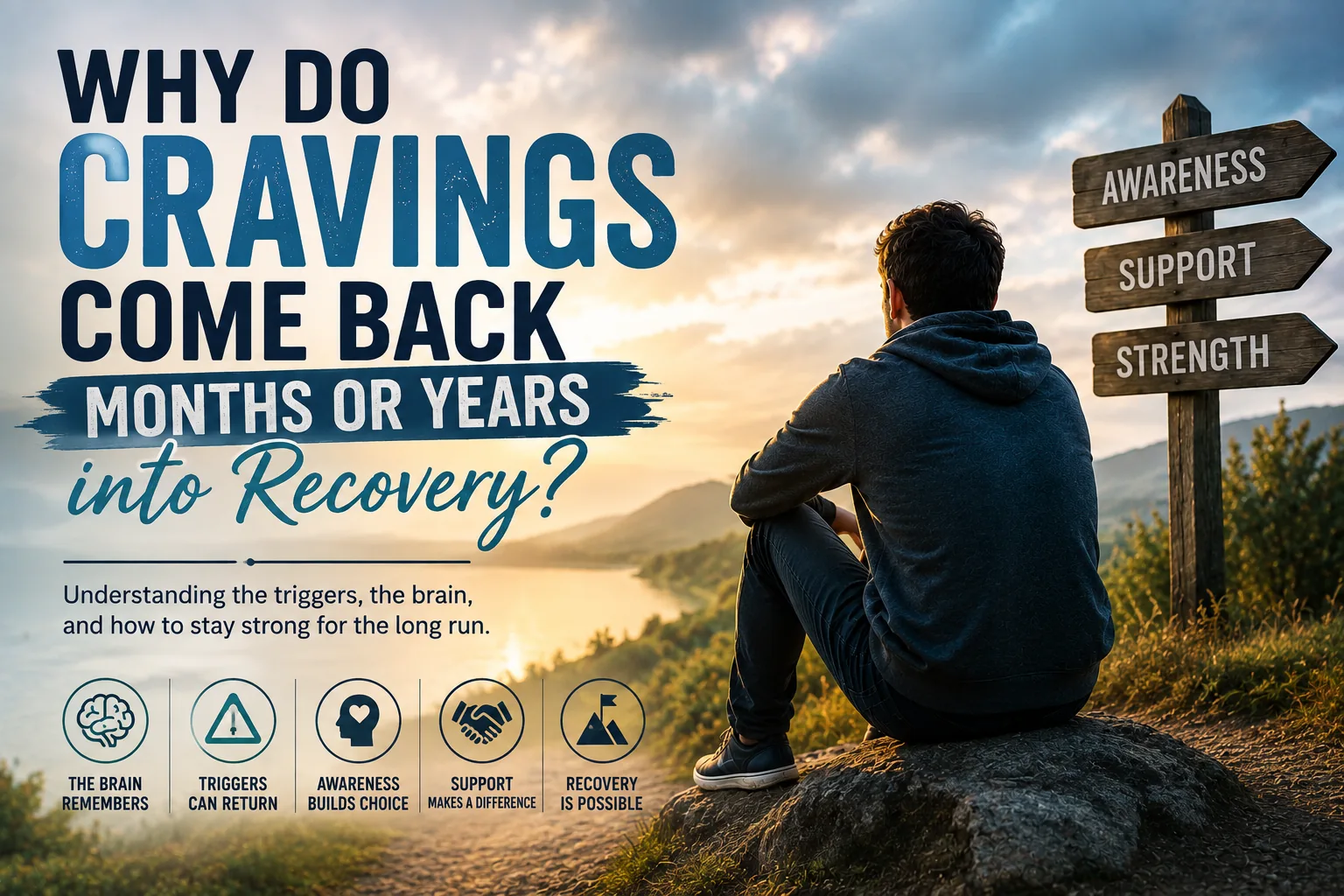


Why do cravings come back months or years into recovery? It can be unsettling to have a sudden urge to drink or use drugs after a long period of sobriety. You may have gone months without thinking seriously about substances. Maybe you have rebuilt relationships, developed healthy routines, and started feeling secure in recovery.
Then something happens.
A song plays.
You drive through an old neighborhood.
Someone orders your former favorite drink.
You experience a stressful week.
Suddenly, the thought of using feels surprisingly close.
This does not automatically mean your recovery is failing.
Repeated substance use can create powerful connections between drugs or alcohol and memories, emotions, people, places, and experiences. Those associations may become quieter with time, but some can remain for years.
A craving is a signal.
It is not a command.
Why Can Cravings Return After a Long Time?
Addiction involves learning.
The brain remembers what once produced pleasure, relief, energy, confidence, or escape.
During addiction, the addicted brain may repeatedly connect certain experiences with substance use.
Friday night becomes associated with drinking.
Stress becomes associated with pills.
A particular friend becomes associated with cocaine.
Payday becomes associated with buying drugs.
Those connections can become deeply learned.
Even after years of sobriety, encountering an old cue can activate a memory.
This can create a sudden craving that seems to appear from nowhere.
Our broader guide to cravings in addiction recovery explains how these urges fit into the recovery process.
The important thing is not whether a craving ever appears again.
What matters is what you do when it appears.
Old Triggers Can Become Powerful Again
A trigger is anything that increases thoughts or urges related to substance use.
Some triggers are obvious.
Seeing someone you used with.
Walking into a familiar bar.
Returning to a neighborhood where you bought drugs.
Others are emotional.
Anger.
Loneliness.
Grief.
Stress.
Celebration.
Even happiness can trigger memories if substances were once part of every celebration.
Learning how to deal with triggers in addiction recovery can help you identify these patterns before they become dangerous.
Sometimes a trigger has not appeared for years.
You may believe it no longer matters.
Then you experience it again and are surprised by how strongly your brain reacts.
That does not erase your progress.
It simply means you discovered a trigger that still deserves attention.
Stress Can Wake Up Old Cravings
Long-term recovery does not protect you from difficult life events.
People lose jobs.
Relationships end.
Parents die.
Money gets tight.
Health problems happen.
Children struggle.
Stress can become especially dangerous when several problems occur at once.
If substances were once your fastest way to escape emotional pain, intense stress may reactivate thoughts about using.
That is why learning how to stay sober during stressful times remains important even years into recovery.
Sometimes you need more recovery support during difficult periods than you did six months earlier.
That is not weakness.
Recovery needs can change.
If life becomes overwhelming, knowing how to protect your recovery when life gets difficult can help you increase support before a craving becomes a crisis.
A Sudden Craving Does Not Mean You Want Your Old Life Back
One of the most dangerous interpretations of a craving is:
“If I still want this, maybe I never really recovered.”
That conclusion can create unnecessary fear and shame.
A craving can simply be an old learned response.
You might see a drink and briefly remember how alcohol felt.
You might smell something connected with your past and think about drugs.
The thought itself does not determine your behavior.
Understanding how long drug cravings can last after quitting can help put occasional long-term urges into perspective.
Recovery is not necessarily reaching a point where your brain forgets that substances ever existed.
It is reaching a point where those thoughts have less control over your decisions.
You can think:
“I remember that.”
without deciding:
“I need that.”
That difference is enormous.
What Should You Do When an Old Craving Suddenly Returns?
Treat the craving seriously without panicking.
First, identify what happened.
Where are you?
Who are you with?
What were you thinking about?
Are you stressed?
Hungry?
Angry?
Lonely?
Tired?
Did something remind you of using?
Then take action.
Change your environment.
Call someone you trust.
Attend a recovery meeting.
Exercise.
Eat.
Rest.
Talk about what happened.
Avoid isolating yourself and repeatedly thinking about the substance.
If the urge feels especially strong, follow a clear plan for what to do when you suddenly want to use again.
You can also review practical strategies for handling drug or alcohol cravings without using.
Do not wait until you have made plans to use before asking for help.
Early action is easier than trying to stop a relapse once several decisions have already been made.
Long-Term Recovery Still Requires Attention
A craving months or years into sobriety does not automatically mean a relapse is coming.
But it deserves attention.
Watch for thoughts such as:
“Maybe I can handle it now.”
“I’ve been sober long enough.”
“One night won’t erase everything.”
“Maybe I was never really addicted.”
These thoughts can slowly change how you view your past.
That is when an occasional craving can become more dangerous.
Reconnect with the reasons you stopped.
Think about what addiction actually cost you.
Look at what recovery has given you.
The sobriety timeline continues long after the first year. Recovery changes over time, but protecting it remains important.
You may need less support during some seasons and more during others.
That is normal.
The goal is not to prove that you never need help again.
The goal is to protect the life you worked so hard to build.
Cravings can return months or years into recovery because the brain remembers old rewards, triggers, and learned associations. Their return does not erase your progress. What matters is recognizing the craving, understanding what triggered it, and choosing recovery again.


