



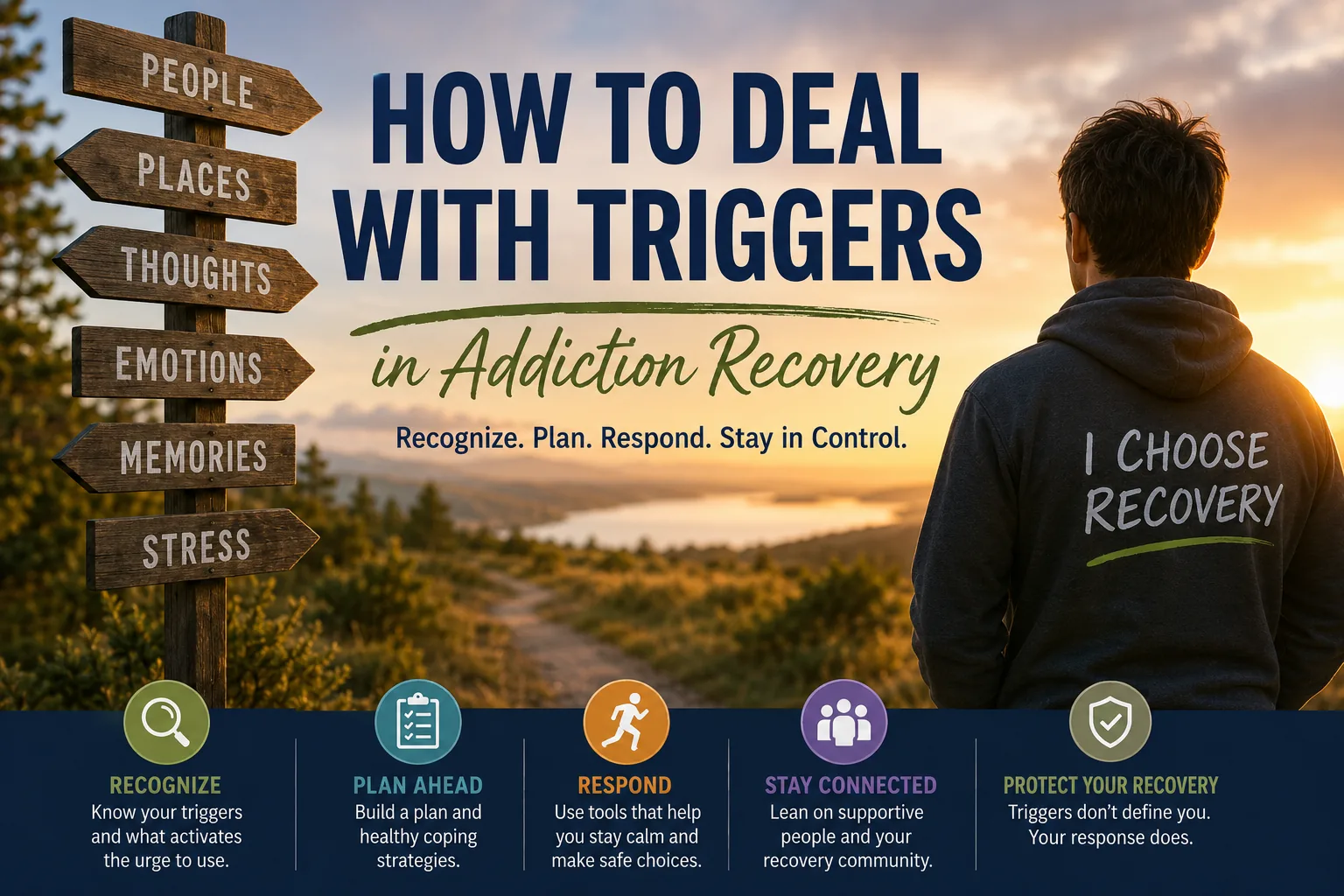


Learning how to deal with triggers in addiction recovery is one of the most important parts of staying sober. A trigger can be a person, place, emotion, memory, smell, song, situation, or even a certain time of day that suddenly makes you think about drinking or using drugs.
Sometimes the connection is obvious.
You walk past an old bar.
You see someone you used with.
You have an argument.
Other triggers are harder to recognize.
You feel restless on Friday night.
You get paid.
A familiar song starts playing.
Suddenly, you want to use.
Triggers are common in recovery because repeated substance use can teach the brain to connect drugs or alcohol with relief, pleasure, excitement, people, places, and routines.
The goal is not to eliminate every trigger.
That may be impossible.
The goal is to recognize what is happening and choose what you do next.
What Is a Trigger in Addiction Recovery?
A trigger is anything that increases thoughts, cravings, or urges related to past substance use.
Triggers can be external.
Examples include:
- Bars
- Parties
- Old neighborhoods
- People you used with
- Seeing drugs or alcohol
- Certain music
- Paydays
- Holidays
Triggers can also be internal.
Stress.
Anger.
Loneliness.
Boredom.
Fear.
Grief.
Exhaustion.
The addicted brain can form strong learned associations between these experiences and substance use.
That means your brain may respond to a trigger before you consciously understand what is happening.
You suddenly think about drinking.
Then you realize you are driving past the restaurant where you used to meet friends every weekend.
Recognizing the connection gives you more control over your response.
Learn Your Personal Triggers
Not everyone has the same triggers.
One person may struggle around alcohol.
Another may be completely comfortable at a restaurant but have strong cravings after arguments.
Pay attention to what happens before an urge appears.
Ask yourself:
Where was I?
Who was I with?
How was I feeling?
What was happening immediately before the craving?
Writing these situations down can help reveal patterns.
Maybe stress at work repeatedly makes you want to drink.
Maybe loneliness makes you think about calling people you used drugs with.
Maybe celebrations make you romanticize your old life.
Understanding drug and alcohol cravings in recovery can help you see how triggers and cravings work together.
A trigger is often the spark.
The craving is the reaction.
Recognizing the spark earlier can make the reaction easier to manage.
Have a Plan for What You Will Do
Do not wait until you are standing in front of a trigger to decide how you will respond.
Create a plan beforehand.
If you see someone you used with, what will you do?
If you become overwhelmed after work, who will you call?
If everyone starts drinking at a party, how will you leave?
If a craving appears, what healthy activity can you do instead?
Having a plan reduces the number of decisions you have to make during a vulnerable moment.
Strategies for handling drug or alcohol cravings without using can help you build that plan.
You may decide to:
Call someone supportive.
Take a walk.
Exercise.
Attend a meeting.
Eat.
Change locations.
Go home.
Talk with someone from treatment.
Sometimes the smartest response to a trigger is simply leaving.
You do not have to prove that you can tolerate every situation.
Know What to Do When a Trigger Suddenly Hits
Triggers are not always predictable.
You may be having a normal day when something brings back a powerful memory.
Suddenly you want to use.
Do not panic.
A sudden urge does not erase your recovery.
If the craving becomes strong, follow a clear plan for what to do when you suddenly want to use again.
First, create distance from the trigger.
Move away from the alcohol.
Leave the location.
Stop talking with the person.
Change what you are doing.
Then reach out.
Tell someone:
“Something triggered me and I’m having a strong craving.”
Cravings often feel more powerful when they remain secret.
Remember that cravings can change over time. Learning how long drug cravings may last after quitting can help you remember that an intense urge does not necessarily last forever.
Even old triggers can return unexpectedly. Understanding why cravings can come back months or years into recovery can prevent a surprise craving from making you think you have lost all your progress.
Stress and Social Situations Can Create Powerful Triggers
Some triggers become stronger when several risk factors happen at once.
Imagine you are exhausted after a difficult week.
Then you attend a party.
Everyone is drinking.
Someone starts talking about old memories.
Suddenly, a situation that normally would not bother you feels dangerous.
That is why learning how to stay sober during stressful times matters.
Your ability to manage triggers can change depending on your emotional and physical condition.
Social events need planning too.
If alcohol is a major trigger, strategies for staying sober when everyone around you drinks can help you establish boundaries.
You can also prepare for staying sober at parties and social events by having transportation, a nonalcoholic drink, supportive contacts, and an exit plan.
Holidays can combine several triggers at once, including alcohol, family conflict, grief, and disrupted routines. Planning how to stay sober during the holidays can reduce unnecessary risk.
Triggers Do Not Have to Become Relapse
Experiencing a trigger does not mean you are about to relapse.
What matters is how you respond.
A trigger may create:
“I want to use.”
That thought becomes more dangerous when it changes into:
“Maybe I could use once.”
Then:
“I know where I can get some.”
Then:
“I’m going.”
The earlier you interrupt that process, the easier it may be to protect your sobriety.
Learning how to protect your recovery when life gets difficult can help you recognize when you need more support instead of less.
The sobriety timeline is different for everyone. Triggers that feel overwhelming early in recovery may eventually lose much of their power.
But recovery is not about proving triggers no longer exist.
It is about recognizing them before they control your behavior.
Every time you encounter a trigger and choose a healthier response, you build another experience your brain can learn from.
The bar is still there.
The stressful day still happened.
The memory still exists.
But you responded differently.
That is progress.
Learning how to deal with triggers in addiction recovery means recognizing what activates the urge to use, creating a plan before cravings become overwhelming, and remembering that being triggered does not determine what you do next.


