



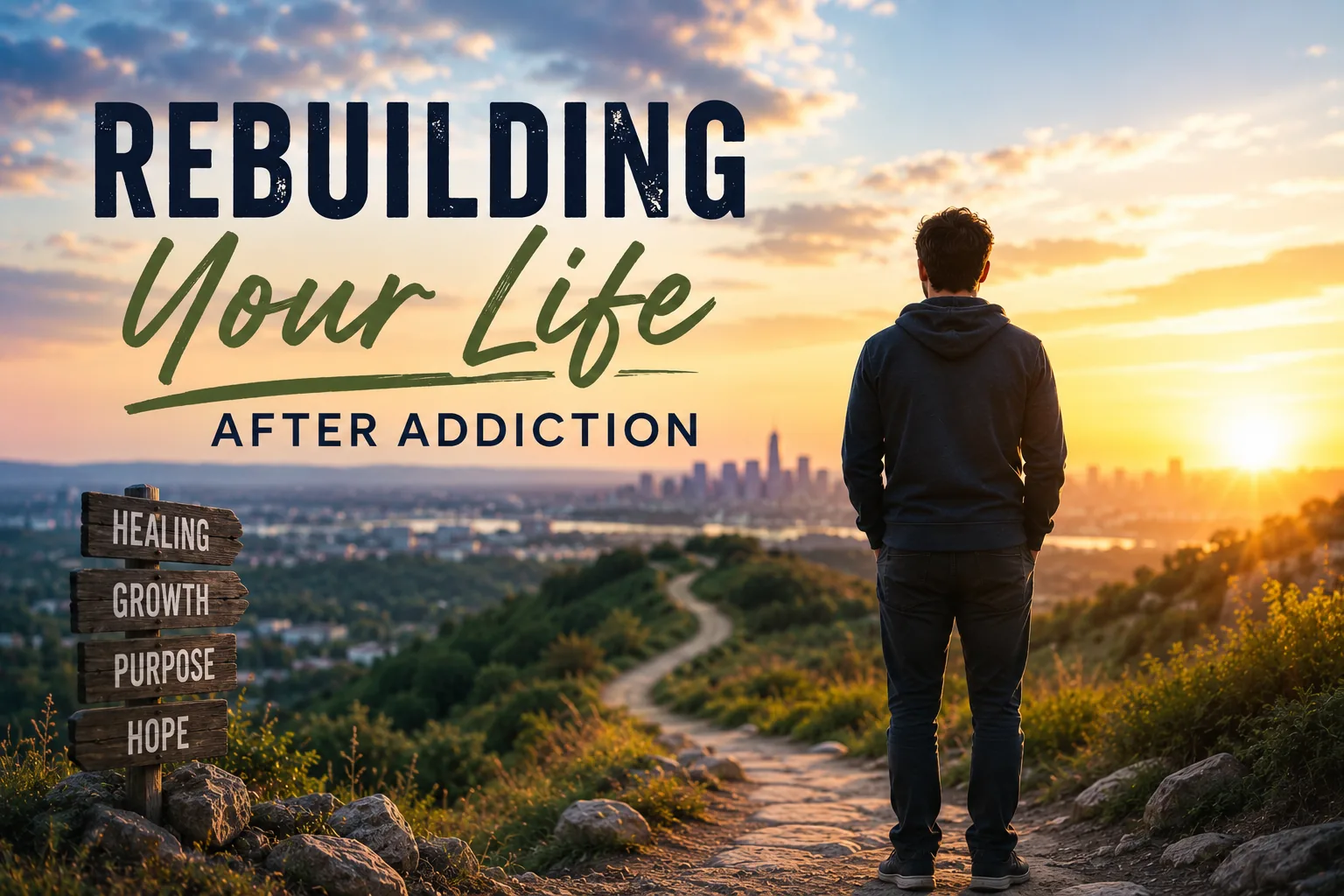


Learning how to rebuild your life after addiction can feel almost as overwhelming as getting sober in the first place. Once the drugs or alcohol are gone, many people are left facing damaged relationships, financial problems, health concerns, lost time, broken trust, and questions about what comes next.
That can be frightening.
But recovery is not only about repairing what addiction damaged. It is also about creating a life that may be healthier, more stable, and more meaningful than the one you had before.
You do not have to fix everything at once.
In fact, trying to rebuild your entire life overnight can create unnecessary pressure. Recovery usually happens through small decisions repeated over time.
Wake up. Stay sober. Keep an appointment. Answer the phone. Tell the truth. Go to work. Ask for help.
Those ordinary choices can eventually create an extraordinary change.
Start With Stability in Early Recovery
The first goal after addiction is not to become perfect.
It is to become stable.
During early recovery, your brain and body may still be adjusting to life without drugs or alcohol. Sleep can be irregular. Emotions may feel stronger. Cravings may appear unexpectedly. Anxiety, boredom, guilt, or loneliness can make ordinary life feel difficult.
This is why structure matters.
A simple recovery routine might include:
- Waking up and going to bed at consistent times
- Attending treatment or recovery meetings
- Eating regular meals
- Exercising
- Taking prescribed medications correctly
- Checking in with supportive people
- Avoiding high-risk people and places
- Making time for rest
It may not sound exciting, but stability creates the foundation for everything that comes next.
You cannot rebuild your finances, relationships, career, and future if your recovery is constantly in danger.
Protecting your sobriety comes first.
Rebuilding Relationships After Addiction
Addiction can damage trust.
Family members may have heard promises before. Friends may have been hurt. Partners may still feel angry, frightened, or suspicious even after substance use stops.
That can be painful, especially when you are trying hard to change.
The difficult truth is that trust usually cannot be demanded.
It has to be rebuilt.
Instead of repeatedly saying, “You can trust me now,” show people through consistent behavior.
Keep your promises.
Arrive when you say you will.
Tell the truth even when it is uncomfortable.
Respect boundaries.
Take responsibility without making excuses.
Some relationships may heal quickly. Others may take months or years. A few may never return to what they were before.
Recovery sometimes means accepting that you can control your behavior but not someone else’s forgiveness.
Family counseling, addiction treatment, recovery groups, and healthy communication can all help when people are ready to rebuild relationships.
Repair Your Finances, Work, and Daily Responsibilities
Financial damage is common during addiction.
There may be unpaid bills, debt, damaged credit, job loss, legal expenses, or months of missed responsibilities.
Looking at everything at once can feel impossible.
Break it down.
Start with basic needs such as housing, food, transportation, healthcare, and employment. Make a list of debts and overdue responsibilities. Then deal with them one at a time.
Recovery is a great time to learn skills that may have been ignored during active addiction.
Create a budget.
Open your mail.
Pay bills on time.
Save a small amount of money when possible.
Show up for work consistently.
If you lost a job or career because of addiction, remember that your past does not automatically determine your future.
Many people in recovery return to school, learn new skills, rebuild careers, start businesses, or discover completely new directions.
Progress may be slow at first.
Slow progress is still progress.
Build a Life You Do Not Want to Escape From
One of the most important parts of life after addiction is creating something worth protecting.
During active addiction, substance use can become the center of daily life. When it disappears, a large empty space may remain.
That space needs to be filled.
This is where hobbies, relationships, exercise, spirituality, education, volunteering, travel, creativity, and meaningful work can become important.
Ask yourself:
What did I enjoy before addiction?
What have I always wanted to try?
What kind of person do I want to become?
You may not know the answers immediately.
That is okay.
Recovery gives you the opportunity to discover them.
Some people find purpose by helping others in recovery. Others reconnect with children or family. Some become passionate about fitness, art, education, faith, or their careers.
The goal is not to create a perfect life.
It is to create one that you no longer constantly feel the need to escape.
Protect the Recovery You Have Built
As life improves, it can become easy to believe addiction is completely behind you.
This is when continued recovery support remains important.
Stress, relationship problems, grief, loneliness, work pressure, or major changes can still trigger cravings years into recovery.
A strong relapse prevention plan can help you recognize problems before they become emergencies.
Know your warning signs.
Stay connected to supportive people.
Ask for help early.
Continue caring for your physical and mental health.
If you begin isolating, skipping treatment, romanticizing past substance use, or returning to old behaviors, pay attention.
Recovery often becomes stronger when people respond to warning signs early instead of waiting for a crisis.
You Are Building Something New
Rebuilding your life after addiction is not about returning to exactly who you were before.
You have changed.
Recovery gives you the opportunity to decide what happens next.
You may have to repair damage. You may have to apologize. You may have to start over in places you never expected.
But starting over does not mean starting from nothing.
You bring experience, lessons, strength, and the knowledge of what addiction can take away.
At first, recovery may simply mean making it through today without using.
Then it becomes keeping a job.
Repairing a relationship.
Saving money.
Sleeping peacefully.
Laughing again.
Making plans for next year.
Eventually, you may realize something important:
You are no longer spending every day trying to survive addiction.
You are building a life.
And that is what recovery is really about.


