



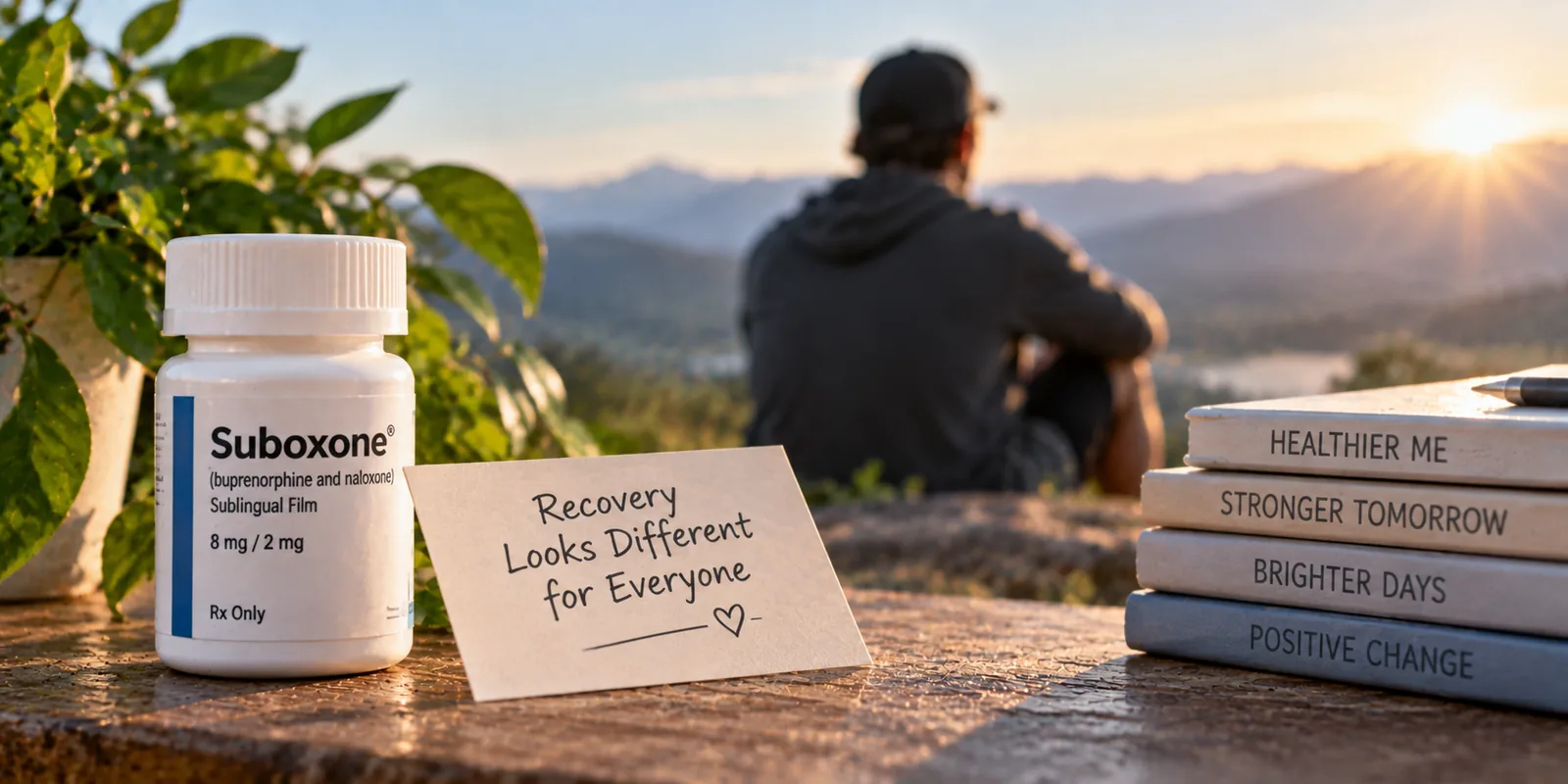


Is taking Suboxone considered sober? In many modern addiction treatment settings, yes. A person who takes Suboxone exactly as prescribed for opioid use disorder can absolutely be considered in recovery.
But not everyone uses the word “sober” the same way.
Some abstinence-based recovery communities define sobriety as living without any mind-altering or opioid-based medication. Others distinguish between compulsive drug use and taking a prescribed medication that helps control cravings, withdrawal, and opioid addiction.
That difference has created unnecessary shame for some people receiving medication for opioid use disorder.
Suboxone is not simply another way to “get high.” It is a legitimate medication used to treat opioid dependence and addiction.
Learning how Suboxone treatment for opioid addiction works can make the debate much easier to understand.
What Is Suboxone?
Suboxone contains buprenorphine and naloxone.
Buprenorphine is a partial opioid agonist. It interacts with opioid receptors in the brain but does not act in exactly the same way as full opioid agonists such as heroin or fentanyl.
When appropriately prescribed, buprenorphine can reduce opioid cravings and withdrawal symptoms while helping someone stabilize their life.
That stability can be enormous.
Instead of spending each day searching for opioids, avoiding withdrawal, worrying about overdose, or cycling between intoxication and sickness, someone may finally have the opportunity to work, reconnect with family, attend treatment, and rebuild their health.
That is recovery.
The fact that medication is involved does not erase those changes.
Why Some People Say Suboxone Isn’t “Really Sober”
The disagreement usually comes down to how sobriety is defined.
Traditional abstinence-based recovery programs historically placed a strong emphasis on being completely free of drugs and alcohol.
Because buprenorphine acts on opioid receptors, some people believe anyone taking it cannot call themselves sober.
But this can confuse physical dependence on a medication with active addiction.
Those are not necessarily the same thing.
A person can become physically dependent on many prescribed medications. Physical dependence means the body has adapted to the medication and stopping suddenly may cause withdrawal.
Addiction involves a broader pattern of compulsive use despite harmful consequences.
Someone taking a stable dose of Suboxone under medical supervision is in a very different situation from someone compulsively using illicit opioids.
Similar debates happen over whether taking methadone is considered clean.
The words may differ.
The real question is whether treatment is helping the person move away from destructive opioid use.
Can You Take Medication and Still Be Sober?
Many people in recovery take prescription medications.
Someone may need antidepressants.
Another person may take medication for ADHD, anxiety, diabetes, epilepsy, chronic pain, or high blood pressure.
Using medically appropriate treatment does not automatically invalidate recovery.
Our guide to whether you can take prescription medication and still be sober explores this issue in greater detail.
The same principle can apply to Suboxone.
The important distinction is how the medication is being used.
Is it prescribed?
Is the person taking it as directed?
Is it reducing illicit opioid use?
Is treatment improving stability and functioning?
Is the person working toward healthier goals?
Those questions reveal much more about recovery than whether someone’s medication happens to interact with an opioid receptor.
Does Taking Suboxone Mean You’re Replacing One Addiction With Another?
This is one of the most common criticisms of medication-assisted recovery.
But the phrase “replacing one addiction with another” oversimplifies what treatment is designed to accomplish.
Someone actively addicted to fentanyl or heroin may spend much of their day dealing with cravings, withdrawal, finding drugs, using, recovering from use, and avoiding sickness.
Effective medication treatment can interrupt that cycle.
A person may still be physically dependent on buprenorphine, which is why Suboxone should not simply be stopped suddenly without discussing it with the prescribing clinician.
But physical dependence does not automatically equal uncontrolled addiction.
Treatment can give someone the stability needed to rebuild every other part of life.
That is why recovery should be measured by more than whether medication appears on someone’s prescription list.
How Long Can Someone Stay on Suboxone?
There is no universal deadline.
Some people use Suboxone for a shorter period and gradually taper with medical supervision.
Others remain on buprenorphine for years.
For some people, long-term maintenance may provide the stability that helps prevent a return to illicit opioids.
There should not be pressure to stop medication simply so someone else will approve of your recovery label.
Stopping too soon can be dangerous if it leads to renewed opioid use. After a period away from illicit opioids, tolerance may be lower, which can increase overdose danger if someone returns to fentanyl, heroin, or other opioids.
A medication decision should be made between the patient and qualified healthcare provider based on benefits, risks, stability, cravings, and individual treatment goals.
If thoughts of returning to opioid use begin increasing, pay attention to possible warning signs of relapse and seek support early.
Sobriety Is More Than a Word
Recovery communities sometimes spend too much energy deciding who is allowed to use certain labels.
Is someone sober?
Clean?
Recovering?
Recovered?
Our guide to sober vs. clean explains why these terms already mean different things to different people.
A person taking prescribed Suboxone may consider themselves completely sober.
Another may say, “I’m in medication-assisted recovery.”
Someone else may simply say, “I’m in recovery.”
The label is less important than the life behind it.
Are illicit opioids still controlling your day?
Are you reducing your overdose risk?
Are you rebuilding relationships?
Are you receiving appropriate medical care?
Are you becoming healthier and more stable?
Those are meaningful measures of progress.
For many people, Suboxone is not standing in the way of addiction recovery.
It is helping make recovery possible.
If medication is helping you stay away from dangerous opioids and rebuild your life, you should not let someone else’s definition of sobriety convince you that your progress does not count.


