



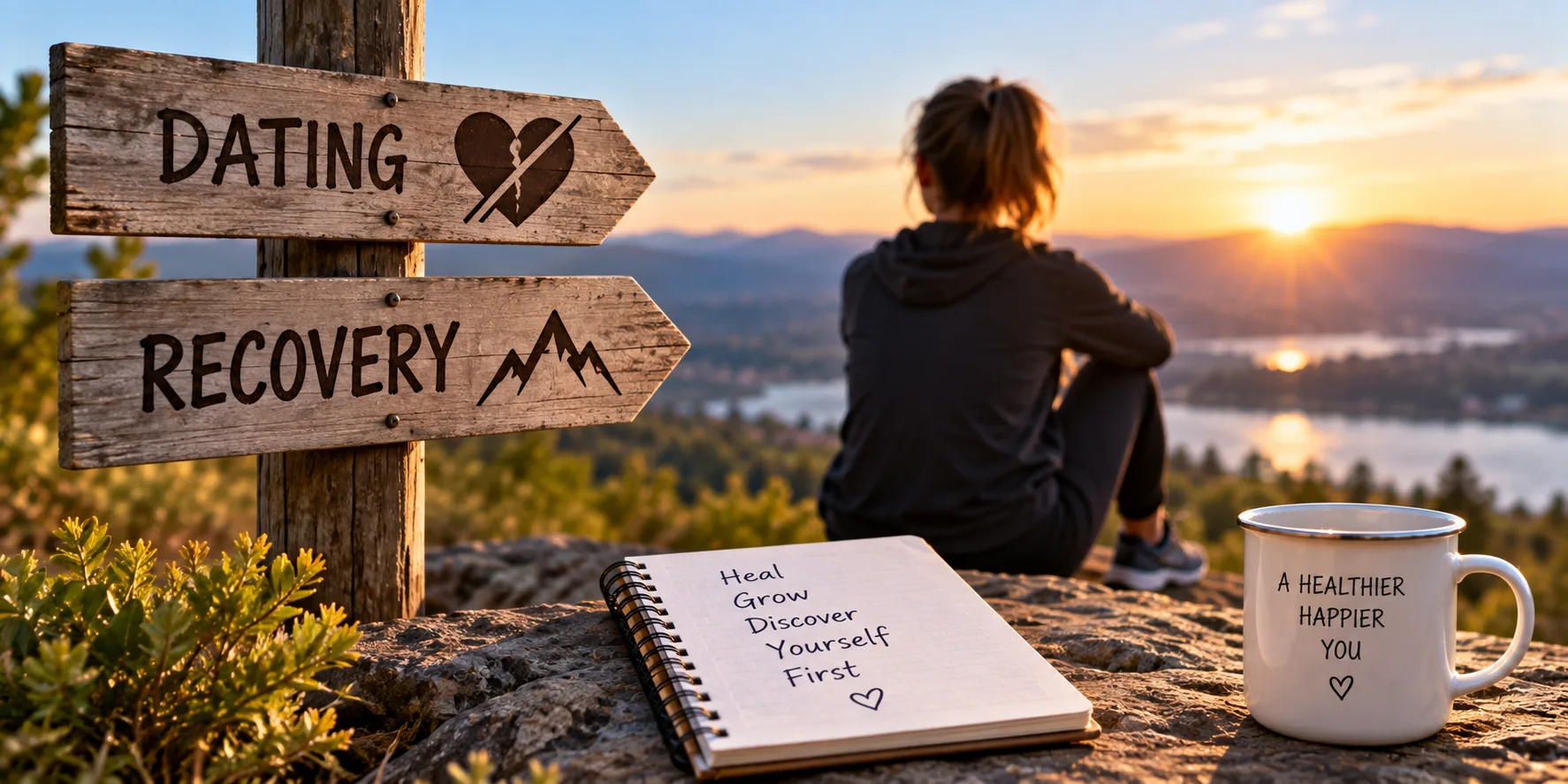


Why do people say not to date during your first year sober? The advice is common in many recovery communities because early sobriety can involve major emotional, physical, and lifestyle changes. Starting an intense romantic relationship during that period can sometimes distract from the work of building a stable foundation for recovery.
The “one-year rule” is not a medical law. There is no universal timeline that says everyone must remain single for exactly 365 days. Instead, the advice is meant to encourage people to focus on themselves before adding the emotional highs and lows that can come with dating.
If you are wondering whether you are ready, our guide to dating in early recovery and deciding how soon is too soon looks more closely at readiness rather than relying only on the calendar.
For some people, waiting makes sense.
For others, the bigger issue is whether recovery is stable enough to remain the priority.
Early Sobriety Can Be Emotionally Intense
Getting sober does not instantly make emotions easier.
In fact, you may begin experiencing feelings that drugs or alcohol helped you avoid for years.
Loneliness.
Fear.
Excitement.
Anger.
Insecurity.
Attraction.
Rejection.
Those emotions can feel extremely powerful during early recovery.
Understanding how the addicted brain changes during recovery can help explain why reward, stress, motivation, and emotional reactions may feel different after substance use stops.
A new relationship can add another layer of intensity.
The excitement of meeting someone new may feel incredible.
But what happens if they stop texting?
What happens after your first argument?
What happens if they reject you?
If relationship stress immediately causes strong cravings, dating may be adding more emotional pressure than your recovery can safely handle.
New Relationships Can Become a Replacement High
One concern about dating during the first year sober is that a relationship can become another way to escape uncomfortable feelings.
New romance can be exciting.
You may think about the person constantly.
You may stay up late talking.
You may feel an intense rush when they call.
That excitement is not automatically unhealthy.
But problems can develop when the relationship becomes your entire emotional support system.
You stop attending recovery activities.
You abandon routines.
You ignore friends.
You feel unable to function when the person is unavailable.
This can overlap with patterns discussed in codependency and addiction recovery.
Recovery should help you become more capable of handling life—not more dependent on one person to make life feel manageable.
A healthy relationship can support recovery.
It should not replace it.
You Are Still Learning Who You Are Sober
Relationships are easier to navigate when you have some understanding of your own needs, boundaries, and values.
Early sobriety may be the first time in years that you have had the opportunity to ask:
What do I actually enjoy?
What kind of people do I want around me?
What are my boundaries?
What do I want from a partner?
What behavior am I no longer willing to tolerate?
If addiction shaped your previous relationships, you may have to relearn what healthy connection looks like.
Dating someone who is also in addiction recovery can create a sense of shared understanding, but both people still need their own recovery foundation.
If you are dating someone who continues to drink, there may be another set of challenges. It can help to think carefully about what to do when your partner still drinks while you’re sober.
The issue is not whether every partner must live exactly like you.
The issue is whether the relationship supports or threatens the life you are building.
Breakups and Rejection Can Increase Stress
Dating does not always end happily.
Relationships can involve jealousy, arguments, disappointment, and heartbreak.
During stable recovery, those experiences can still hurt.
During fragile early sobriety, they may feel overwhelming.
That is one reason people caution against immediately entering a serious relationship.
If a relationship does end, understanding how to handle a breakup during addiction recovery can help you prepare to respond without returning to substances.
You need ways to handle pain besides getting high or drunk.
Call someone.
Attend a meeting.
Exercise.
Get outside.
Maintain your routine.
Talk honestly with people you trust.
If relationship problems begin causing cravings, isolation, or serious thoughts about using again, those changes may increase your risk of addiction relapse.
The goal is not to avoid every painful emotion.
It is to learn that you can survive painful emotions sober.
Healthy Relationships Require Boundaries and Trust
A good relationship involves more than attraction.
It requires honesty.
Boundaries.
Communication.
Independence.
Respect.
Trust.
Those things can take time to rebuild after addiction.
If you are already in a committed relationship or marriage, waiting a year to “date” may not even apply in the traditional sense. Your focus may instead be on rebuilding trust after addiction or figuring out whether a relationship can survive addiction.
Marriage may require even more intentional work. Our guide to rebuilding a marriage after addiction explores how consistent behavior, communication, and time can help couples move forward.
Physical closeness may also change after substance use ends. Sex and intimacy after getting sober can feel unfamiliar when alcohol or drugs were previously connected with confidence, dating, or sexual experiences.
Healthy relationships grow slowly.
You do not have to rush intimacy to prove you are recovering.
Focus on Recovery First, Then Let Relationships Add to Your Life
The real reason people advise waiting during the first year sober is simple:
Your recovery needs room to become strong.
That does not mean love is dangerous.
It means a relationship should eventually fit into a healthy life rather than become the foundation holding your entire life together.
Use early recovery to build routines.
Strengthen friendships.
Work on your health.
Address responsibilities.
Learn to handle emotions.
Develop independence.
Explore the broader recovery process and resources for building a sober life.
Then, when dating does happen, you are bringing a more stable version of yourself into the relationship.
There are also situations where the concern goes beyond dating. If a partner or loved one is actively using drugs or alcohol, refusing help, or putting themselves or others at risk, loved ones may need to learn how to stage an intervention for addiction rather than trying to manage the substance use through the relationship alone.
So, should you avoid dating during your entire first year sober? Not necessarily. The one-year guideline is better understood as a reminder not to rush. Ask whether you can protect your recovery when you are excited, rejected, lonely, angry, or heartbroken. Ask whether you can maintain boundaries and keep your recovery routines while caring about another person. When a relationship can add to a stable life rather than become the thing holding sobriety together, you may be in a much healthier position to date.


