



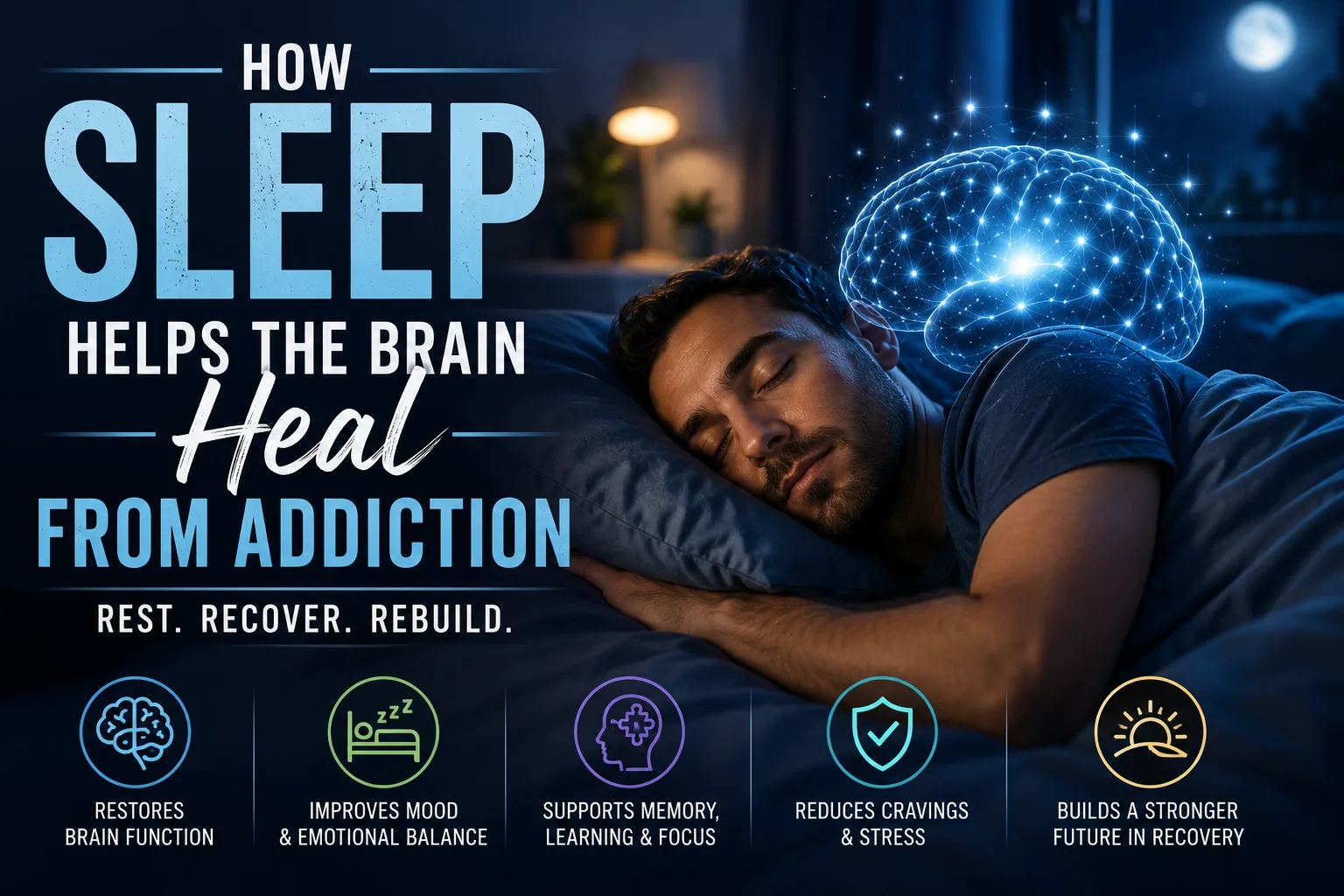


Sleep plays a major role in brain healing during addiction recovery. After months or years of drug or alcohol use, the brain may be dealing with disrupted reward systems, poor memory, emotional instability, stress, and changes in sleep itself. Getting sober removes the substance, but the brain still needs time to recover.
That is where sleep becomes especially important.
Good sleep supports memory, emotional regulation, decision-making, immune function, and overall brain health. It also gives the brain a chance to recover from the stress of addiction.
Understanding the addicted brain and what happens during recovery can help explain why something as basic as sleep becomes so important after substance use stops. Addiction affects interconnected systems involving reward, stress, memory, motivation, and behavior. Recovery asks those systems to adapt again.
Unfortunately, sleep is often one of the first things to become disrupted in early recovery.
Someone may be exhausted but unable to fall asleep.
Another person may sleep for ten hours and still feel tired.
Others experience vivid dreams, frequent waking, or restless nights.
This can be frustrating, but sleep often improves gradually as recovery continues.
Why Addiction Can Disrupt Sleep
Drugs and alcohol can interfere with the brain systems that control sleep and wakefulness.
Different substances affect sleep differently.
Alcohol may make someone feel sleepy at first, but it can disrupt normal sleep patterns later in the night.
Stimulants such as methamphetamine or cocaine can keep the brain highly activated and make sleep difficult.
Opioids can affect breathing, sleep quality, and normal sleep cycles.
Sedatives may cause drowsiness, but long-term use can change the way the brain regulates sleep naturally.
During active addiction, sleep may become completely irregular.
Someone may stay awake for long periods while using and then crash.
Others may pass out rather than experience healthy sleep.
Over time, the brain can lose a stable sleep rhythm.
These sleep disruptions are one part of the larger picture of how addiction changes the brain and what happens in recovery.
When substance use stops, the brain has to relearn how to sleep without chemical interference.
Sleep Helps the Brain Repair and Reorganize
Sleep is not simply a period when the brain shuts down.
The brain remains active during sleep.
It processes information.
It organizes memories.
It regulates emotional responses.
It helps maintain important brain systems.
During recovery, these functions can be especially valuable.
The brain has spent time adapting to repeated substance use. Once drugs or alcohol are removed, it begins adapting again.
Healthy sleep gives the brain a better environment for that process.
Someone who sleeps consistently may notice gradual improvements in:
- Concentration
- Memory
- Mood
- Energy
- Decision-making
- Stress tolerance
- Emotional control
These changes do not happen because sleep is a miracle cure.
Sleep simply gives the brain one of the basic conditions it needs to function well.
Recovery still takes time. Our guide to how long the brain takes to heal from addiction explains why some functions may improve relatively early while other changes can continue for months or years.
Sleep Supports Memory During Recovery
Memory problems are common in early recovery.
Someone may forget appointments.
They may struggle to remember conversations.
Reading can feel difficult.
New information may not stick.
Poor sleep can make all of these problems worse.
Sleep helps the brain process and organize memories.
When sleep is consistently disrupted, attention also suffers.
That matters because you cannot remember information well if you never fully focused on it in the first place.
People struggling with forgetfulness can learn more about memory problems during addiction recovery and why sleep, attention, stress, and memory are so closely connected.
Better sleep can therefore support both memory and concentration.
As sleep improves, someone may begin noticing that their thinking feels clearer.
They remember more.
They follow conversations more easily.
They feel less mentally foggy.
These improvements can be an important part of brain recovery.
Sleep Can Help With Brain Fog
Feeling mentally slow is another common complaint after quitting drugs or alcohol.
Someone may lose their train of thought.
Simple decisions become exhausting.
Reading takes more concentration.
Work may suddenly feel much harder.
Brain fog after quitting drugs or alcohol can have many possible contributors, including withdrawal, stress, anxiety, depression, nutritional problems, and disrupted sleep.
One bad night can make concentration difficult for almost anyone.
Several weeks of poor sleep while simultaneously dealing with withdrawal and major life changes can have an even greater effect.
Improving sleep may not solve every cognitive symptom, but it can remove one major obstacle to clearer thinking.
Sleep Helps Control Emotions
Early recovery can bring intense emotions.
Anxiety.
Anger.
Sadness.
Frustration.
Fear.
Loneliness.
One reason these emotions may feel even stronger is poor sleep.
Sleep deprivation can make it harder to regulate emotional reactions.
Small problems can feel enormous.
A disagreement may feel unbearable.
A stressful day may seem impossible to handle.
This matters because strong emotions can become relapse triggers.
Someone who is exhausted may be more likely to think:
“I can’t deal with this.”
That thought can quickly turn into:
“Using would make this go away.”
Protecting sleep may therefore support both brain health and relapse prevention.
Sleep, Dopamine and the Brain’s Reward System
Sleep does not work separately from the brain’s reward and motivation systems.
Addiction can change how strongly the brain responds to normal rewards. At the same time, sleep deprivation can make mood, energy, attention, and motivation worse.
That combination can make early recovery feel emotionally flat.
Understanding dopamine recovery after addiction helps explain why pleasure and motivation may need time to stabilize after repeated substance use.
Someone may sleep poorly and wake up exhausted.
They have no motivation to exercise.
Nothing sounds enjoyable.
Work seems overwhelming.
Then they begin thinking about how substances once made them feel.
This is one reason healthy sleep can support much more than physical rest.
It can make other recovery behaviors easier to practice.
Sleep and Cravings Are Connected
Cravings are not only about substances.
They can become stronger when someone is stressed, hungry, angry, lonely, or tired.
Exhaustion reduces patience.
It weakens decision-making.
It makes it harder to use coping skills.
Someone who has slept poorly for several nights may have less emotional energy to resist cravings.
This does not mean lack of sleep causes relapse.
But it can make recovery harder.
That is why many recovery programs emphasize basic routines.
Eat.
Sleep.
Exercise.
Stay connected.
Attend treatment.
Simple habits can become powerful protective factors.
Why Sleep Can Be Difficult in Early Recovery
One of the biggest frustrations is that people often understand sleep is important but cannot actually sleep.
That is common.
Withdrawal can disrupt sleep.
Anxiety can keep the mind racing.
Depression can change sleep patterns.
Some people experience vivid dreams after quitting drugs or alcohol.
Others wake frequently.
The body may also be adjusting to a completely different schedule.
For someone who used substances late at night or slept during the day, normal nighttime sleep may take time to return.
Low motivation can complicate the situation further. When someone is exhausted during the day, establishing routines may seem almost impossible. Understanding why motivation is low in early recovery can help explain why rebuilding basic habits sometimes takes persistence before they begin feeling natural.
The key is consistency.
Sleep often improves gradually rather than immediately.
Poor Sleep Can Make Sober Life Feel Less Rewarding
Some people are surprised by how emotionally flat early recovery can feel.
They expected sobriety to make them happier.
Instead, they feel exhausted and uninterested.
They may wonder why nothing feels good after getting sober.
Poor sleep can make this experience even more intense.
When you are exhausted, activities that normally require effort may seem pointless.
Exercise sounds miserable.
Socializing sounds exhausting.
Hobbies feel like work.
For some people, a reduced ability to experience pleasure becomes more pronounced. This is known as anhedonia, and understanding anhedonia in addiction recovery can help explain why healthy rewards may take time to feel meaningful again.
Sleep is not the only factor involved, but improving it can make the rest of recovery easier to engage with.
How to Improve Sleep During Addiction Recovery
There is no single trick that works for everyone, but healthy sleep habits can help.
Keep a consistent schedule. Try to wake up and go to bed at similar times each day.
Reduce caffeine later in the day. Too much caffeine can make an already sensitive nervous system more restless.
Exercise regularly. Physical activity can support both sleep and mood. There is also growing interest in how exercise can help the brain recover from addiction as part of a broader recovery plan.
Create a bedtime routine. Give your brain signals that the day is ending.
Reduce screen time before bed. Constant stimulation can make it harder to wind down.
Keep the bedroom comfortable. A quiet, dark environment can support better sleep.
Avoid replacing one substance with another. Using alcohol, sedatives, or other substances to force sleep can create new problems.
Talk with a healthcare professional if sleep problems continue. Persistent insomnia may need medical evaluation.
Healthy sleep works best as one part of a larger recovery lifestyle.
Nutrition matters.
Movement matters.
Treatment matters.
Connection matters.
Routine matters.
Do Not Expect Perfect Sleep Immediately
Recovery involves patience.
Someone may get sober and expect sleep to improve within days.
Sometimes it does.
Sometimes it takes weeks or months.
The brain is adjusting.
Stress levels are changing.
Daily routines are changing.
Emotions may be returning after years of being numbed.
It makes sense that sleep may take time to stabilize.
The goal is not perfect sleep every night.
The goal is gradual improvement.
This is also why asking whether the brain can fully heal after drug addiction cannot be answered according to a single timeline. Different brain functions can recover at different rates, and sleep itself may improve gradually alongside memory, mood, motivation, and concentration.
Sleep Problems Do Not Automatically Mean Permanent Brain Damage
Poor concentration, memory problems, emotional instability, and fatigue can make someone worry that addiction permanently damaged their brain.
That is not necessarily the case.
Sleep deprivation alone can make many of these symptoms significantly worse.
At the same time, certain complications of substance use can cause lasting neurological injury. Overdose-related oxygen deprivation, stroke, traumatic brain injury, and severe nutritional deficiencies are examples.
Understanding when addiction can cause permanent brain damage can help distinguish common recovery symptoms from situations where medical evaluation becomes particularly important.
Persistent confusion, severe memory loss, seizures, major personality changes, weakness, speech problems, or worsening neurological symptoms should not simply be blamed on poor sleep.
Seek medical care when symptoms are severe or concerning.
Better Sleep Can Make Recovery Feel Easier
One of the most noticeable turning points in recovery can be getting a truly restful night of sleep.
You wake up and realize your mind feels clearer.
You have more patience.
You can focus.
You feel less emotional.
Cravings may feel easier to manage.
You have more energy to exercise, work, attend treatment, and connect with other people.
Sleep alone does not heal addiction.
But it supports nearly every part of recovery.
The brain needs time to heal.
It also needs the right environment.
Every night of healthier sleep supports the routines you are trying to build during the day.
Those routines support relationships.
Treatment.
Exercise.
Work.
Emotional stability.
And continued sobriety.
Consistent sleep gives the recovering brain something incredibly valuable: time every night to reset, reorganize, and prepare for another sober day.


