



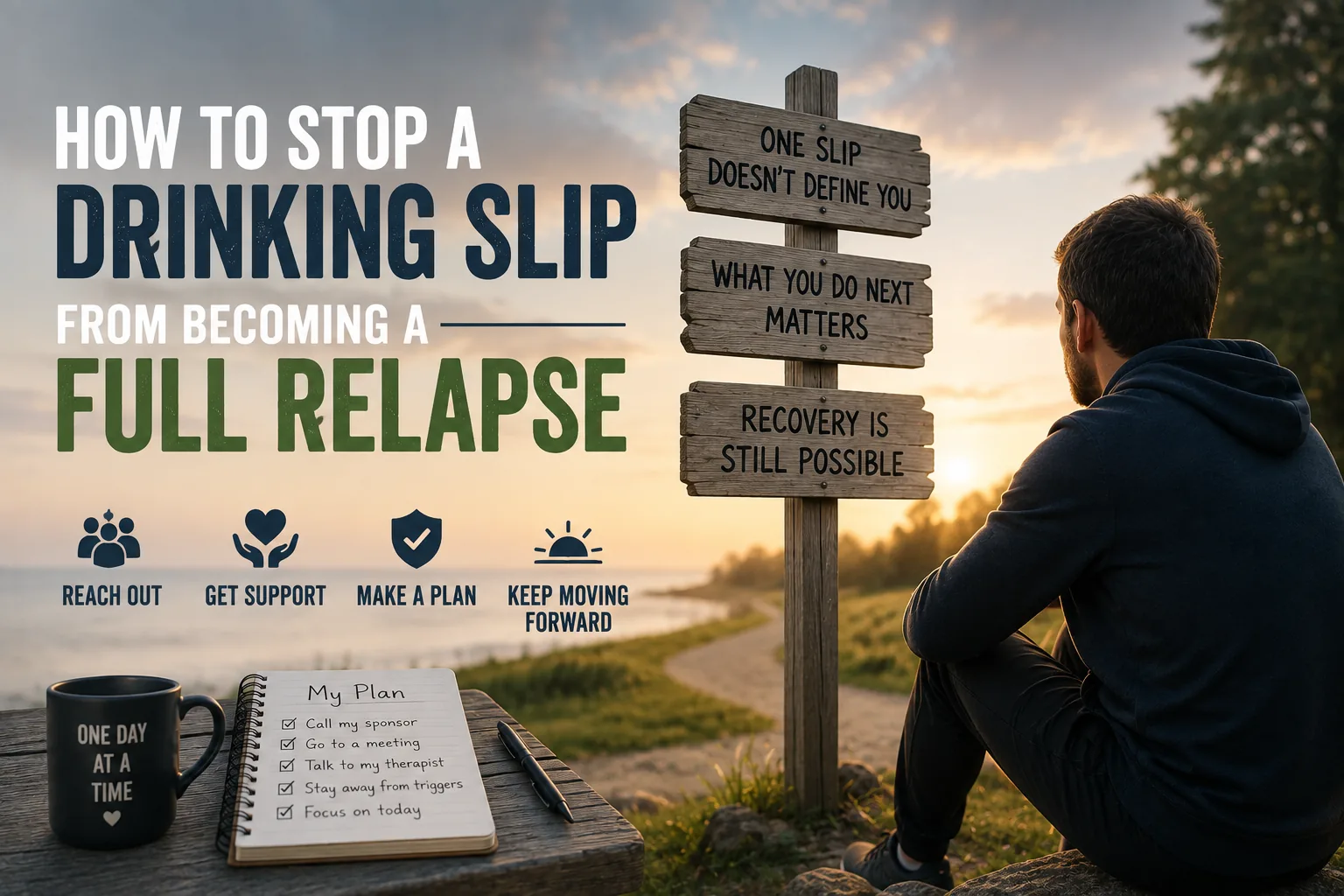


A drinking slip can feel devastating, especially after weeks, months, or years of sobriety. You may wake up thinking, “I ruined everything.” That thought can be more dangerous than the drink itself.
One night of drinking does not have to become a full alcohol relapse. The most important thing is what you do next. A slip can become a warning sign that something in your recovery plan needs attention. If you act quickly, tell the truth, and reconnect with support, you may be able to stop the situation before alcohol takes control again.
Do not wait until tomorrow, next week, or until things “get bad enough.” Recovery can begin again with the next decision you make.
Stop the All-or-Nothing Thinking
One of the biggest risks after drinking is thinking that your sobriety no longer matters.
You might tell yourself:
- “I already failed.”
- “I have to start over anyway.”
- “One more night will not make a difference.”
- “Everyone is going to be disappointed in me.”
- “I might as well enjoy drinking before I quit again.”
This thinking can turn one drink into a weekend and a weekend into weeks of alcohol use.
Instead, separate the slip from what happens next.
If you drove the wrong direction for one mile, you would not keep driving for another 500 miles simply because you made a wrong turn. You would turn around.
Recovery can work the same way.
The sober time you already accumulated still taught you something. You learned how to get through cravings, wake up without a hangover, manage stress differently, and live without alcohol. Those skills did not disappear because you drank.
Your goal now is not to punish yourself. It is to stop the damage from continuing.
What to Do Immediately After a Drinking Slip
Tell someone as soon as possible.
Secrecy gives relapse room to grow. Call your counselor, sponsor, recovery coach, treatment provider, sober friend, or trusted family member. Say exactly what happened.
You do not need a perfect explanation.
Try: “I drank last night. I do not want this to turn into a relapse, and I need help getting back on track.”
Remove access to alcohol.
Do not keep leftover alcohol around “just in case.” Ask someone you trust to remove it from your home. Avoid bars, liquor stores, parties, or people who are likely to encourage drinking.
Make the next drink harder to reach.
Change your environment.
If being alone increases your risk, go somewhere safe. Spend time with a supportive friend, attend a recovery meeting, or stay with a family member who understands what is happening.
Reconnect with treatment.
If you have a therapist, counselor, doctor, or treatment center, contact them. A slip may mean you need additional appointments, more structured treatment, or another form of support.
The sooner you respond, the easier it may be to interrupt the pattern.
Figure Out What Happened Before You Drank
Do not stop your analysis at, “I drank.”
Ask what happened during the hours, days, or weeks before the first drink.
Were you:
- Under unusual stress?
- Feeling lonely or depressed?
- Fighting with someone?
- Sleeping badly?
- Missing treatment or recovery meetings?
- Spending time around people who drink?
- Thinking more often about alcohol?
- Telling yourself you could control drinking now?
- Feeling overconfident about your recovery?
- Keeping problems to yourself?
A drinking slip rarely comes completely out of nowhere.
You may discover that your recovery started weakening before alcohol was actually used. Perhaps you stopped calling supportive people. Maybe you began isolating or romanticizing your drinking days. Maybe a major life event overwhelmed the coping strategies that had been working.
Finding the trigger is not about assigning blame.
It is about making a better plan.
If loneliness contributed to the slip, schedule more time with supportive people. If work stress overwhelmed you, talk with your counselor about healthier coping strategies. If being around alcohol triggered you, change your social environment.
Turn the mistake into useful information.
Strengthen Your Relapse-Prevention Plan
After a slip, your previous recovery routine may need more support.
Consider temporarily increasing your structure.
That could mean attending more recovery meetings, scheduling additional counseling, checking in with someone every day, avoiding certain people or places, or returning to an outpatient treatment program.
Create a simple emergency plan for the next craving.
Write down:
Three people I can call.
Three places I can go where alcohol is not available.
Three things I can do until the craving passes.
Keep the list in your phone.
You may also want to talk with a healthcare professional about medications used to treat alcohol use disorder. Some medications can help reduce cravings or support continued abstinence. Medication is not appropriate for everyone, but it can be an important part of treatment for some people.
Know When Stopping Alcohol May Require Medical Help
If the slip was one isolated drinking episode, alcohol withdrawal may not be an issue.
The situation is different if the slip has already become several days or weeks of heavy drinking.
People who become physically dependent on alcohol can experience withdrawal when they suddenly stop. Symptoms may include shaking, sweating, anxiety, nausea, insomnia, rapid heartbeat, and agitation. Severe alcohol withdrawal can include hallucinations, seizures, or severe confusion and may become life-threatening.
If you have returned to heavy or frequent drinking, especially if you have experienced serious withdrawal before, speak with a healthcare professional before attempting to detox on your own.
Call 911 for a seizure, severe confusion, loss of consciousness, serious breathing problems, or another medical emergency.
Getting medical help does not mean you failed at recovery. It means you are taking the situation seriously.
A Slip Does Not Have to Become Your New Story
The hours after drinking again matter.
Shame tells you to hide. Recovery tells you to reach out.
Shame tells you that everything was wasted. Recovery asks what you learned.
Shame says you might as well keep drinking. Recovery says the next decision can be different.
You cannot change the drink you already had. You can control what you do now.
Tell someone. Remove the alcohol. Reconnect with treatment. Identify the trigger. Strengthen your plan.
A drinking slip is serious, but it does not have to become a full relapse. The sooner you change direction, the more of your recovery you can protect.


