



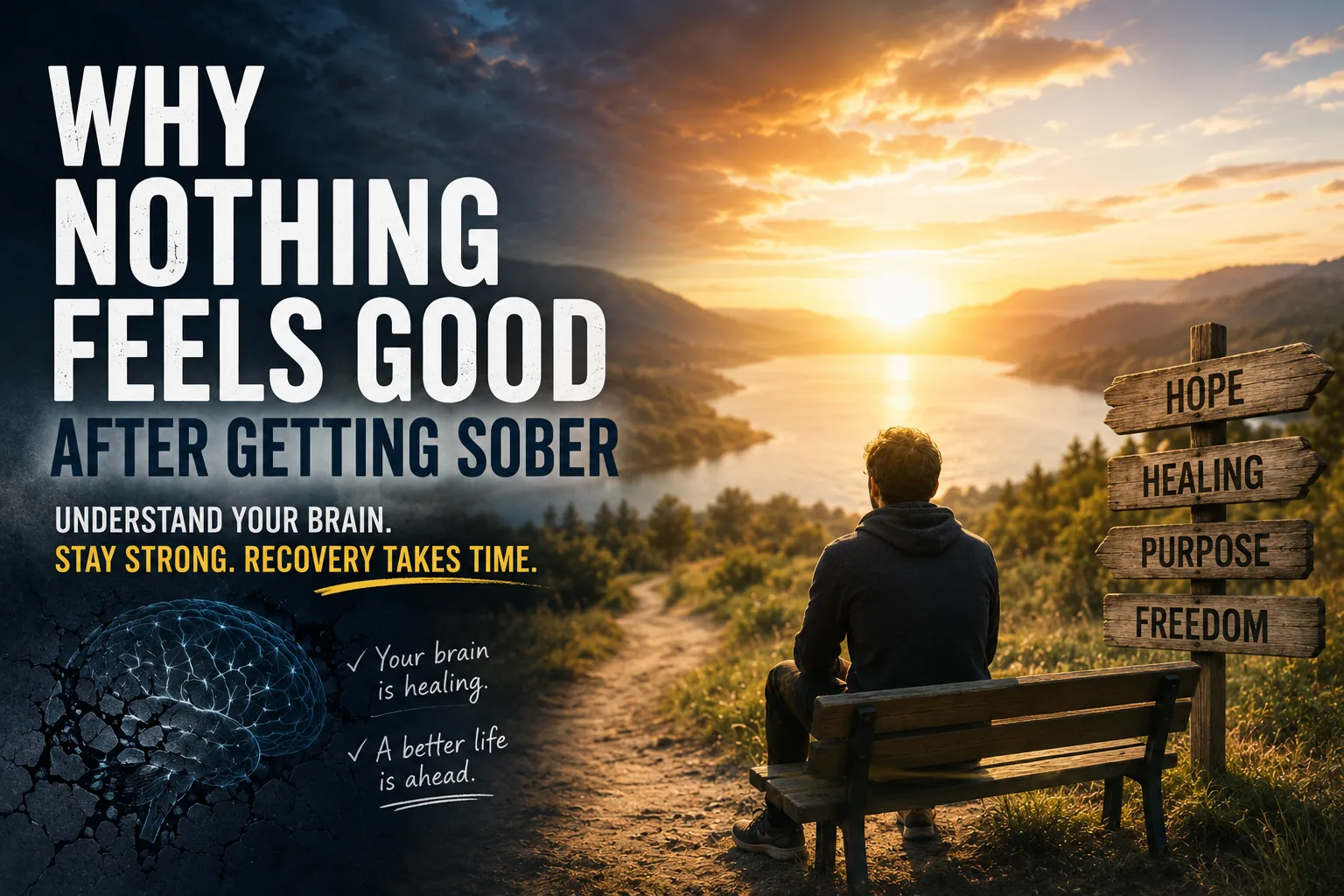


One of the most confusing parts of recovery can happen after the drugs or alcohol are gone: nothing feels good anymore. Food tastes fine, but it does not excite you. Music sounds the same, but it does not move you. Friends invite you out, but you would rather stay home. Even accomplishments can feel strangely empty.
For someone with an addicted brain, this emotional flatness can be frightening. You may wonder if sobriety is worth it or whether you permanently damaged your ability to feel happiness. These feelings can also increase the risk of relapse if you start believing that using again is the only way to feel normal.
The good news is that this experience can be a normal part of early recovery, and for many people, it improves with time.
Understanding how addiction changes the brain during recovery can help explain why pleasure, motivation, concentration, and emotions may not immediately return to normal after substance use stops.
Why Does Nothing Feel Good After Getting Sober?
Addictive substances can change the brain’s reward system.
Normally, your brain rewards everyday activities such as:
- Eating
- Exercising
- Spending time with people you care about
- Reaching a goal
- Having sex
- Listening to music
- Learning something new
- Completing a difficult task
These activities involve several brain chemicals, including dopamine, that help create motivation and reinforce behaviors.
Drugs and alcohol can overwhelm or disrupt this system.
Some substances produce powerful reward signals that are far stronger or faster than normal life experiences. Over time, the brain begins adapting.
The drug becomes extremely important.
Normal rewards can start feeling weak by comparison.
Eventually, someone may lose interest in activities they once loved because their brain has learned to expect a much more intense chemical reward.
Dopamine is only one part of this process, but it plays an important role in motivation, learning, reinforcement, and reward. Understanding dopamine recovery after addiction and how long it can take can help explain why everyday experiences may initially feel less satisfying after getting sober.
Stopping the substance does not immediately reverse that process.
What Is Anhedonia?
The medical term for difficulty feeling pleasure is anhedonia.
Anhedonia can make early sobriety feel emotionally empty.
Someone may say:
“I know I should be happy, but I don’t feel anything.”
Others describe feeling numb, bored, disconnected, or emotionally flat.
You may stop looking forward to weekends.
You may not enjoy being around friends.
You may have little interest in hobbies.
Even positive events may barely register emotionally.
For a deeper explanation, our guide to anhedonia in addiction recovery and why pleasure feels different explores how reduced pleasure can affect early sobriety and why it may improve over time.
This can be especially frustrating because many people expect sobriety to feel immediately amazing.
They think:
“I stopped using. Why don’t I feel better?”
The answer may be that your brain and body are still adjusting.
The Addicted Brain Has to Learn Normal Rewards Again
An addicted brain has spent months or years learning that a substance is one of the strongest rewards available.
Recovery asks the brain to change that lesson.
Imagine spending years turning the volume on your reward system all the way up.
Then suddenly, the volume drops.
Normal life can seem very quiet.
A walk outside cannot compete with the immediate effects of cocaine.
A good meal may not produce the same rush as opioids.
A conversation with a friend may seem boring compared with methamphetamine.
But that comparison can gradually change.
The addicted brain is capable of learning new patterns. The same neuroplasticity that helped strengthen substance-related behaviors can also support healthier responses during recovery.
The longer someone remains in recovery, the more opportunities the brain has to experience healthy rewards without drugs or alcohol.
Those experiences matter.
How Long Does It Take to Feel Happy Again After Getting Sober?
There is no universal timeline.
Some people start noticing improvements within a few weeks.
For others, it may take several months before motivation and pleasure begin returning consistently.
Recovery can be affected by:
- The substance used
- How long someone used
- How heavily they used
- Sleep quality
- Nutrition
- Physical health
- Depression or anxiety
- Trauma
- Stress
- Medications
- Social support
This is why comparing your recovery to someone else’s can be misleading.
Someone may feel dramatically better after 30 days.
Another person may still struggle at 90 days.
Neither experience means the person’s recovery is succeeding or failing.
The brain does not recover according to a fixed calendar.
Our broader guide to how long it takes the brain to heal from addiction explains why some improvements may appear within weeks while other changes continue for months or years.
It is also reasonable to wonder whether the brain can fully heal after drug addiction. Significant recovery is possible, but the degree and timeline depend on the individual, substance involved, duration of use, and whether other neurological complications occurred.
Boredom Can Become a Relapse Trigger
Feeling bored may sound harmless, but in early recovery it can become dangerous.
During active addiction, much of someone’s day may have revolved around substances.
Finding drugs.
Buying alcohol.
Using.
Recovering from using.
Hiding use.
Thinking about the next opportunity to use.
When that cycle suddenly disappears, there can be a huge amount of empty time.
At first, ordinary life can feel incredibly slow.
That boredom can become a relapse trigger.
The brain may remember exactly what used to make boredom disappear.
Low motivation can make this stage even harder. Learning why motivation is low in early recovery can help explain why someone may know they need healthy activities while having almost no desire to actually do them.
This is why building structure during recovery is important.
You do not need to fill every minute.
But having regular activities can help.
Exercise.
Meetings.
Work.
Treatment.
Cooking.
Walking.
Calling friends.
Volunteering.
Learning something.
Building hobbies.
At first, you may not feel excited about these activities.
Do them anyway.
Enjoyment often follows participation rather than appearing before it.
Why Getting High Again Can Seem So Tempting
When nothing feels good, the memory of getting high can become extremely powerful.
The addicted brain may focus on the reward while minimizing the consequences.
It remembers:
“Using made me feel something.”
It may conveniently forget the fights.
The money.
The withdrawal.
The lying.
The fear.
The hospital visits.
The people you hurt.
The mornings you promised yourself you would never do it again.
This selective memory is one reason relapse prevention matters.
A craving does not always begin with wanting drugs.
Sometimes it begins with boredom.
Loneliness.
Exhaustion.
Frustration.
Or simply wanting to feel alive again.
Recognizing that pattern early gives you a chance to respond before it becomes a physical relapse.
Brain Fog and Memory Problems Can Make Recovery Feel Worse
Emotional flatness is not always the only problem.
Some people also struggle to think clearly.
Brain fog after quitting drugs or alcohol can make concentration difficult, thinking feel slow, and everyday responsibilities seem mentally exhausting.
Memory may also seem unreliable.
You might forget appointments.
Lose your train of thought.
Struggle to remember conversations.
Have difficulty retaining information you just read.
These memory problems during addiction recovery can occur alongside poor sleep, stress, anxiety, depression, withdrawal, and other changes happening during early sobriety.
Experiencing these problems at the same time as anhedonia can make someone believe sobriety has made everything worse.
That is why understanding the recovery process matters.
What you feel during early sobriety does not necessarily predict how you will feel months or years later.
What Can Help You Feel Better?
There is no instant fix, but several habits can support recovery.
Exercise regularly. Movement can improve mood, sleep, stress levels, and overall brain health. Research continues to examine the role of physical activity in substance use recovery, and exercise may help support brain recovery after addiction as part of a broader treatment and wellness plan.
Protect your sleep. Poor sleep can make depression, irritability, cravings, and low motivation worse. Learning how sleep helps the brain heal from addiction can help explain why a consistent sleep routine is so important during recovery.
Eat regularly. Your brain needs consistent nutrition, especially after long periods of substance use.
Spend time with people. Isolation can make emotional numbness worse. Even when socializing does not sound appealing, connection can help.
Create a routine. Structure gives the day direction when motivation is low.
Try new activities. Recovery is not only about returning to your old life. It can involve discovering interests you never had while using.
Get professional help when needed. Depression, anxiety, PTSD, ADHD, and other mental health conditions may become more noticeable after substances are removed.
Does Feeling Numb Mean You Permanently Damaged Your Brain?
Not necessarily.
Feeling emotionally flat, unmotivated, forgetful, or mentally foggy during recovery does not automatically mean permanent neurological damage occurred.
Many brain functions can improve with prolonged recovery.
However, there are situations where substance use can contribute to lasting injury. Overdose-related oxygen deprivation, stroke, traumatic brain injuries, severe nutritional deficiencies, and other complications can cause serious neurological problems.
Understanding when addiction can cause permanent brain damage can help distinguish common recovery symptoms from problems that deserve additional medical evaluation.
Persistent severe memory loss, confusion, seizures, weakness, speech changes, major personality changes, or worsening neurological symptoms should be evaluated by a healthcare professional.
Do Not Mistake Early Recovery for Your Future
This may be the most important thing to remember.
Early recovery is not necessarily what sober life will feel like forever.
You may be experiencing life through a brain that is still adjusting.
The fact that you cannot enjoy something today does not mean you will never enjoy it again.
The first laugh that feels real matters.
The first morning you wake up rested matters.
The first time you genuinely enjoy dinner matters.
The first day you realize you went several hours without thinking about using matters.
Little by little, ordinary life can begin to feel rewarding again.
Recovery Is About Learning to Feel Again
Getting sober removes the substance.
Recovery builds the life that replaces it.
At first, that life may feel quiet.
Then the volume slowly starts coming back.
You notice music.
Food.
People.
A sunrise.
A good night’s sleep.
Pride in finishing something difficult.
The ability to trust yourself again.
The addicted brain learned to chase intense rewards. In recovery, the brain can begin learning that happiness does not always have to arrive as a rush.
Sometimes it arrives slowly.
And if nothing feels good right now, that does not mean nothing ever will.
Keep giving your brain new experiences to learn from. Recovery takes time, but the ability to enjoy life can return.


