



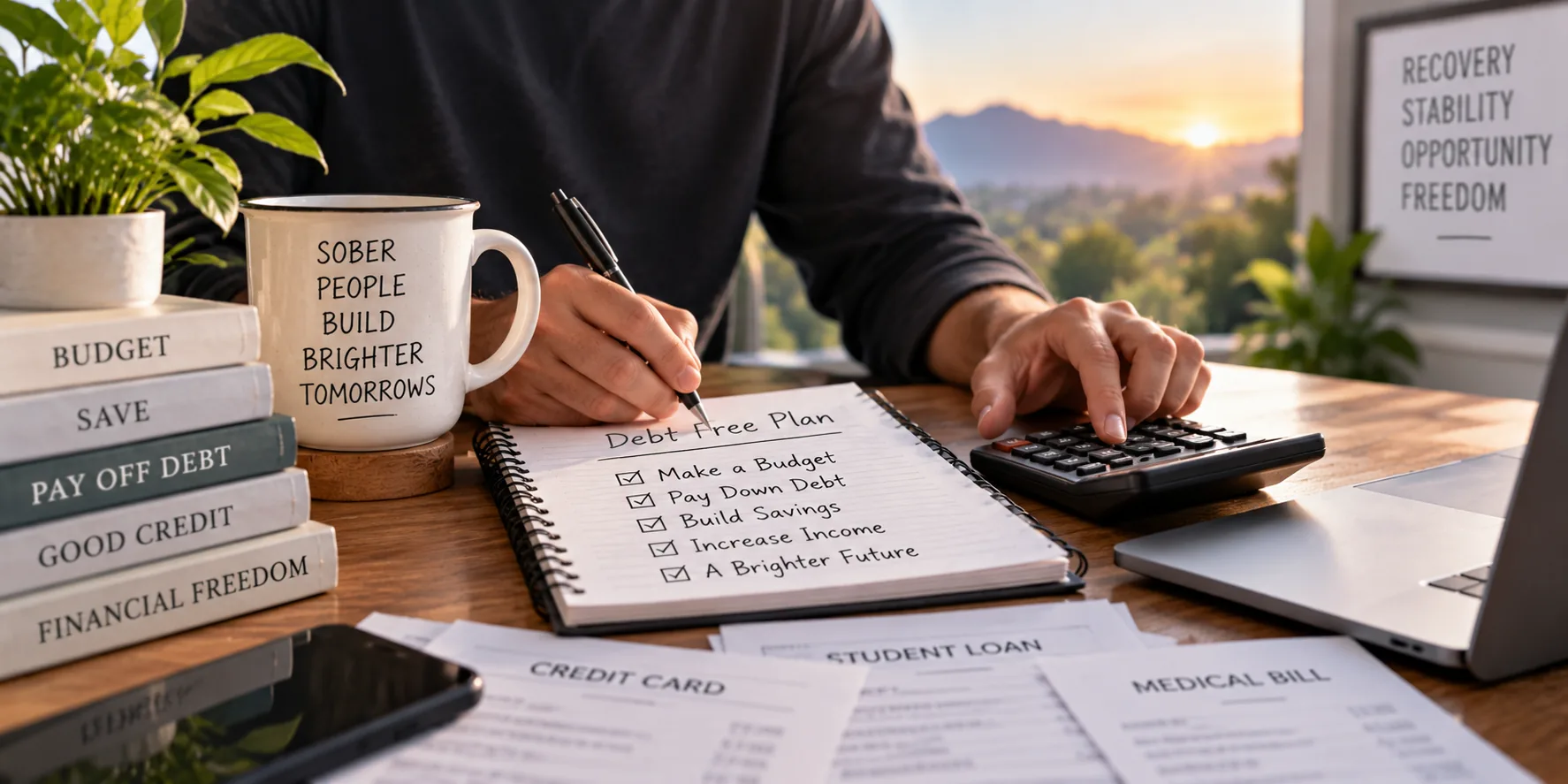


Learning how to pay off debt after getting sober can feel overwhelming when you are already rebuilding the rest of your life. Credit cards, unpaid bills, personal loans, medical expenses, collections, or money owed to family may have piled up during active addiction.
You may feel embarrassed when you finally look at the numbers.
Do it anyway.
Debt does not disappear because you avoid it, but it also does not have to control your future.
The same habits that strengthen addiction recovery—honesty, consistency, patience, and taking life one day at a time—can help you rebuild financially.
You do not need to become debt-free overnight.
You need a realistic plan you can keep following.
Find Out Exactly How Much Debt You Owe
Start with the truth.
Make a list of every debt you know about, including:
- Credit cards
- Personal loans
- Medical bills
- Car loans
- Past-due utilities
- Collections
- Taxes
- Money owed to friends or relatives
Write down the balance, minimum payment, interest rate, and whether the account is current or overdue.
This step may be uncomfortable.
You may discover debts you have ignored for months or years.
But once the information is organized, it becomes a problem you can work on instead of a fear sitting in the back of your mind.
If your finances feel chaotic beyond debt alone, start with a broader plan for fixing your finances after addiction.
Do not judge yourself while gathering the numbers.
The goal is not shame.
The goal is clarity.
Build a Budget Before Making Aggressive Payments
Before throwing every available dollar toward debt, make sure your basic needs are covered.
You still need:
Housing.
Food.
Transportation.
Utilities.
Insurance.
Medical care.
Recovery-related expenses.
A simple budget for early addiction recovery can help you understand how much money is actually available for debt repayment each month.
Your plan should be realistic.
If you earn $3,000 a month and essential expenses consume $2,700, promising to pay $1,000 toward debt is not a plan.
It is a setup for frustration.
Maybe you can start with $100 or $200.
That is still progress.
Pay at least the required minimums whenever possible, then direct additional money toward one priority debt.
Consistency matters more than dramatic payments you cannot maintain.
Choose a Debt Repayment Strategy
Two common approaches are the debt snowball and debt avalanche.
With the debt snowball, you focus extra payments on your smallest balance first.
When that debt is gone, move the payment to the next one.
This can provide quick psychological wins.
With the debt avalanche, you focus on the debt with the highest interest rate first.
That approach may reduce the total amount of interest you pay.
Neither strategy works if you constantly abandon it.
Choose the method you are most likely to follow.
You may also need to contact creditors about payment arrangements or overdue accounts.
Do not ignore letters and phone calls indefinitely.
If an account is already in collections or the situation is complicated, consider getting guidance from a reputable nonprofit credit counselor or qualified financial professional.
As balances decline, you can also begin working on rebuilding your credit after addiction.
Debt repayment and credit rebuilding often happen together.
Watch for Spending Habits That Can Replace Addiction
Getting sober can change where your money goes almost immediately.
Money that once went toward alcohol or drugs may suddenly be available.
That can feel exciting.
It can also create another problem.
Some people begin spending impulsively on clothing, electronics, food delivery, gambling, hobbies, or online shopping.
The purchases may provide a quick rush.
Understanding how the addicted brain responds to rewards can help explain why immediate gratification may still feel powerful after substance use stops.
If shopping starts becoming another emotional escape, learn how to control impulsive spending after getting sober.
Try a 24-hour waiting period before nonessential purchases.
Remove saved payment information from shopping apps.
Set a weekly spending limit.
Ask yourself:
“Would I rather have this item or owe less money next month?”
You do not need to eliminate every enjoyable purchase.
You need to make sure spending supports the life you are rebuilding.
Increase Income Without Sacrificing Recovery
Cutting expenses has limits.
Increasing income can speed up debt repayment.
That might mean:
Working additional hours.
Finding a better-paying job.
Learning a new skill.
Taking temporary side work.
Completing a certification.
Changing careers.
If addiction interrupted your employment, starting a new career after addiction recovery may eventually help you earn more and create greater stability.
But avoid working so much that recovery disappears from your schedule.
You still need sleep.
Support.
Medical care.
Healthy relationships.
Time away from work.
Someone recovering from meth addiction and compulsive methamphetamine use may be particularly familiar with periods of impulsive spending, disrupted employment, or financial instability connected to stimulant use.
Recovery gives you the opportunity to make money serve a different purpose.
Instead of funding addiction, income can pay debt, create savings, and build independence.
Protect Your Recovery While You Repair Your Finances
Debt creates stress.
A collection notice can ruin your morning.
An unexpected bill can make you feel hopeless.
Watching money disappear toward old mistakes can become frustrating.
That is why understanding how financial stress can threaten addiction recovery is so important.
Do not allow debt repayment to become another form of self-punishment.
You still need to live.
You still need support.
You still need moments that make recovery worthwhile.
If money problems begin causing intense cravings, isolation, secrecy, or thoughts of using again, take those addiction relapse warning signs seriously.
Ask for help early.
Debt can be repaired.
A return to substance use can create new financial problems on top of the old ones.
As balances fall, begin thinking beyond debt and toward rebuilding financial independence after addiction.
Build emergency savings.
Pay bills on time.
Create long-term goals.
Eventually, your financial life can become about more than cleaning up the past.
It can become about building the future.
Learning how to pay off debt after getting sober is not about fixing everything immediately. It is about making better financial decisions consistently.
Know what you owe.
Build a budget.
Choose a repayment strategy.
Control impulsive spending.
Increase income when possible.
Protect your recovery.
Then keep going.
Every balance you reduce is another reminder that your past does not have to control what happens next.


