



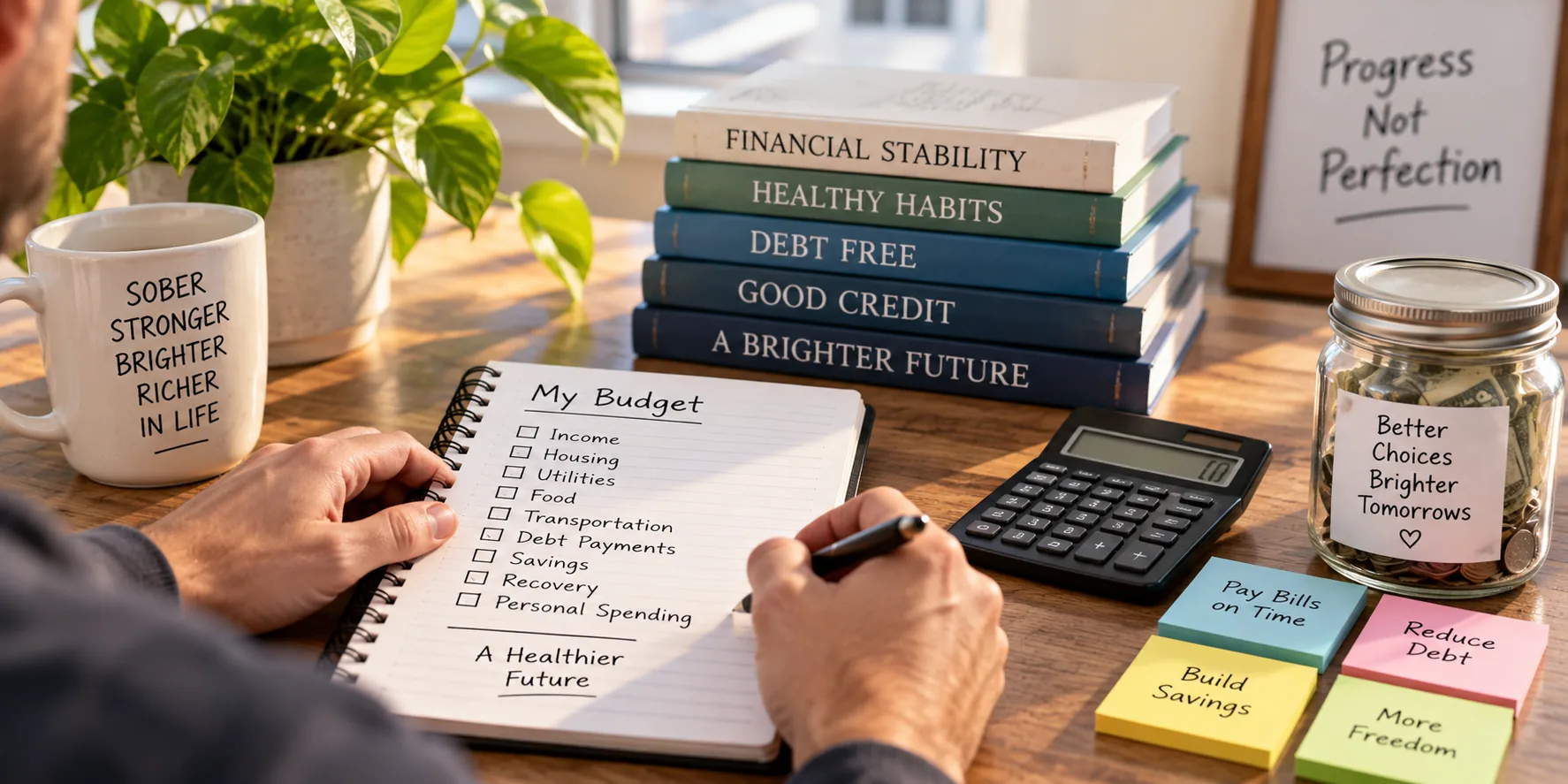


Learning how to create a budget in early recovery can help you regain control of money after months or years of financial instability. Addiction can drain savings, create debt, interrupt employment, damage credit, and make ordinary bills difficult to manage.
When you first get sober, looking at your finances may feel overwhelming.
You may have rent due, credit cards behind, collection notices arriving, and very little money saved.
You do not need to fix everything this month.
A budget simply gives every dollar a purpose.
Just as addiction recovery is built one day at a time, financial stability is usually built one paycheck at a time.
Your first budget does not need to be perfect.
It needs to be realistic.
Start With Your Actual Monthly Income
Begin with the money you can reasonably expect to receive each month.
Include:
- Paychecks
- Regular benefits
- Reliable side income
- Other consistent sources of income
Do not build your budget around overtime you might receive or money someone might lend you.
Use numbers you can depend on.
If your employment changed because of addiction, income may be lower than it once was. That can be frustrating, but your budget should reflect where you are today.
If you are rebuilding professionally, starting a new career after addiction recovery may eventually help you increase income and create greater financial stability.
For now, work with what you have.
A realistic $2,500 budget is more useful than an imaginary $4,000 one.
Put Essential Expenses First
Next, list the bills you must pay to maintain a stable life.
Start with:
Housing.
Utilities.
Food.
Transportation.
Insurance.
Medication and medical care.
Phone service.
Recovery-related expenses.
Minimum debt payments.
These expenses should generally come before entertainment, shopping, subscriptions, or other optional spending.
Early recovery is not the time to create unnecessary financial chaos.
Stable housing, food, transportation, and access to treatment support the life you are trying to rebuild.
If your finances already feel out of control, our guide to fixing your finances after addiction can help you look at the larger picture.
Add up your essential expenses.
Then subtract them from your monthly income.
Whatever remains is the money you can divide between debt repayment, savings, and discretionary spending.
Make a Plan for Debt Without Punishing Yourself
Addiction can leave behind serious debt.
Credit cards.
Medical bills.
Collections.
Loans.
Money owed to family.
You may feel tempted to send every extra dollar toward these balances because you want the problem gone immediately.
That can backfire.
If you leave yourself no money for groceries, transportation, or emergencies, you may end up borrowing again.
Start with minimum payments whenever possible.
Then choose one debt to receive extra money.
Our guide on how to pay off debt after getting sober explains different repayment approaches in more detail.
Even $50 or $100 of additional monthly debt repayment can become meaningful over time.
Credit damage can also improve gradually. Learn how to rebuild credit after addiction while you are paying down balances.
Do not let shame turn your budget into punishment.
The purpose is progress.
Give Yourself Some Money for Normal Life
An overly strict budget often fails.
You are allowed to enjoy recovery.
Budget a reasonable amount for things such as:
Coffee.
Movies.
Meals out.
Hobbies.
Entertainment.
Clothing.
Family activities.
The amount depends on your income and obligations.
The important word is reasonable.
Going from uncontrolled substance spending to extreme financial restriction can create resentment.
At the same time, watch for spending becoming a replacement source of excitement.
After getting sober, some people begin shopping, gambling, ordering food, or buying expensive hobbies whenever they feel stressed or bored.
Understanding how the addicted brain responds to rewards can help explain why immediate purchases may feel so satisfying.
If this starts happening, learn how to stop impulsive spending after getting sober.
Someone recovering from meth addiction and compulsive methamphetamine use may be especially familiar with periods of impulsivity, disrupted employment, or money disappearing quickly during active substance use.
A budget creates a new pattern.
Start Building a Small Emergency Fund
Even when you have debt, try to begin saving something.
Your first goal does not need to be thousands of dollars.
Start with $100.
Then $250.
Then $500.
A small emergency fund can help when:
Your tire goes flat.
A prescription costs more than expected.
Your work hours get reduced.
A utility bill jumps.
Without savings, every unexpected expense can become another credit card balance or loan.
Eventually, savings can become part of rebuilding financial independence after addiction.
Financial independence may mean paying your own bills, building savings, improving credit, supporting your family, or eventually getting your own home.
It happens gradually.
Do not compare your first month sober to someone else’s tenth year of financial recovery.
Protect Your Recovery When Money Gets Stressful
Budgets do not eliminate financial problems overnight.
There may still be months when money feels tight.
An unexpected bill may appear.
Your car may break.
You may lose work hours.
Debt may feel impossible.
Recognize how financial stress can threaten addiction recovery before money anxiety becomes a reason to escape.
Watch for:
Isolation.
Hopelessness.
Increasing cravings.
Skipping recovery support.
Avoiding bills completely.
Thinking that drugs or alcohol would make the stress disappear.
Those can become warning signs of addiction relapse.
Money problems are difficult, but they are usually solvable with time.
Returning to substance use can create new health, relationship, legal, and financial problems on top of the ones you already have.
Learning how to create a budget in early recovery is really about creating stability.
Know what comes in.
Know what goes out.
Pay necessities first.
Make steady progress on debt.
Save something.
Give yourself reasonable room to enjoy life.
Then repeat the process next month.
Your budget will change as your income and recovery change.
That is okay.
You are not trying to become financially perfect.
You are building a life where your money supports your recovery instead of your addiction.


