



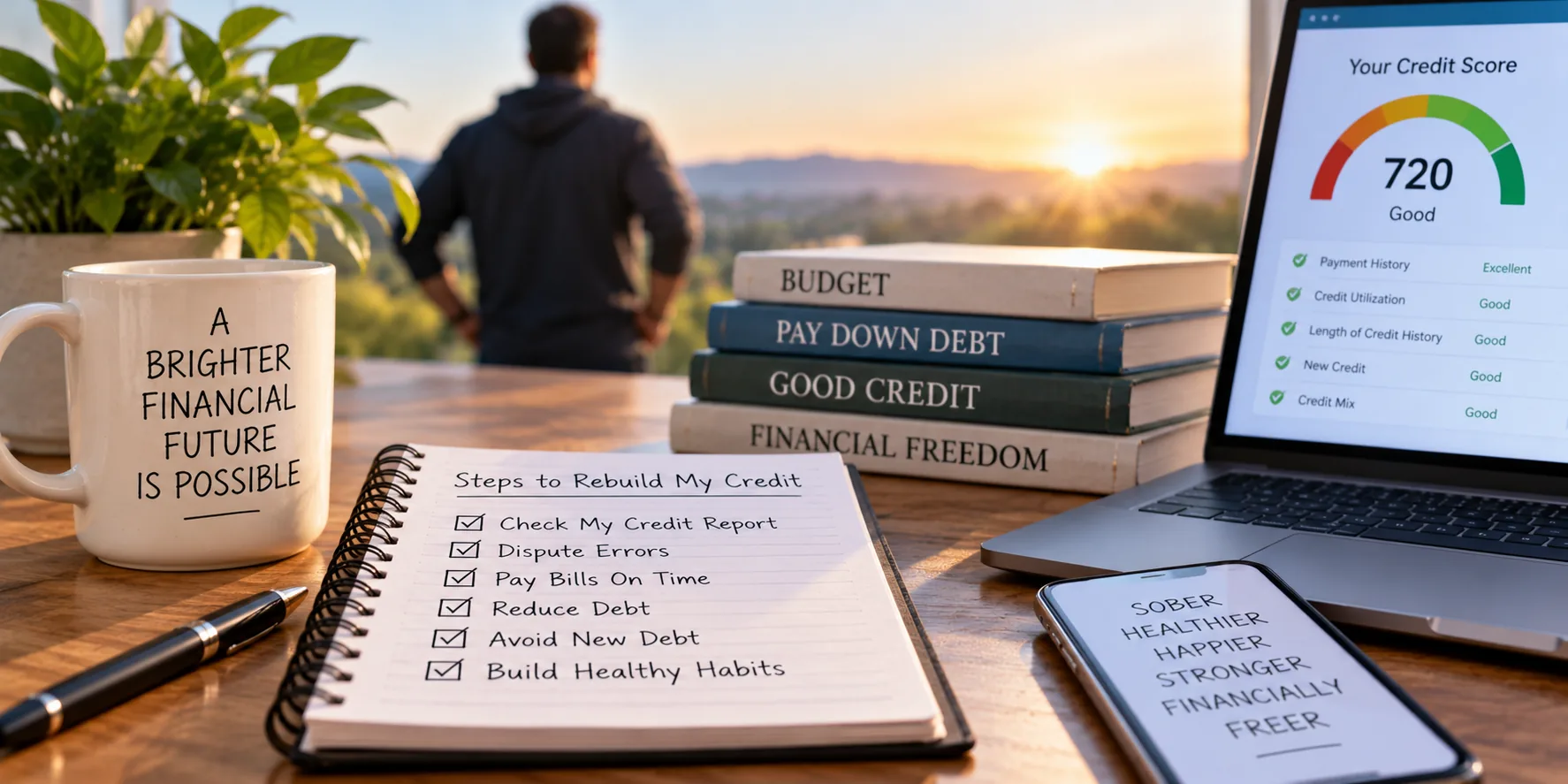


Learning how to rebuild credit after addiction can feel like another difficult part of starting over. Addiction may have led to missed credit card payments, unpaid medical bills, collections, repossessions, maxed-out accounts, or months when keeping track of money simply was not a priority.
When you finally get sober and look at your credit, the damage can be discouraging.
But damaged credit is not permanent.
Just as addiction recovery happens through consistent choices over time, credit can improve through a series of small financial decisions.
You do not need a perfect credit score tomorrow.
You need to stop creating new damage, understand where you stand, and begin building a better financial history.
Start by Checking Your Credit Reports
Before trying to fix your credit, find out what is actually being reported.
Review your credit reports and look for:
- Late payments
- Collection accounts
- Credit card balances
- Loans
- Accounts you do not recognize
- Incorrect balances
- Duplicate information
- Old addresses or personal information
Do not assume everything hurting your score is accurate.
If you find legitimate errors, use the appropriate dispute process with the credit bureau reporting the information.
If the negative information is accurate, do not panic.
Knowing what is there gives you a starting point.
If your overall financial situation feels disorganized, begin with a broader strategy for fixing your finances after addiction.
Credit is only one part of financial recovery.
Income, debt, savings, budgeting, and stability all work together.
Pay Your Current Bills on Time
One of the most useful things you can do for your financial future is surprisingly simple:
Pay your bills on time.
That includes:
Credit cards.
Loans.
Utilities.
Car payments.
Rent or mortgage payments.
Insurance.
Set reminders or automatic payments when appropriate.
If you have struggled with organization during addiction, create a routine.
Choose one day each week to review your accounts.
A simple budget for early addiction recovery can help you make sure enough money is available before payments are due.
Do not create a budget based on what you wish you earned.
Use your actual income.
Pay necessities first.
Then decide what can go toward debt and savings.
Credit rebuilding is usually boring.
That is a good thing.
Stable finances are built through predictable habits rather than financial emergencies.
Reduce Debt Without Trying to Fix Everything Overnight
High balances can make financial recovery feel impossible.
Start with a plan.
List each debt, its balance, minimum payment, and interest rate.
Then decide where extra money should go.
Our guide on how to pay off debt after getting sober explains strategies for reducing balances without sacrificing essential expenses.
Do not empty your bank account just to make one dramatic payment.
You still need food.
Housing.
Transportation.
Treatment.
And some emergency savings.
If you pay $2,000 toward a credit card but have no money left when your car breaks down, you may end up putting the repair right back on the card.
Aim for sustainable progress.
A smaller payment you can repeat every month is often more useful than one huge payment followed by another financial crisis.
Be Careful About New Debt and Impulsive Spending
Getting sober may leave more money in your account than you are used to seeing.
That can create temptation.
New clothes.
Electronics.
Food delivery.
Expensive hobbies.
Online shopping.
A newer car.
Spending can sometimes become another source of instant gratification after substance use stops.
Understanding how the addicted brain responds to rewards can help explain why fast, exciting purchases may feel especially appealing.
If this becomes a pattern, learn how to stop impulsive spending after getting sober.
Before making a nonessential purchase, wait 24 hours.
Ask:
“Will I still want this tomorrow?”
Avoid opening several new credit accounts just because you qualify.
Credit should become a financial tool—not another way to escape uncomfortable emotions.
For someone recovering from meth addiction and compulsive methamphetamine use, repairing finances and credit may be especially important when stimulant use previously contributed to impulsive decisions, unstable employment, or money being directed toward drugs.
Recovery allows those patterns to change.
Avoid Credit Repair Scams and Quick-Fix Promises
When your credit score is low, companies may promise:
“We can erase bad credit instantly.”
Be skeptical.
Accurate negative information generally cannot simply be made to disappear because someone charges you a fee.
Be especially cautious if a company:
Promises a guaranteed credit-score increase.
Demands a large payment upfront.
Tells you to dispute information you know is accurate.
Encourages you to create a new credit identity.
Promises results that sound too good to be true.
There is no secret shortcut that replaces responsible financial behavior.
Time matters.
Payment history matters.
Debt levels matter.
Consistency matters.
You may not notice dramatic changes immediately.
Keep going anyway.
The objective is not gaming a credit score.
It is creating healthier financial behavior that eventually produces a stronger financial profile.
Build Credit as Part of Rebuilding Your Life
Credit becomes more useful when it serves bigger goals.
You may eventually want to:
Rent an apartment.
Finance reliable transportation.
Buy a home.
Qualify for better interest rates.
Start a business.
Build savings.
Become financially independent.
That is why credit rebuilding should be connected to rebuilding financial independence after addiction.
Income matters too.
If addiction damaged your employment history or career, starting a new career after addiction recovery may help you create greater long-term financial stability.
And do not allow money problems to overwhelm your recovery.
Learning how financial stress can threaten addiction recovery can help you recognize when bills, debt, or credit problems are becoming emotionally dangerous.
If financial pressure leads to isolation, secrecy, increasing cravings, hopelessness, or thoughts of returning to substance use, recognize those warning signs of addiction relapse early.
Your credit score is important.
Your sobriety is more important.
Learning how to rebuild credit after addiction is ultimately about proving financial reliability one month at a time.
Check your reports.
Correct legitimate errors.
Pay bills on time.
Reduce debt.
Control impulsive spending.
Avoid scams.
Build income.
Then allow time to do its work.
A low credit score may describe part of your financial history.
It does not have to describe your financial future.


