



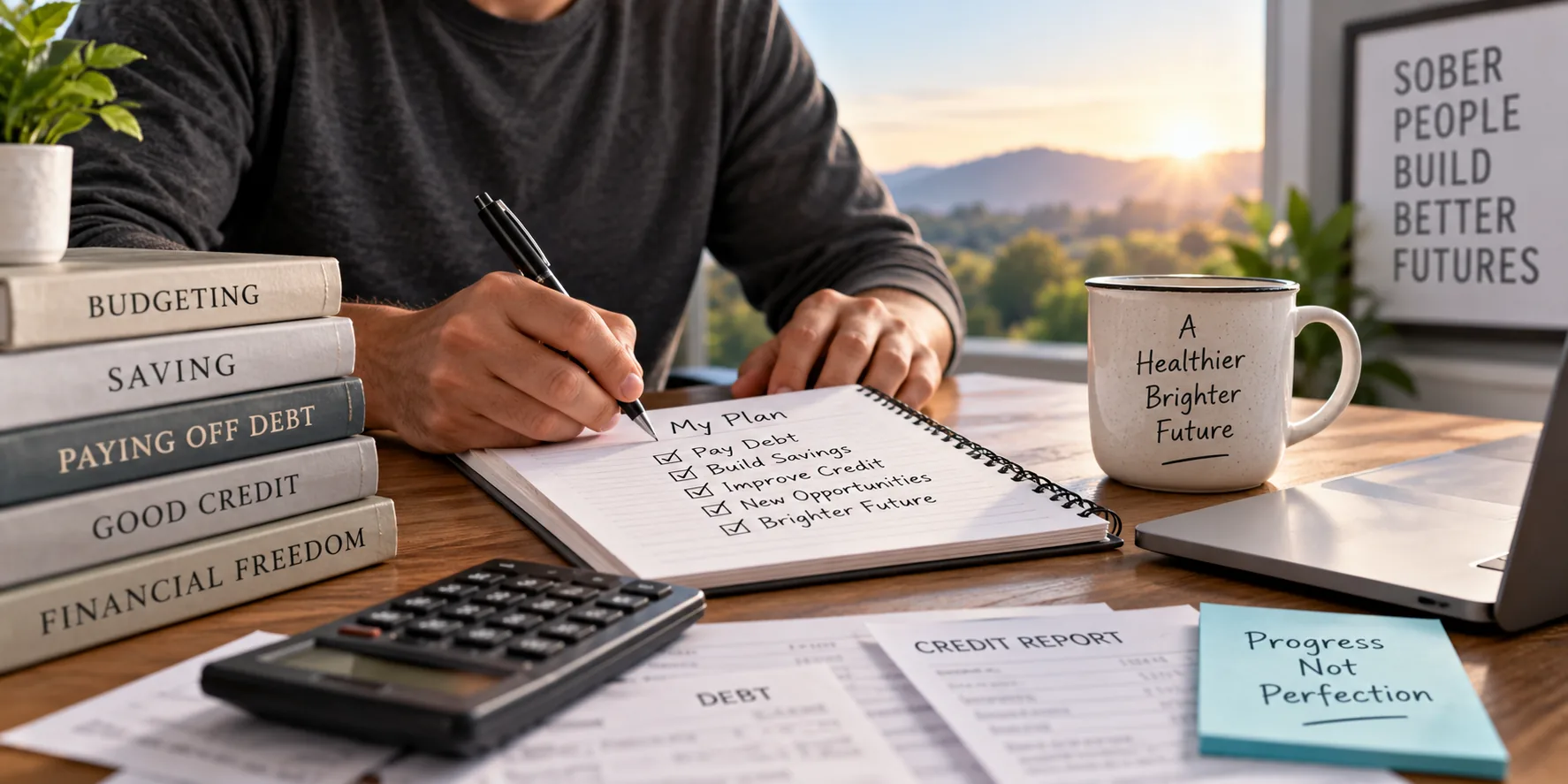


Learning how to fix your finances after addiction can feel overwhelming when you are already trying to rebuild your health, relationships, and daily life. Addiction can drain savings, create debt, damage credit, interrupt employment, and turn ordinary bills into problems that seem impossible to solve.
You may open your bank account after getting sober and wonder:
“How am I ever going to fix this?”
Start with one important truth: you do not have to repair years of financial damage in a few weeks.
Just like addiction recovery, financial recovery happens through repeated choices over time.
You can make a budget.
Pay down debt.
Rebuild credit.
Increase your income.
And slowly regain control over money that once felt completely out of control.
Start by Finding Out Where You Really Stand
Avoiding your finances usually makes the anxiety worse.
Gather your information.
Look at:
- Checking and savings balances
- Credit cards
- Personal loans
- Medical bills
- Car payments
- Past-due utilities
- Rent or mortgage payments
- Collections
- Taxes
- Money owed to family or friends
Write everything down.
Do not judge yourself while doing it.
The purpose is information, not punishment.
Maybe the number is better than you expected.
Maybe it is worse.
Either way, knowing the truth gives you something you can work with.
If debt has become the biggest problem, learning how to pay off debt after getting sober can help you organize balances and begin creating a realistic repayment strategy.
You do not need to eliminate everything immediately.
Your first goal is simply to stop the financial situation from getting worse.
Create a Recovery-Friendly Budget
A budget is not supposed to make your life miserable.
It tells your money where it needs to go.
Start with necessities:
Housing.
Utilities.
Food.
Transportation.
Insurance.
Medical care.
Minimum debt payments.
Recovery-related expenses.
Then look at what is left.
Our guide on how to create a budget in early recovery can help you build a simple spending plan without making money management overly complicated.
Leave some room for normal life.
An unrealistic budget often fails.
If you tell yourself you will spend absolutely nothing on entertainment, eating out, or hobbies for the next year, you may eventually become frustrated and abandon the plan altogether.
Aim for progress.
Track your spending for a month.
You may discover small expenses adding up faster than expected.
Once you see where the money actually goes, changing the pattern becomes much easier.
Address Debt and Credit One Step at a Time
Debt can create enormous shame after addiction.
You may have credit cards that were used for substances, cash advances, unpaid bills, collections, or loans from people you love.
Do not allow shame to keep you frozen.
Make minimum payments where possible and choose a strategy for paying additional money toward your balances.
Even small payments create momentum.
At the same time, begin learning how to rebuild credit after addiction.
Rebuilding credit usually depends on boring but powerful habits:
Pay bills on time.
Avoid unnecessary new debt.
Keep balances manageable.
Review your credit reports.
Correct legitimate errors.
Give the process time.
There is rarely a legitimate overnight solution for damaged credit.
Be cautious about companies promising instant fixes for large upfront fees.
Financial recovery is usually less dramatic.
It is built through months and years of responsible behavior.
Watch for Impulsive Spending in Recovery
Substance use is not the only behavior that can become impulsive.
After getting sober, some people begin chasing other quick rewards.
Shopping.
Gambling.
Food.
Expensive hobbies.
Online purchases.
You may feel:
“I stopped using drugs. I deserve this.”
Occasional rewards are not the problem.
The concern is when spending becomes another way to escape uncomfortable emotions.
Understanding the addicted brain and reward system can help explain why immediate rewards can feel especially appealing during recovery.
Learning how to stop impulsive spending after getting sober can protect the financial progress you are making.
Try waiting 24 hours before nonessential purchases.
Delete stored credit cards from shopping apps.
Set spending limits.
Avoid browsing online stores when you are stressed.
Ask yourself:
“Do I need this, or am I trying to change how I feel?”
That question can save a surprising amount of money.
Increase Your Income and Rebuild Independence
Cutting expenses can only go so far.
Eventually, increasing income may become one of the most powerful ways to improve your financial situation.
You may need to find work, ask for more hours, develop new skills, or pursue a different career.
If addiction disrupted your professional life, starting a new career after addiction recovery may provide a path toward greater stability and income.
Focus on gradually rebuilding financial independence after addiction.
That may mean:
Paying your own bills again.
Building an emergency fund.
Repaying family.
Saving for transportation.
Moving into your own housing.
Contributing to retirement.
Financial independence rarely arrives in one giant breakthrough.
It grows as you become more stable and capable of supporting yourself.
For someone recovering from meth addiction and compulsive methamphetamine use, rebuilding finances may be especially meaningful when substance use previously consumed money, disrupted employment, or contributed to impulsive decisions.
Whatever substance affected your life, the basic principle remains the same:
Your money can start supporting your future instead of your addiction.
Do Not Let Financial Stress Threaten Your Recovery
Debt and money problems can create intense pressure.
You may feel embarrassed.
Angry.
Trapped.
Afraid to answer the phone.
Those feelings can become dangerous when they start making substance use seem like an escape.
Learn how financial stress can threaten addiction recovery and recognize when money anxiety begins affecting your sobriety.
If you notice isolation, hopelessness, increasing cravings, secrecy, or thoughts that using would make financial problems easier to tolerate, take those warning signs of addiction relapse seriously.
Money problems are fixable.
A relapse can create new financial, physical, legal, and relationship consequences on top of the ones you are already trying to repair.
Ask for help.
Talk to someone you trust.
Break large problems into smaller steps.
Learning how to fix your finances after addiction does not require becoming wealthy. It means gradually becoming stable.
Know what you owe.
Make a budget.
Pay bills on time.
Control impulsive spending.
Increase your income.
Build savings when you can.
Then keep repeating those habits.
You may not like where your finances are today.
That does not mean they have to stay there.
Every responsible financial decision becomes another piece of the healthier life recovery is giving you the opportunity to build.


