



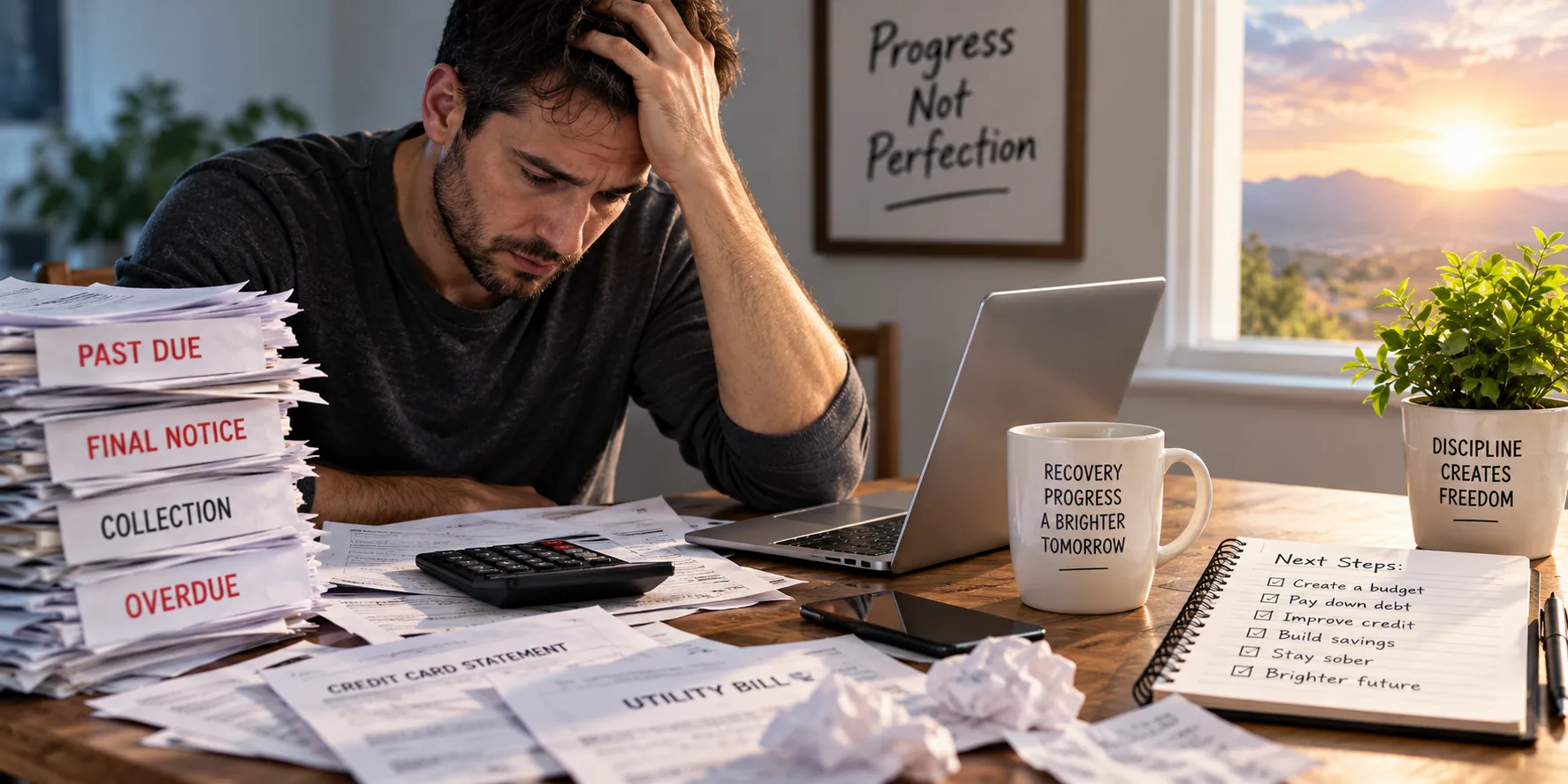


Financial stress can threaten addiction recovery when bills, debt, unemployment, damaged credit, or money worries begin to feel impossible to escape. You may be sober and making progress, yet still wake up thinking about overdue rent, collection notices, credit card balances, or how you will afford groceries until the next paycheck.
That pressure can build quickly.
For someone who once used drugs or alcohol to cope with fear, shame, frustration, or hopelessness, financial problems can become a powerful trigger.
Money does not cause addiction by itself. But financial stress can create the emotional conditions that make old coping patterns feel tempting again.
That is why protecting your addiction recovery includes learning how to face money problems without running from them.
You do not need perfect finances to stay sober.
You need a plan, support, and enough stability to keep moving forward.
Why Money Problems Can Feel So Dangerous in Recovery
Financial stress affects more than your bank account.
It can affect sleep.
Mood.
Relationships.
Confidence.
Your ability to focus at work.
You may start thinking:
“I ruined everything.”
“I’ll never catch up.”
“What’s the point?”
Those thoughts can become dangerous when they lead to isolation or cravings.
Addiction often trains the brain to look for quick relief from uncomfortable emotions. Understanding how the addicted brain responds to stress and reward can help explain why the urge to escape may return during financial pressure.
The problem is that using drugs or alcohol does not solve the bill.
It usually creates another one.
A relapse can lead to lost income, missed work, new debt, legal problems, health expenses, or damaged relationships.
The goal is to respond to financial stress before it becomes a recovery crisis.
Avoiding Your Finances Usually Makes the Stress Worse
It can be tempting to stop opening mail.
Ignore calls.
Avoid checking your bank account.
Put unopened bills in a drawer.
For a short time, avoidance may reduce anxiety.
Then the anxiety grows.
Late fees increase.
Payments are missed.
Accounts go into collections.
You become even more afraid to look.
Breaking that cycle begins with information.
If your financial life feels chaotic, start with a step-by-step plan for fixing your finances after addiction.
Write down:
What you owe.
What you earn.
What bills are due.
Which expenses are essential.
Which problems are most urgent.
You do not have to solve everything today.
You simply need to stop hiding from the numbers.
Clarity reduces uncertainty.
And uncertainty is often what makes financial stress feel unbearable.
A Simple Budget Can Reduce Financial Anxiety
A budget cannot make every problem disappear.
But it can help you know what happens next.
Start with your reliable monthly income.
Then list necessities:
Housing.
Food.
Transportation.
Utilities.
Insurance.
Medical care.
Recovery-related expenses.
Minimum debt payments.
Learning how to create a budget in early recovery can help turn financial chaos into a basic monthly plan.
A budget also helps you recognize when the problem is not overspending.
Sometimes income simply is not high enough.
That matters because blaming yourself for every financial problem can create unnecessary shame.
If your expenses are higher than your income even after reasonable cuts, the solution may involve increasing income, changing jobs, or developing new skills.
That can take time.
For now, focus on keeping the most important parts of your life stable.
Debt and Bad Credit Do Not Need to Be Fixed Overnight
Debt can create intense pressure in recovery.
You may feel like every dollar should go toward paying off the past.
Be careful.
If you send every available dollar to debt and leave yourself unable to pay for food, transportation, or treatment, the plan is not sustainable.
Start with a realistic repayment strategy.
Our guide on how to pay off debt after getting sober explains how to organize balances and make steady progress.
If addiction also damaged your credit, learn how to rebuild credit after addiction.
Neither debt nor credit usually improves overnight.
That can actually be reassuring.
You are not failing because your finances are not repaired after 30 or 60 days sober.
You are rebuilding.
Pay one bill.
Then another.
Make one month of on-time payments.
Then repeat it.
Small financial victories matter because they create evidence that your situation is changing.
Watch for Impulsive Spending When You Feel Stressed
Not all financial problems in recovery come from old debt.
New spending habits can also create problems.
You may have a terrible day and buy something expensive because it makes you feel better.
You may shop online because you are bored.
You may begin gambling.
You may constantly order food or buy things you do not need because spending provides a quick emotional reward.
If this happens, learn how to stop impulsive spending after getting sober.
Try creating a waiting period before nonessential purchases.
Ask yourself:
“Am I buying this because I need it, or because I am trying to change how I feel?”
Someone recovering from meth addiction and compulsive methamphetamine use may be especially familiar with impulsive decisions, unstable finances, or money disappearing quickly during active use.
Recovery gives you the opportunity to replace those patterns with slower, more intentional decisions.
Build Financial Stability Without Sacrificing Sobriety
Improving your finances may eventually require earning more money.
That is a good goal.
But do not turn work into another form of self-destruction.
You may be tempted to work every possible hour because you want debt gone immediately.
Then you stop sleeping.
Stop attending appointments.
Stop seeing supportive people.
Become exhausted.
And begin thinking about substances again.
Financial recovery should strengthen sobriety, not compete with it.
If career changes could improve your income, consider starting a new career after addiction recovery.
As income and stability improve, you can begin rebuilding financial independence after addiction.
That might mean paying your own bills.
Building savings.
Repaying family.
Getting reliable transportation.
Improving credit.
Eventually moving into your own housing.
Financial independence is not about proving you never need help.
It is about gradually gaining more control over your life.
Most importantly, watch for signs that money stress is turning into relapse risk.
If you begin isolating, hiding problems, skipping recovery support, feeling hopeless, or thinking about using again, recognize those warning signs of addiction relapse.
Ask for help before financial stress becomes substance use.
Financial stress can threaten addiction recovery, but financial problems can be solved without sacrificing sobriety. Face the numbers. Build a budget. Make steady progress on debt. Control impulsive spending. Increase income gradually. Protect your recovery while you rebuild.
Money problems may take months or years to fully repair.
That is okay.
You have already started fixing the most important thing: the direction your life is moving.


