



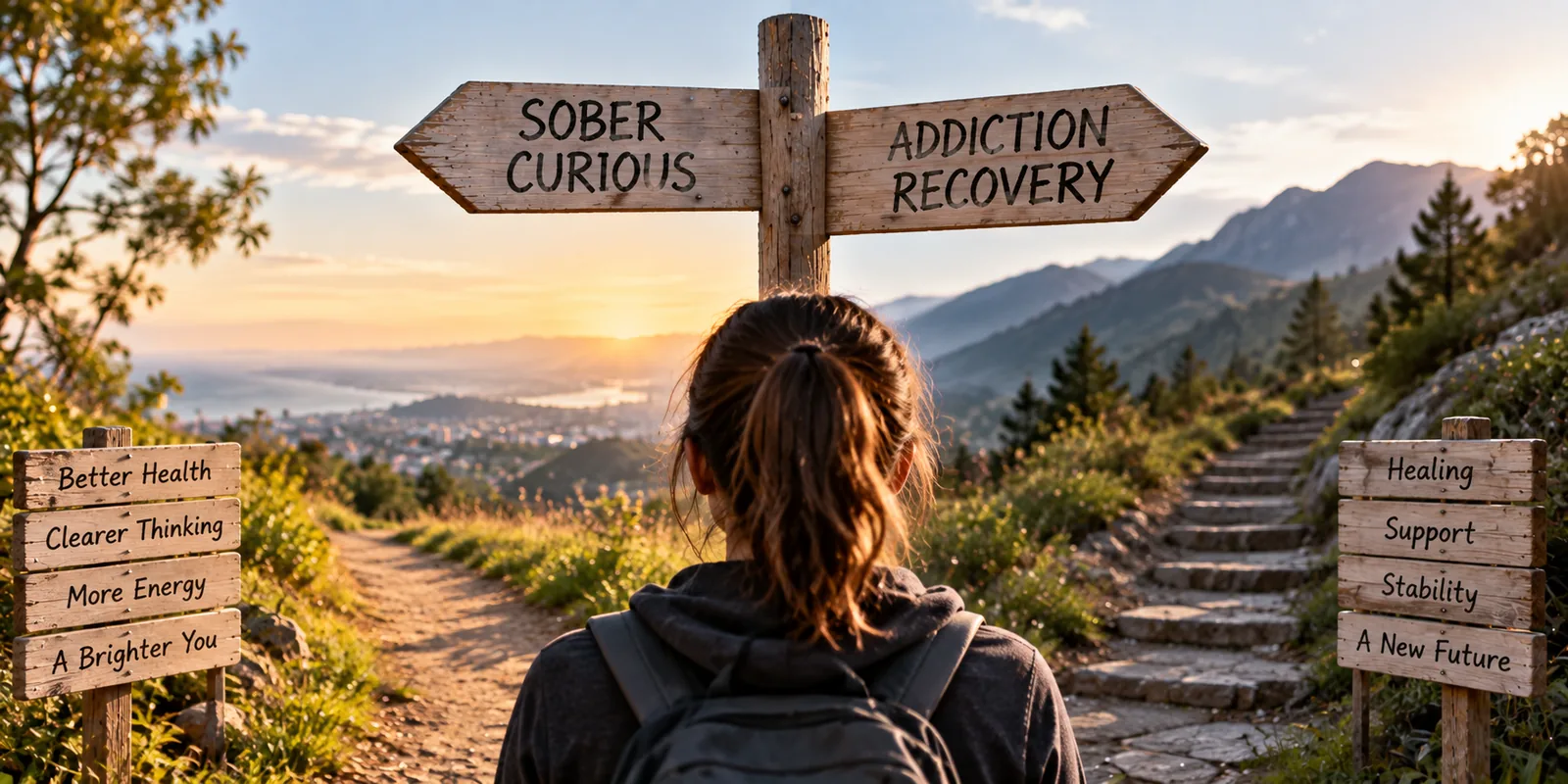


Sober curious vs. addiction recovery may sound like two versions of the same thing, but they can represent very different experiences.
A person who is sober curious is questioning their relationship with alcohol or other substances. They may stop drinking for a month, cut back on weekends, choose alcohol-free events, or simply pay closer attention to how drinking affects their sleep, mood, relationships, and health.
Someone in addiction recovery, however, is typically addressing a substance use problem that has already caused significant harm or loss of control.
The difference is important.
Sober curiosity is often about exploration.
Addiction recovery is often about healing, stability, and preventing a return to harmful substance use.
Understanding addiction and how substance use disorders can affect a person’s life can help explain why casually experimenting with sobriety is different from recovering after drugs or alcohol have become difficult to control.
What Does Sober Curious Mean?
Being sober curious means becoming more intentional about whether, when, and why you use alcohol.
You might ask yourself:
Do I actually enjoy drinking?
Why do I feel like I need alcohol to socialize?
Would I sleep better without it?
How would I feel after 30 days sober?
A sober-curious person does not necessarily have alcohol use disorder.
They may simply want better health, clearer thinking, more energy, fewer hangovers, or greater control over their habits.
They also do not have to commit to permanent abstinence.
Someone might take three months away from alcohol and eventually decide they are comfortable drinking occasionally.
Another person might enjoy sobriety so much that they never return to drinking.
Our guide to sober curious vs. sober explains how experimenting with sobriety differs from making a more definite decision not to drink.
What Is Addiction Recovery?
Addiction recovery usually begins from a very different place.
A person may have experienced cravings, withdrawal, damaged relationships, health problems, financial consequences, overdose, legal trouble, or repeated failed attempts to stop.
Substance use is no longer just something they are questioning.
It has become something they need to change.
Recovery may involve detox, treatment, counseling, medications, peer support, sober living, relapse prevention, or long-term changes to daily routines and relationships.
For some people, complete abstinence is an important part of staying safe.
Others follow different paths, which is why questions about whether someone can be in recovery without being completely abstinent can become complicated.
The goal of recovery is larger than simply counting days without substances.
It is rebuilding health, stability, relationships, purpose, and control over your life.
How Do You Know Which One Describes You?
Sometimes sober curiosity reveals that drinking has become more serious than expected.
Imagine deciding to take 30 days off alcohol.
By day three, you cannot stop thinking about drinking.
You repeatedly bargain with yourself.
Maybe I’ll just have one.
You drink more than planned, hide it from other people, or abandon the challenge completely.
One unsuccessful alcohol-free month does not automatically mean someone has addiction.
But patterns matter.
Warning signs can include:
- Repeatedly using more than intended
- Trying unsuccessfully to cut down
- Strong cravings
- Hiding substance use
- Continuing despite relationship problems
- Missing responsibilities
- Using substances despite health consequences
- Experiencing withdrawal
- Organizing your life around drinking or drugs
If those patterns sound familiar, the issue may extend beyond curiosity.
Someone who is simply sober curious generally has more flexibility around alcohol.
Someone with addiction may feel that alcohol or drugs are making the decisions for them.
Can Sober Curiosity Become Recovery?
Yes.
For some people, sober curiosity becomes the doorway into addiction recovery.
A person may start by thinking:
I’m just taking a break.
Then they begin noticing how much effort drinking required.
They remember the arguments.
The blackouts.
The anxiety.
The mornings spent recovering.
The promises they repeatedly broke.
An alcohol-free experiment can sometimes make patterns much easier to see.
At that point, someone may decide they need more support than a lifestyle challenge provides.
They might attend meetings, speak with a counselor, enter treatment, or build a more structured recovery plan.
They may also begin reconsidering how they describe themselves. Questions about being sober versus clean or whether you have to call yourself an addict forever often arise as people develop their own recovery identity.
Labels can change.
The need for honest self-awareness should not.
Sober Curious, California Sober and Other Recovery Labels
Modern sobriety language can become confusing quickly.
Along with “sober curious,” you may hear terms such as “California sober.”
California sober often describes someone who stops certain substances while continuing to use others, commonly marijuana or alcohol.
That is different from sober curiosity.
A sober-curious person is usually examining whether substances belong in their life at all.
A person following a California sober approach has usually already decided that some substance use remains acceptable.
This has created debate over whether California sober really counts as sobriety.
Again, the label cannot tell you whether someone’s relationship with substances is healthy.
Behavior can.
The Difference Comes Down to Why You’re Changing
Sober curiosity and addiction recovery can overlap, but they are not identical.
Sober curiosity often begins with:
What would my life be like without drinking?
Addiction recovery may begin with:
I cannot keep living like this.
Both can lead to powerful changes.
Neither requires shame.
If you are experimenting with sobriety and discovering that stopping is much harder than expected, take that information seriously. Difficulty controlling use, strong cravings, or repeated consequences may signal that additional support could help.
If you are already in addiction recovery, you do not need to compare your path with someone who simply decided to skip alcohol for a month.
Your challenges may be different.
So may your needs.
What matters is becoming more honest about the role substances play in your life.
Sometimes that honesty leads to drinking less.
Sometimes it leads to never drinking again.
And sometimes it becomes the first step toward rebuilding an entire life.


