



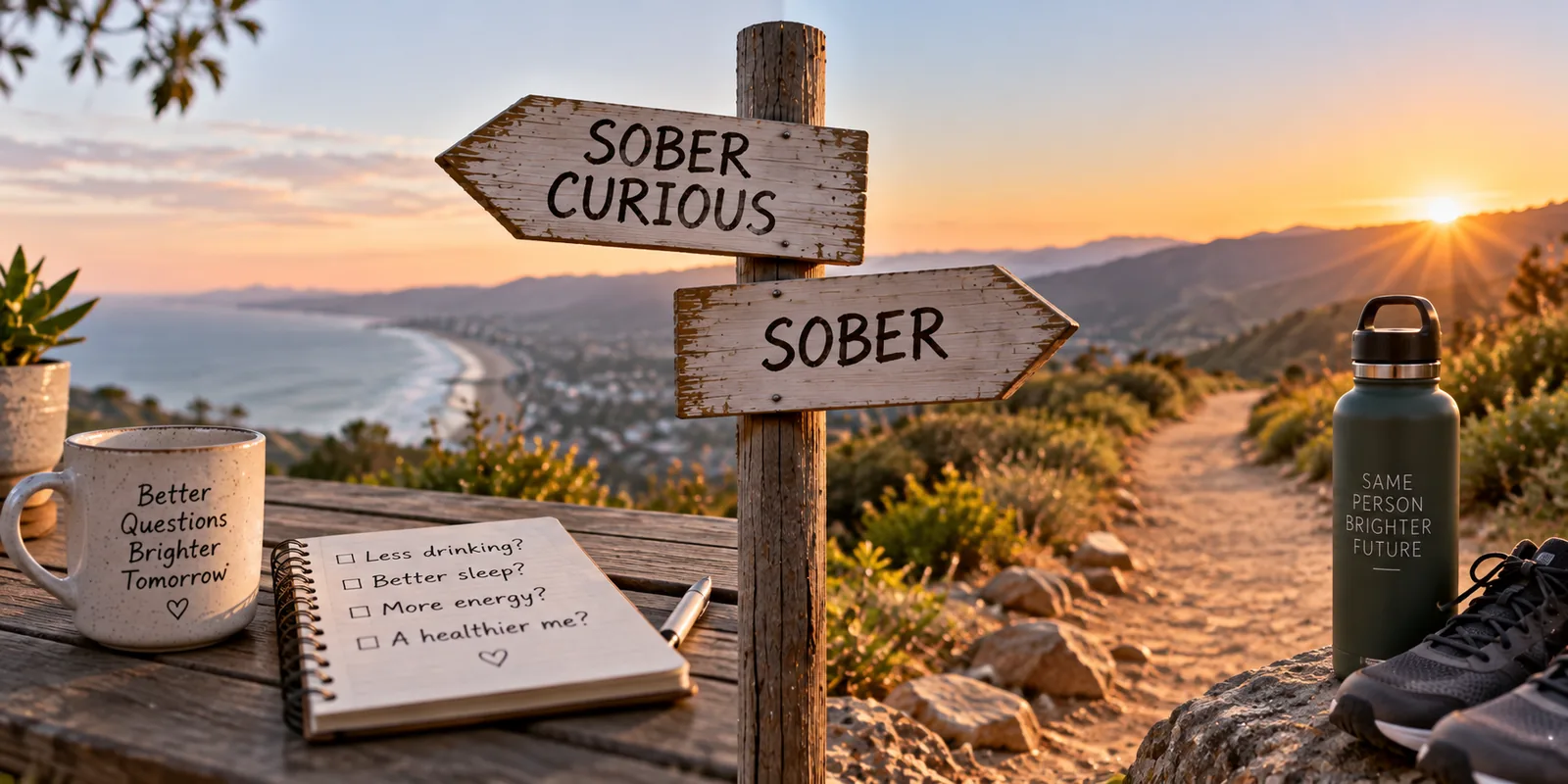


Sober curious vs. sober may sound like two ways of saying the same thing, but there is an important difference.
Someone who is sober curious is questioning the role alcohol plays in their life. They may take a month off drinking, stop drinking during the week, attend alcohol-free events, or simply experiment with what life feels like without alcohol.
Someone who describes themselves as sober is usually making a more definite statement: they do not drink alcohol. For people in addiction recovery, sobriety may also include avoiding other non-prescribed drugs.
The difference matters because being sober curious does not necessarily mean someone has an alcohol addiction.
Some people simply want better sleep, fewer hangovers, improved health, clearer thinking, or more control over how they spend their time.
Others begin sober curiosity because they are quietly wondering whether their drinking has become a bigger problem than they want to admit.
What Does Sober Curious Mean?
Being sober curious means intentionally questioning your relationship with alcohol instead of automatically drinking because everyone else is.
You might ask:
Why do I drink every weekend?
Would I enjoy this event without alcohol?
Would I sleep better if I stopped drinking?
Am I drinking because I want to—or because it has become a habit?
A sober-curious person does not necessarily promise never to drink again.
They may try 30 days without alcohol.
They may only drink on special occasions.
They may eventually return to moderate drinking.
Or they may discover that life feels significantly better without alcohol and decide to stop completely.
This makes sober curiosity different from addiction recovery, where substance use has already created enough problems that maintaining recovery may require stronger boundaries and additional support.
What Does It Mean to Be Sober?
“Sober” can have several meanings.
Technically, it can simply mean someone is not currently intoxicated.
In everyday conversation, however, someone who says, “I’m sober,” often means they have stopped drinking alcohol altogether.
In recovery communities, sobriety may have an even broader meaning.
Someone might use the word to describe years without alcohol or non-prescribed drugs while rebuilding their health, relationships, routines, and emotional well-being.
That is why discussions about the difference between sober and clean can become complicated. Different recovery communities use these words differently.
Someone can also be sober without identifying as an alcoholic, addict, or person in recovery.
They may simply choose not to drink.
Sober Curious vs. Sober: The Biggest Differences
The biggest difference is usually commitment and purpose.
Sober curiosity is often an experiment.
Sobriety is generally a decision.
Someone who is sober curious might say:
“I’m seeing how I feel without drinking.”
Someone who is sober might say:
“I don’t drink.”
Neither statement automatically tells you whether that person has experienced addiction.
A person may become sober because of alcohol addiction, medication interactions, pregnancy, religious beliefs, fitness goals, family history, mental health, personal preference, or dozens of other reasons.
Likewise, someone experimenting with sobriety may eventually realize alcohol has more control over their life than they previously recognized.
Sober curiosity can create space to notice that.
It can also help people question social expectations around drinking without requiring them to immediately adopt a lifelong recovery identity.
When Sober Curiosity Reveals a Bigger Problem
Taking a break from alcohol can sometimes reveal warning signs.
Perhaps you planned not to drink for 30 days but could not make it through the first weekend.
Maybe you constantly thought about alcohol.
Perhaps you became uncomfortable in situations where you could not drink.
You might begin hiding drinking, breaking rules you set for yourself, or drinking significantly more than you intended.
Those experiences do not automatically prove someone has alcohol use disorder, but they are worth taking seriously.
Someone concerned about a family member or friend may also notice repeated consequences, failed attempts to stop, damaged relationships, or increasing alcohol or drug use.
When conversations have repeatedly failed and substance use is causing serious harm, learning how a professional drug or alcohol intervention works may help families understand their options for encouraging treatment.
If stopping alcohol causes shaking, hallucinations, seizures, severe confusion, or other serious symptoms, seek medical care. Alcohol withdrawal can become dangerous in people who have developed physical dependence.
Can Sober Curious Turn Into Long-Term Sobriety?
Absolutely.
For some people, sober curiosity is simply a temporary experiment.
For others, it becomes the beginning of something much bigger.
A person takes a month away from alcohol and notices:
They sleep better.
Their anxiety improves.
They save money.
Their relationships feel more genuine.
Weekends become more productive.
They no longer lose mornings to hangovers.
Eventually, they may decide that drinking simply is not adding enough value to their life.
Others may realize they were using alcohol to manage stress, loneliness, anxiety, or uncomfortable emotions.
That realization can lead them toward treatment or recovery.
Some people also explore alternatives such as reducing alcohol rather than immediately choosing complete abstinence. Our guide to recovery without complete abstinence examines that discussion.
Others experiment with approaches such as California sober, although continuing to use other substances can create its own risks.
There is no requirement that sober curiosity must eventually become permanent sobriety.
But asking honest questions about alcohol can be valuable regardless of the answer.
You Don’t Need a Label to Question Your Drinking
You do not have to identify as an alcoholic to stop drinking.
You do not need to hit “rock bottom.”
And you do not have to promise yourself that you will never drink again just to see how life feels without alcohol.
Sober curiosity gives people permission to ask a simple question:
Would my life be better if I drank less—or not at all?
For some, the answer will lead back to occasional drinking.
For others, it may lead to permanent sobriety.
And for someone struggling to control alcohol despite consequences, it may become the first step toward recognizing that additional help is needed.
The label matters less than the honesty behind it.
Whether you are sober curious, completely sober, or beginning addiction recovery, the goal is not to win an argument about terminology.
It is to understand the role alcohol plays in your life and decide whether that role still serves you.


