



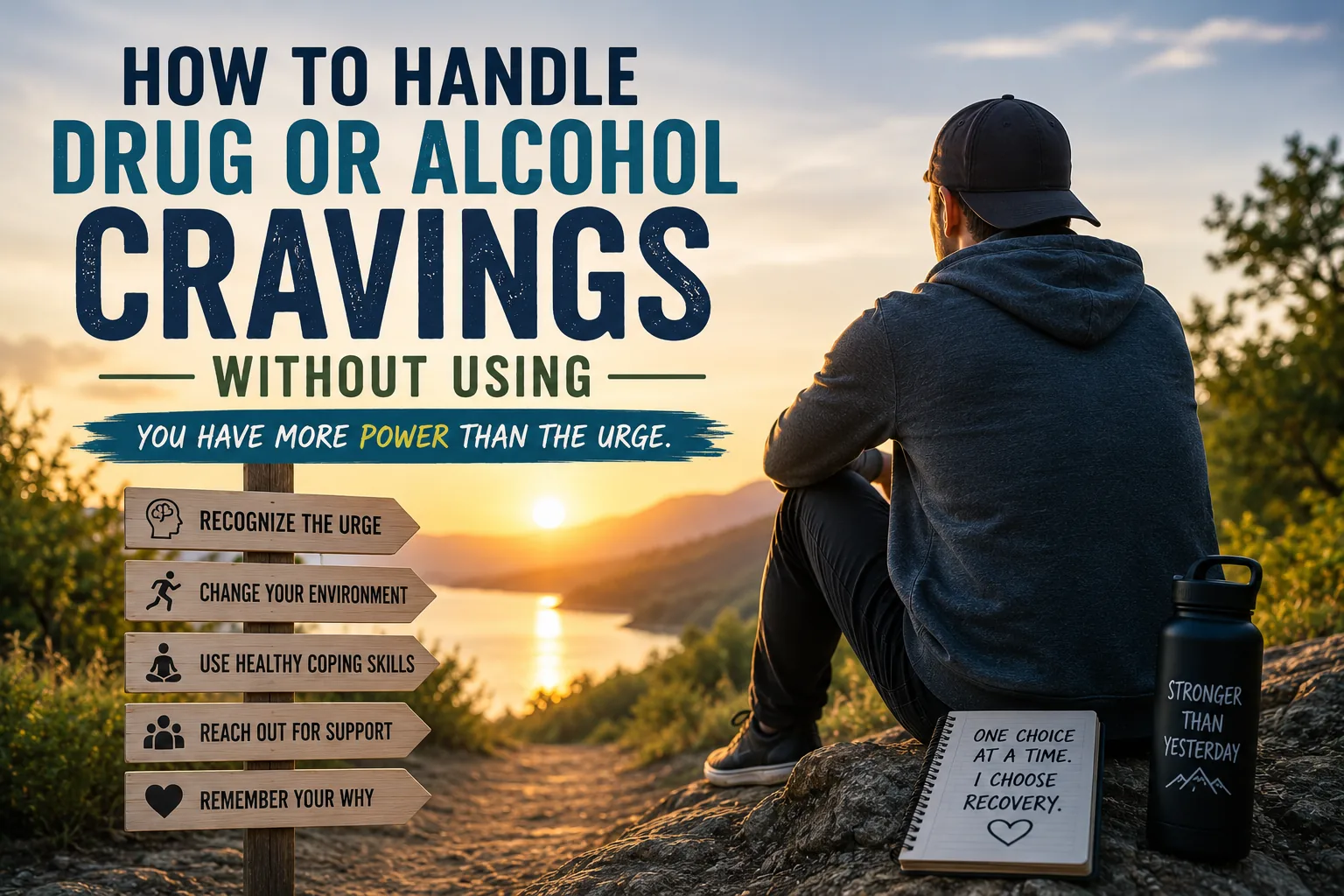


Learning how to handle drug or alcohol cravings without using is one of the most important skills in addiction recovery. A craving can come on suddenly and feel overwhelming. One minute you are going about your day, and the next your mind is telling you that drinking or using would make everything easier.
That does not mean you have failed.
Cravings are a common part of recovery, especially after repeated substance use. Your brain may still connect drugs or alcohol with relief, pleasure, excitement, sleep, confidence, or escape.
The goal is not necessarily to never experience another craving.
The goal is to learn that a craving can happen without becoming a relapse.
You can feel the urge.
You can recognize it.
And you can choose not to use.
Understand What a Craving Actually Is
A craving is a strong desire or urge to use a substance.
Sometimes it feels physical.
You may become restless.
Your heart may race.
Your mouth may water.
You might feel anxious or unable to concentrate.
Other cravings are mostly mental.
You start remembering using.
You picture the first drink.
You think about how drugs once made you feel.
The addicted brain can form strong associations between substances and certain emotions, situations, people, and places.
That is why cravings may continue even after the substance itself is out of your body.
Our broader guide to drug and alcohol cravings in recovery explains why these urges happen and why they do not automatically mean recovery is failing.
Understanding the craving can make it less frightening.
It is a feeling.
Not an instruction.
Identify What Triggered the Urge
When a craving appears, ask yourself what happened right before it.
Were you stressed?
Angry?
Lonely?
Tired?
Did you see someone you used with?
Did you drive past an old bar?
Were you listening to music connected with using?
Did someone offer you a drink?
These connections are often called triggers.
Learning how to deal with triggers in addiction recovery can help you recognize patterns before they become overwhelming.
Sometimes the trigger is easy to identify.
Other times the urge appears to come from nowhere.
Do not panic if you cannot immediately explain it.
Focus first on staying safe.
You can figure out the pattern later.
Change What Is Happening Around You
One of the simplest ways to respond to a craving is to change your environment.
If you are standing outside an old bar, leave.
If you are with people who are using, go somewhere else.
If you are alone and becoming overwhelmed, call someone.
Physical movement can interrupt the mental loop.
Walk.
Drive somewhere safe.
Go to the gym.
Take a shower.
Attend a recovery meeting.
Eat something.
Drink water.
Do something that requires your attention.
When an urge feels especially sudden, having a plan for what to do when you suddenly want to use again can help you act before the craving turns into a series of risky decisions.
Do not sit in the same environment arguing with yourself if you can safely change it.
Sometimes the smartest recovery decision is simply leaving.
Give the Craving Time to Pass
A craving can make you believe:
“I will feel like this until I use.”
You do not have to believe that thought.
Cravings change.
They rise.
They become intense.
Then they can begin to fade.
Understanding how long drug cravings may last after quitting can help you remember that an urge does not need to determine the rest of your day.
Try delaying action.
Tell yourself:
“I am not using for the next 20 minutes.”
Then do something else.
Call someone.
Walk.
Eat.
Watch something.
Exercise.
Clean.
Write.
You do not need to solve the rest of your life during a craving.
You need to get through the moment in front of you.
Also remember that cravings can sometimes return unexpectedly much later. Learning why cravings may come back months or years into recovery can prevent a surprise urge from making you believe you have lost all your progress.
Prepare for Stress and Social Situations
Cravings often become stronger when life becomes harder.
Relationship problems.
Money.
Work stress.
Grief.
Poor sleep.
Family conflict.
If substances were once your fastest way to escape uncomfortable emotions, stress may cause the brain to suggest that old solution again.
Planning how to stay sober during stressful times can help you respond before pressure becomes overwhelming.
Social situations can also create powerful triggers.
You may feel completely comfortable until people around you begin drinking.
If that is a challenge, prepare for staying sober when everyone around you drinks.
Parties can be especially difficult because they combine alcohol, social pressure, old routines, and excitement. Knowing how to stay sober at parties and social events can help you decide when to attend, what boundaries to set, and when to leave.
You do not have to prove your recovery by staying in a dangerous environment.
Protecting yourself is not weakness.
Have a Plan Before the Next Craving
The best time to create a craving plan is when you are not craving anything.
Write down:
- People you can call
- Places you can go
- Reasons you stopped using
- Activities that distract you
- Meetings or support groups available to you
- Situations you should avoid
- Warning signs that mean you need more help
Think about what you will do if life becomes unusually difficult.
Our guide to protecting your recovery when life gets difficult can help you prepare for those periods before you become overwhelmed.
Most importantly, recognize when a craving is becoming more than a craving.
Thinking:
“I want to use.”
is different from:
“I know where I can get drugs, and I am thinking about going there.”
The closer the thought gets to a plan, the more important it is to reach out immediately.
A craving does not have to become a relapse.
Every time you experience an urge without using, you prove something important to yourself.
The craving can come.
It can feel intense.
And it can leave.
Handling drug or alcohol cravings without using is not about having perfect control. It is about creating enough time, distance, support, and healthy choices for the urge to pass without allowing addiction to make the decision for you.


