



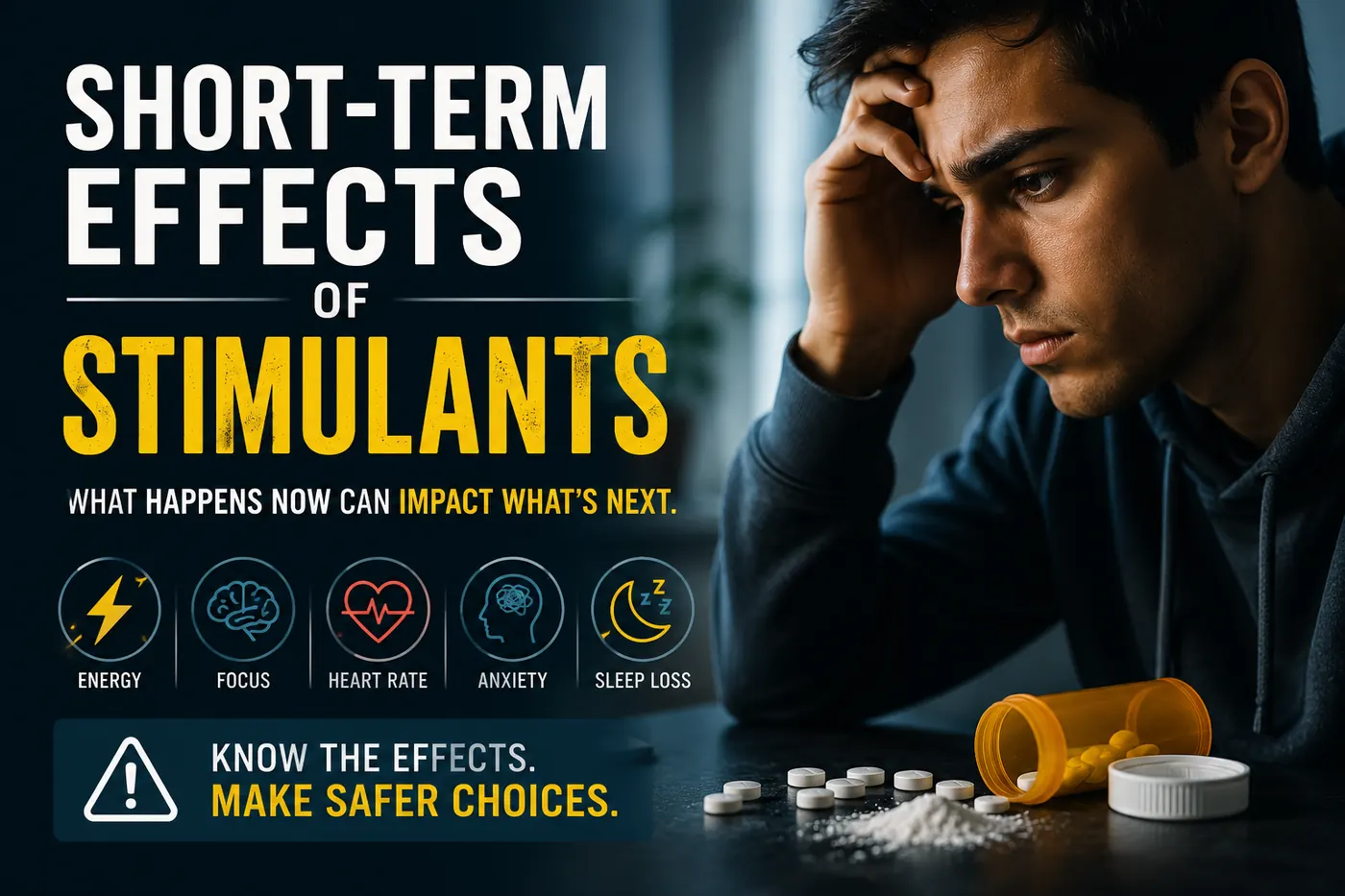


The short-term effects of stimulants can feel powerful at first, but they can turn dangerous fast. The immediate effects of stimulant use may include more energy, alertness, confidence, less appetite, faster heartbeat, higher blood pressure, anxiety, sweating, and trouble sleeping. For some people, these effects seem helpful. For others, they become the start of panic, paranoia, chest pain, risky choices, addiction, or overdose.
That is the part many people miss. Stimulants do not only “wake you up.” They push the body and brain harder than normal. Drugs like cocaine, methamphetamine, Adderall, Ritalin, Vyvanse, and other amphetamines can affect the heart, brain, mood, sleep, and behavior within minutes or hours. Even one episode of heavy use can become an emergency.
Navigating This Guide
This hub page serves as the entry point for deeper exploration. Use the links below to dive into specific areas of stimulant addiction:
In 2024, about 9 million people age 12 or older in the United States misused central nervous system stimulants. About 4.3 million had a central nervous system stimulant use disorder. That same year, 28,722 overdose deaths involved psychostimulants with abuse potential, and 21,945 involved cocaine.
As Jamie Lee Curtis said about recovery, “It was the bravest thing I ever did.” That kind of bravery can start with telling the truth about what stimulants are doing.
How Stimulants Affect the Body Right Away
Stimulants speed up the central nervous system. This can make a person feel awake, focused, talkative, excited, or more confident. Some people use stimulants to party longer, study harder, lose weight, work more, or feel less depressed. But the body pays a price.
Short-term physical effects may include a racing heart, higher blood pressure, sweating, dry mouth, shaking, clenched jaw, widened pupils, headaches, nausea, and loss of appetite. Some people feel like they can go without food or sleep. That may seem useful in the moment, but it can quickly become dangerous.
Stimulants can also narrow blood vessels and place stress on the heart. This raises the risk of chest pain, irregular heartbeat, overheating, seizure, heart attack, and stroke. The risk is higher when someone takes large amounts, uses for hours or days, mixes drugs, or already has heart or blood pressure problems.
Prescription stimulants can be safe when taken exactly as prescribed. The danger rises when someone takes more than directed, takes another person’s medication, crushes pills, snorts them, or mixes them with alcohol or other drugs.
Mental and Emotional Short-Term Effects
Stimulants do not only affect the body. They also change mood, thoughts, and behavior. At first, a person may feel sharp, happy, energetic, or fearless. They may talk more, move more, and feel like they can handle anything.
But this can shift quickly. The same drug that creates confidence can also trigger anxiety, panic, anger, agitation, and paranoia. Some people become suspicious of others. Some feel like they are being watched. Heavy use, high doses, and lack of sleep can lead to hallucinations or stimulant-induced psychosis.
Stimulants can also lower judgment. A person may drive too fast, spend too much money, have unsafe sex, get into fights, or take more drugs than planned. In the moment, they may not see how risky their choices are.
The crash can be painful too. When the stimulant wears off, the person may feel exhausted, sad, anxious, hungry, guilty, or emotionally empty. This crash can push them to use again just to feel normal.
The Brain, Dopamine, and Addiction Risk
The short-term effects of stimulants are tied to dopamine. Dopamine is a brain chemical linked to reward, motivation, and learning. Stimulants can flood the brain with dopamine, making the drug feel important and worth repeating.
That rush teaches the brain, “Do this again.” Over time, the brain can begin to link stimulant use with energy, confidence, relief, or pleasure. This is how casual use can turn into a pattern. The person may start using before work, before school, before social events, or whenever they feel tired, stressed, or low.
This is not just about willpower. Stimulants can change the way the brain responds to reward and cravings. Normal things like sleep, food, hobbies, family, or work may start to feel less satisfying. The drug becomes the shortcut.
Short-term use can also become binge use. A person may keep taking more to hold onto the high or avoid the crash. This can lead to days without sleep, poor nutrition, paranoia, dehydration, and a much higher risk of overdose.
When Short-Term Effects Become a Warning Sign
Some short-term effects mean it is time to get help right away. Call 911 if someone has chest pain, trouble breathing, seizures, extreme confusion, severe paranoia, overheating, fainting, violent behavior, or thoughts of self-harm.
Other warning signs may not look like an emergency, but they still matter. If someone keeps using stimulants even after panic attacks, health scares, work problems, broken trust, money issues, or family conflict, the drug may already be taking control.
Loved ones should pay attention to patterns. Is the person staying awake for long periods? Are they crashing hard? Are they hiding pills, money, or drug use? Are they becoming more anxious, angry, or paranoid? Are they using stimulants to feel normal?
If the answer is yes, it may be time to talk about treatment. Do not wait until an overdose, arrest, or medical crisis proves the problem is real.
Recovery can start before everything falls apart. Treatment can help with cravings, withdrawal, mental health symptoms, sleep, relapse prevention, and rebuilding daily life. A person may need outpatient care, residential treatment, therapy, peer support, or medical help depending on their situation.
The short-term effects of stimulants can be a warning light. They are the body and brain saying, “This is not safe.” If you or someone you love is seeing these signs, take them seriously. Help is available, and reaching out now may prevent something much worse later.


