



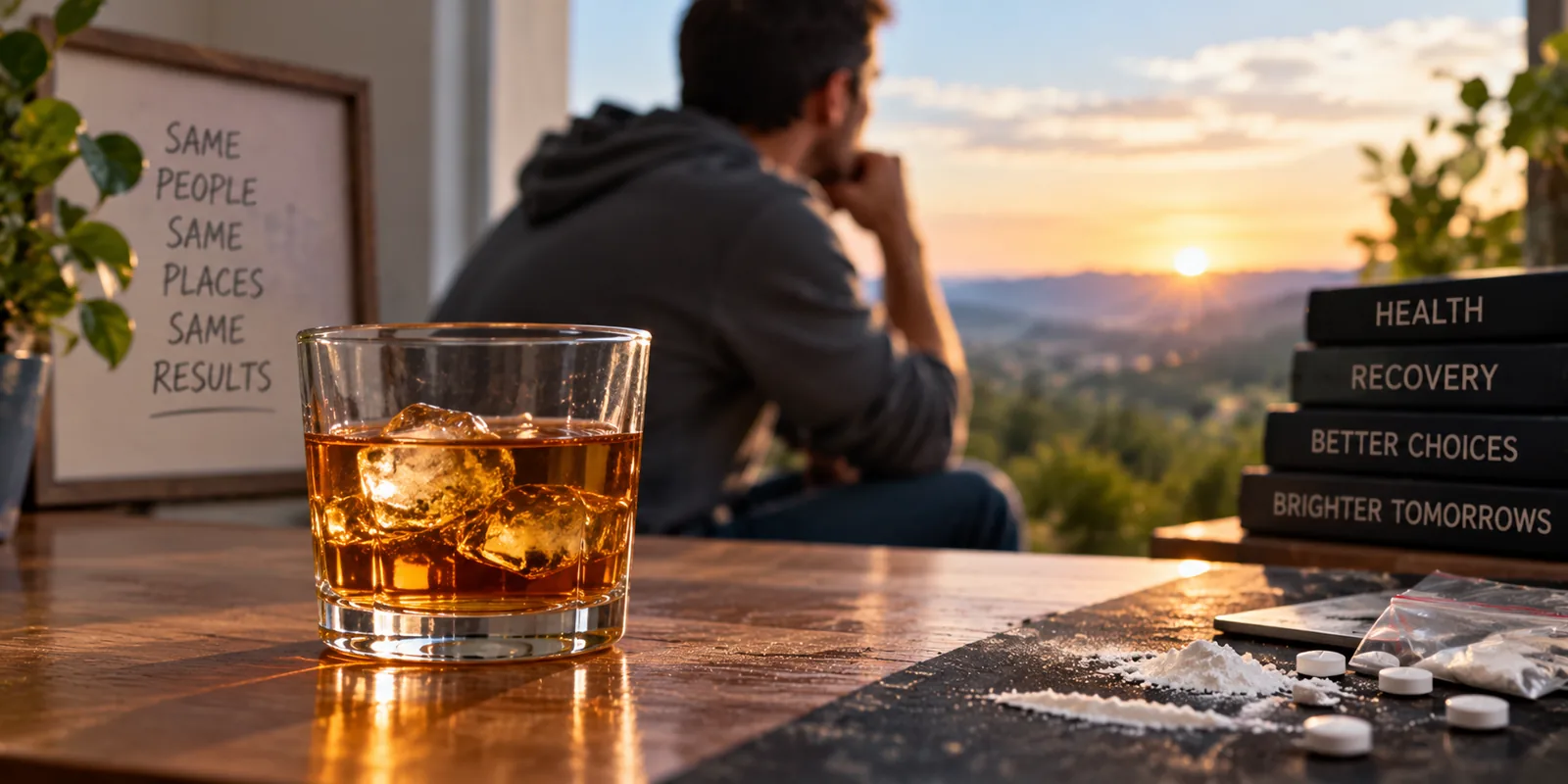


Can you drink alcohol if drugs were your addiction? It is one of the most difficult questions people face in recovery.
Maybe heroin was your problem, not alcohol.
Maybe cocaine destroyed your relationships, while you were always able to have a few beers without trouble.
You might wonder: Why should I give up alcohol when alcohol was never my drug of choice?
There is no answer that is safe for every person. Some people with a history of drug addiction may drink without developing alcohol use disorder. For others, drinking becomes a doorway back to their original drug—or alcohol eventually becomes the new problem.
Understanding alcohol use, addiction, and the effects of drinking can help you make a more informed decision rather than assuming alcohol is automatically safe simply because another drug caused the most damage.
Why Alcohol Can Be Risky After Drug Addiction
Alcohol changes judgment.
That matters during recovery.
Imagine someone who has been free from cocaine for eight months. They go to a party and decide to have a couple drinks.
After several drinks, they feel confident and less concerned about consequences.
Someone mentions cocaine.
Suddenly, an idea they would have rejected while sober does not seem as dangerous.
That does not mean drinking will automatically cause someone to use drugs again.
But alcohol can weaken the boundaries that protect recovery.
It may also reconnect you with bars, parties, people, or situations associated with your former substance use.
For someone who has spent months building new routines, alcohol can reopen doors that were intentionally closed.
This is why avoiding your primary drug while continuing to drink is different from simply asking whether alcohol was ever your “problem.”
Recovery involves considering what could lead back to that problem.
Can Addiction Switch From One Substance to Another?
Sometimes people stop one drug and begin relying heavily on another substance.
Someone stops opioids but starts drinking every evening.
Someone quits meth but begins using marijuana throughout the day.
Someone stops cocaine but discovers they now need alcohol whenever they feel stressed, lonely, or anxious.
The original substance changed.
The underlying pattern may not have.
Pay attention to why you are drinking.
Are you having an occasional drink because you genuinely enjoy it?
Or are you using alcohol to shut off your thoughts, escape uncomfortable feelings, sleep, socialize, or cope with stress?
Those motivations matter.
Our guide to whether you can be in recovery without being completely abstinent looks more closely at the difference between abstinence, moderation, and harm-reduction approaches.
Some people can create boundaries around substances that were never part of their addiction.
Others discover that switching substances simply gives addiction a new place to grow.
What Are the Warning Signs That Drinking Is Becoming a Problem?
Be honest with yourself about what happens after you start drinking.
Warning signs may include:
- Drinking more frequently than you planned
- Regularly getting drunk
- Hiding how much you drink
- Needing alcohol to relax or socialize
- Thinking about alcohol throughout the day
- Breaking limits you set for yourself
- Returning to people connected with past drug use
- Experiencing cravings for your original drug
- Missing recovery meetings or treatment
- Believing you no longer need support because you can “handle” alcohol
These patterns can become warning signs of addiction relapse, especially if drinking starts bringing old thoughts and behaviors back into your life.
You do not need to wait until you use your original drug again before taking those signs seriously.
Sometimes the relapse process begins long before the drug itself returns.
Does Recovery Have to Mean Complete Abstinence?
This depends partly on how you define recovery.
Traditional abstinence-based programs generally recommend avoiding alcohol and non-prescribed drugs entirely.
That clear rule works well for many people.
Others use a harm-reduction approach and focus on eliminating the substances that caused the greatest danger while evaluating other substance use individually.
This debate is one reason people ask about being sober versus clean.
It has also contributed to terms such as California sober, which usually describes stopping certain substances while continuing others.
But terminology should not distract from what is happening in your life.
If alcohol increases cravings, damages relationships, causes you to lose control, or repeatedly puts you near your former drug, it probably does not matter what recovery label you use.
Your behavior is giving you the answer.
How Do You Decide Whether Drinking Is Worth the Risk?
Ask yourself some difficult questions.
What do I gain from drinking?
What could I lose?
Did alcohol regularly appear alongside my drug use?
Have I ever used my primary drug after drinking?
Does alcohol make me want other substances?
Am I drinking to cope with emotions?
Could I comfortably choose not to drink?
What do the people who know my addiction history think?
If the only reason to drink is proving that you can, consider whether that experiment is worth risking something you fought hard to rebuild.
Someone in early recovery may also have a different risk profile than someone who has been stable for years.
Talk openly with an addiction professional, therapist, physician, sponsor, peer-support worker, or another person who understands your history.
Do not hide the parts of the story that make drinking seem less safe.
Protect the Life You Built in Recovery
Recovery does not require everyone to use identical rules.
But it does require honesty.
Alcohol may never have been the substance that brought you to treatment. That does not automatically make it harmless.
For some people, avoiding alcohol removes an unnecessary risk.
For others, the bigger issue may be recognizing whether any mind-altering substance is beginning to take on the same emotional role their original drug once had.
If you are still deciding what sobriety means for you, exploring the difference between sober curiosity and addiction recovery can help put these choices into perspective.
You can also find more information about building sustainable addiction recovery.
The question is not simply:
Can I drink?
A better question may be:
Is drinking worth putting my recovery at risk?
You worked hard to build distance between yourself and addiction.
Whatever choices you make next should protect that distance—not slowly erase it.


