



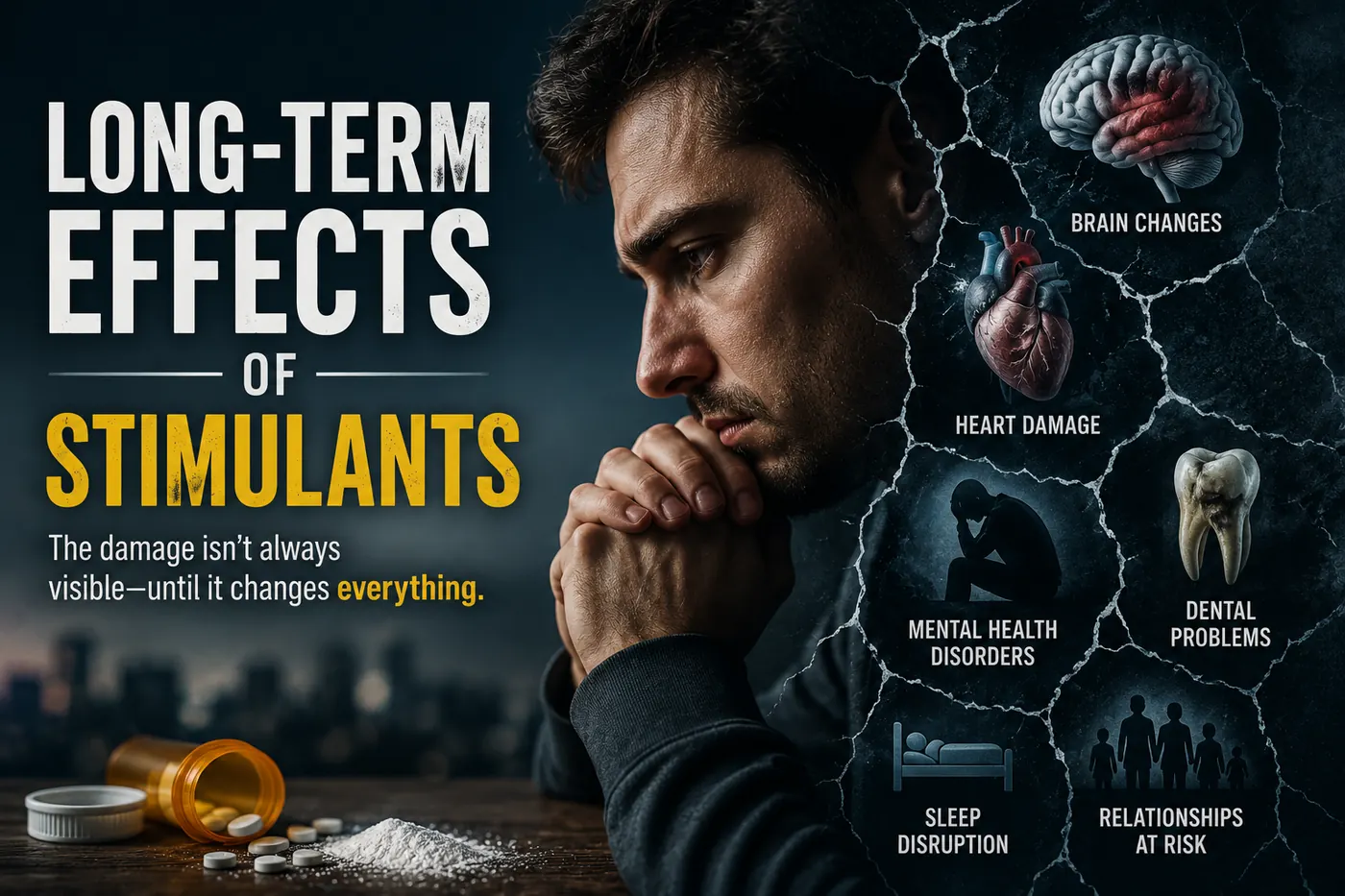


The long-term effects of stimulants can reach far beyond a short high, a burst of energy, or a few sleepless nights. The long-term stimulant use effects can damage the brain, heart, mood, sleep, teeth, skin, relationships, money, work, and safety. What starts as “just something to help me focus” or “just something to party” can become a life-changing addiction.
That is the danger many people do not see coming. Stimulants like cocaine, methamphetamine, crack cocaine, Adderall, Ritalin, Vyvanse, and other amphetamines can train the brain to crave the drug while slowly breaking down the body. In 2024, about 9 million people age 12 or older in the United States misused central nervous system stimulants. About 4.3 million had a central nervous system stimulant use disorder. That same year, 28,722 overdose deaths involved psychostimulants with abuse potential, and 21,945 involved cocaine.
As Johann Hari said, “The opposite of addiction isn’t sobriety; it is connection.” That connection can be the first step toward help.
Navigating This Guide
This hub page serves as the entry point for deeper exploration. Use the links below to dive into specific areas of stimulant addiction:
How Stimulants Change the Brain Over Time
Stimulants affect dopamine, a brain chemical tied to pleasure, reward, and motivation. When someone uses stimulants, the brain can get a large dopamine rush. Over time, the brain may start to depend on the drug to feel energy, focus, confidence, or joy.
This is why long-term stimulant use can feel so trapping. Normal life may start to feel boring or empty. Food, sleep, hobbies, family, and work may not bring the same reward. The person may keep using, not because it feels good anymore, but because being without it feels unbearable.
Long-term stimulant use can also affect memory, learning, decision-making, and impulse control. A person may make choices they never thought they would make. They may lie, steal, disappear, or take risks to get more drugs. This does not mean they are a bad person. It means addiction has changed how their brain reacts to stress, cravings, and reward.
The brain can heal, but it takes time. Treatment, rest, nutrition, therapy, and sober support can help the brain relearn how to live without stimulants.
Physical Long-Term Effects of Stimulants
The body pays a heavy price for long-term stimulant use. Stimulants raise heart rate, blood pressure, and body temperature. Over time, this can increase the risk of chest pain, irregular heartbeat, heart attack, stroke, seizures, and sudden death.
Methamphetamine can be especially hard on the body. Long-term use may lead to severe dental problems, weight loss, skin sores, infections, and poor nutrition. People may pick at their skin because of anxiety, paranoia, or the feeling that bugs are crawling on them. Cocaine can damage the heart and blood vessels. Snorting cocaine can also harm the nose and sinuses.
Long-term stimulant use often destroys sleep. A person may stay awake for long periods, then crash for hours or days. Poor sleep makes mental health worse. It also weakens the immune system and makes it harder to think clearly.
Prescription stimulants can also be harmful when misused. Taking more than prescribed, using someone else’s medication, crushing pills, snorting them, or mixing them with other drugs can raise the risk of addiction, heart problems, and overdose.
Mental Health and Relationship Damage
Long-term stimulant use can change a person’s mood and personality. Someone who was once calm may become anxious, angry, paranoid, or unpredictable. They may have panic attacks, depression, mood swings, or suicidal thoughts. Heavy use and lack of sleep can lead to stimulant-induced psychosis, where a person may hear, see, or believe things that are not real.
Families often notice the emotional damage before the person using does. Trust starts to break. Money disappears. Promises are made and broken. Loved ones may feel scared, confused, angry, and exhausted.
Stimulant addiction can also damage work, school, and legal stability. A person may miss shifts, lose jobs, fail classes, drive under the influence, or get arrested. Over time, life can become smaller and smaller until everything revolves around getting, using, hiding, and recovering from the drug. Learn more about the addicted brain.
This is not the future anyone plans for. But it is a common path when stimulant use continues without help.
Getting Help Before the Damage Gets Worse
The long-term effects of stimulants are serious, but they do not have to be the end of the story. People recover every day. The brain and body can begin to heal when stimulant use stops and the person gets the right support.
Treatment may include medical evaluation, detox support, residential treatment, outpatient care, therapy, peer support, relapse prevention, and mental health care. Some people also need help for ADHD, depression, anxiety, trauma, or sleep problems. Treating these issues can lower the risk of going back to stimulant use.
Loved ones can help by speaking with care and honesty. Try saying, “I love you. I’m worried about what this is doing to your health and your life. I want to help you get support.” Avoid shaming, yelling, or making threats you will not keep. Set clear boundaries, but keep the door open for treatment.
If someone has chest pain, seizures, extreme confusion, severe paranoia, violent behavior, or thoughts of self-harm, call 911 right away.
Long-term stimulant use can make a person believe they are too far gone. That is not true. Addiction lies. Recovery tells the truth: help is available, healing is possible, and life can get better. If stimulants are hurting you or someone you love, now is the time to reach out.


