



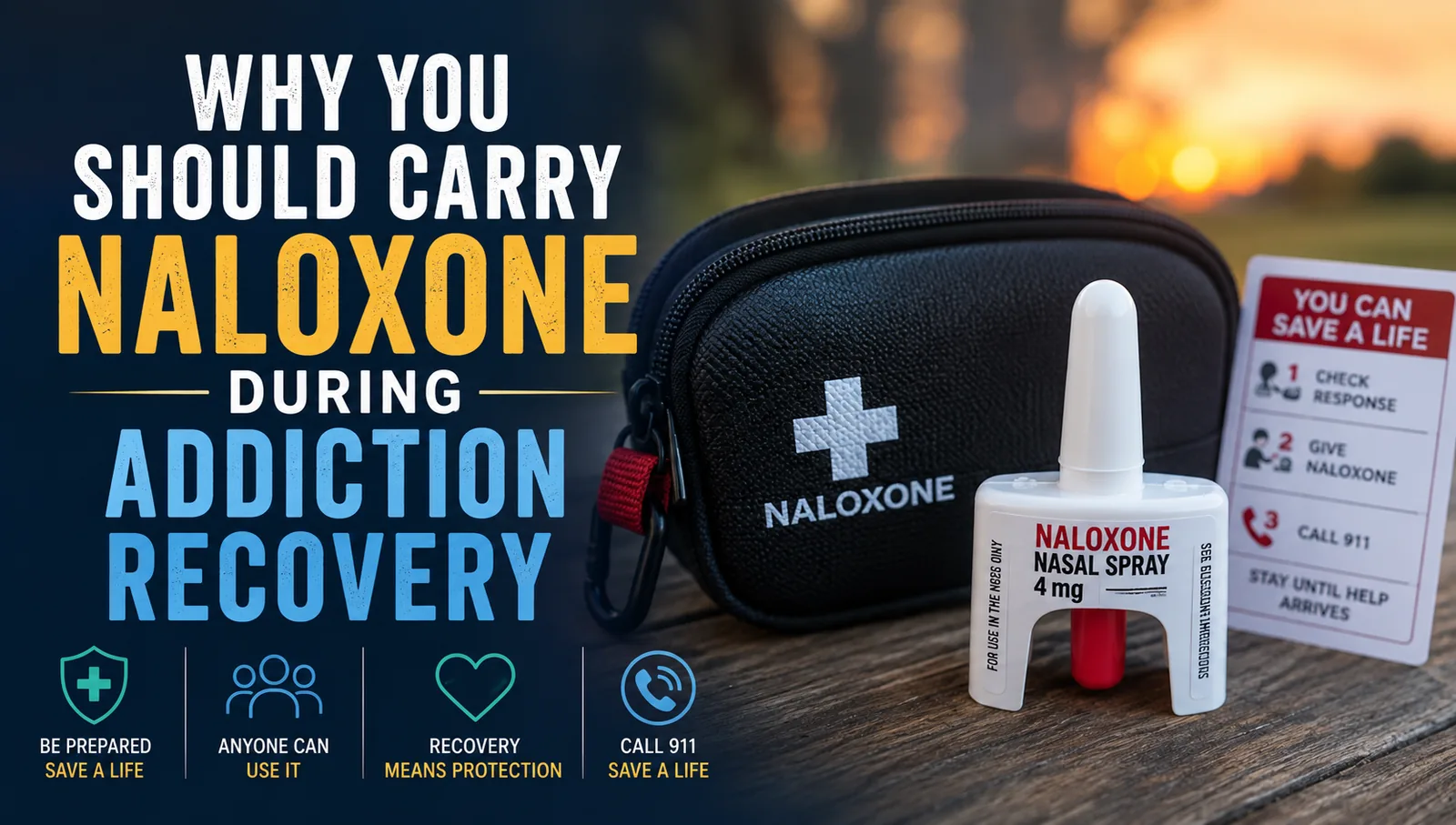


Carrying naloxone during addiction recovery may feel unnecessary if you are sober and committed to staying that way. But recovery does not eliminate overdose risk overnight. For people with a history of heroin, fentanyl, or prescription opioid use, naloxone can provide an important layer of protection during one of the most vulnerable periods of recovery.
Naloxone is a medication that rapidly reverses an opioid overdose. It works by blocking opioids from receptors in the brain and can restore breathing when opioids have caused breathing to slow or stop. It works against opioids including heroin, fentanyl, oxycodone, hydrocodone, and morphine.
Carrying naloxone does not mean you expect to relapse. Think of it like carrying a fire extinguisher or knowing CPR. You hope you never need it, but having it nearby can save a life.
Recovery Can Be a High-Risk Time for Opioid Overdose
One reason naloxone matters so much during opioid recovery is that tolerance can change.
Someone who regularly used opioids may once have tolerated amounts that would be dangerous to another person. After detox, rehab, incarceration, hospitalization, or a period of abstinence, that tolerance can decrease.
If a relapse occurs, returning to a previously familiar amount can result in overdose because the body may no longer tolerate the dose.
The illegal opioid supply creates another risk. Illegally manufactured fentanyl remains heavily involved in overdose deaths in the United States, and fentanyl may be present in drugs without the person realizing it.
Someone may think they are returning to heroin or taking a counterfeit prescription pill and instead encounter fentanyl.
That means a single unexpected relapse can become life-threatening very quickly.
Having naloxone available gives the person—or someone nearby—a chance to respond while emergency services are on the way.
Naloxone Can Reverse an Opioid Overdose
During an opioid overdose, breathing can become extremely slow or stop altogether.
Warning signs may include:
- The person cannot be awakened.
- Breathing is slow, irregular, or stopped.
- Pupils are extremely small.
- The body becomes limp.
- Lips, skin, or fingernails become blue, gray, or unusually pale.
- The person makes choking, snoring, or gurgling sounds.
Naloxone can quickly block opioid effects and restore normal breathing. The CDC states that breathing may return within about two to three minutes after naloxone is administered.
If someone does not respond, another dose may be necessary according to the product instructions. Potent opioids such as fentanyl can sometimes require more than one dose.
Always call 911 when an opioid overdose is suspected, even when naloxone has been given and the person wakes up. Naloxone is temporary, and emergency medical care may still be necessary.
You May Carry Naloxone for Someone Else
Naloxone is not only for people who personally have opioid use disorder.
Family members, roommates, recovery peers, counselors, sober-living residents, and friends can carry it too.
SAMHSA emphasizes that family members, caregivers, and others who spend time around people using opioids should know how to recognize an overdose and administer an overdose-reversal medication while waiting for emergency help.
You could be several years into your own recovery and still encounter someone experiencing an overdose at a meeting, sober-living home, social event, parking lot, or within your own family.
Carrying naloxone gives you the ability to respond.
In the United States, naloxone nasal spray is available over the counter, making it easier for people to obtain without an individual prescription.
Knowing how to use it before an emergency happens is just as important as having it.
Naloxone Does Not Encourage Opioid Use
Some people worry that carrying naloxone somehow gives someone permission to relapse.
That misunderstands what naloxone does.
Naloxone does not produce a high. It does not treat cravings. It does not replace addiction treatment. Its purpose is to reverse the potentially fatal effects of an opioid overdose long enough for the person to receive medical care.
It is an emergency medication.
Carrying naloxone also should not replace medications that actually treat opioid use disorder. Buprenorphine, methadone, and naltrexone are FDA-approved treatment options. Medication treatment for opioid use disorder is associated with reductions in overdose risk and overall mortality.
Think of treatment and naloxone as serving different purposes.
Treatment helps prevent the overdose. Naloxone helps save someone when an overdose occurs.
A strong opioid recovery plan can include both.
Make Naloxone Part of Your Relapse-Prevention Plan
If opioids have been part of your addiction history, consider including naloxone in your written relapse-prevention plan.
Keep it somewhere easy to reach. Tell the people closest to you where it is. Make sure they understand how to recognize an opioid overdose and use the medication.
You may want naloxone:
- At home
- In your backpack or purse
- In your vehicle when storage conditions permit
- With a trusted family member
- At a sober-living residence
- Wherever your recovery community gathers
Check the product expiration date and storage instructions periodically.
Naloxone only reverses the opioid component of an overdose. It does not reverse alcohol poisoning or overdoses caused solely by stimulants or other non-opioid substances. However, because people may not know exactly what is in an illicit drug, CDC guidance recommends giving naloxone when opioid involvement is suspected.
Most importantly, naloxone should be accompanied by continued addiction treatment. Counseling, peer support, recovery housing, medications for opioid use disorder, and relapse-prevention planning can all help reduce the chance that an overdose occurs in the first place.
Carrying Naloxone Means Being Prepared
Recovery is about building a safer future. Carrying naloxone fits that goal.
You are not predicting failure by keeping it nearby. You are acknowledging that opioid overdose can happen quickly and that being prepared gives you the ability to protect yourself or someone else.
The CDC states it simply: naloxone is safe, easy to use, and anyone can carry it.
If opioids have been part of your life or the lives of people around you, carrying naloxone is a small action with potentially enormous consequences.
You may never need to use it.
But if you do, having naloxone within reach could mean someone gets another chance at recovery.


