



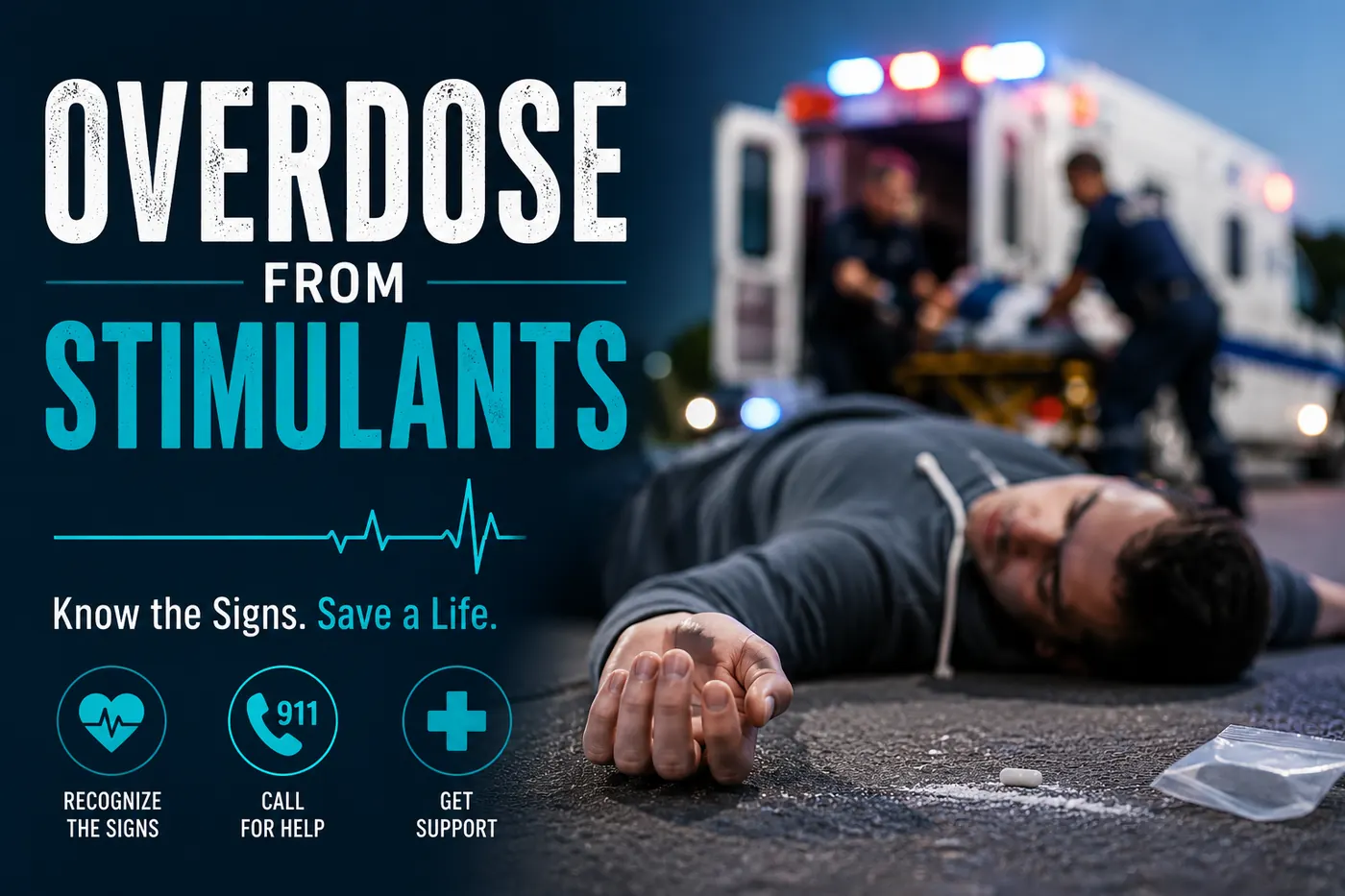


An overdose from stimulants can happen when drugs like cocaine, methamphetamine, Adderall, Ritalin, Vyvanse, or other stimulants push the body past its limit. Common stimulant overdose symptoms may include chest pain, panic, overheating, seizures, confusion, paranoia, fast heartbeat, high blood pressure, or loss of consciousness. This is not just a “bad high.” It can become a medical emergency within minutes.
The danger is real. In 2024, more than 28,000 overdose deaths involved psychostimulants with abuse potential, such as methamphetamine. More than 21,000 involved cocaine. Even when national overdose deaths dropped, stimulant-related deaths remained high. A person can survive one episode and die from the next one, especially when stimulants are mixed with opioids, alcohol, or other drugs.
Navigating This Guide
This hub page serves as the entry point for deeper exploration. Use the links below to dive into specific areas of stimulant addiction:
As author Johann Hari said, “The opposite of addiction isn’t sobriety; it is connection.” If someone you love is using stimulants, connection may be the thing that helps them accept treatment before an overdose happens.
Why an Overdose From Stimulants Happens
Stimulants speed up the central nervous system. They can increase energy, alertness, confidence, and focus. They also raise heart rate, blood pressure, body temperature, and stress on the brain and heart.
An overdose from stimulants can happen after one large dose, repeated use over hours or days, or mixing drugs. It can also happen when someone has not slept, has not eaten, is dehydrated, or has a heart condition. Some people overdose because they keep using to avoid the crash. Others take more because their tolerance has gone up.
Stimulants include methamphetamine, cocaine, crack cocaine, MDMA, synthetic cathinones, and prescription stimulants when misused. Prescription stimulants can be safe when taken exactly as prescribed. They become dangerous when someone takes extra pills, uses another person’s medication, crushes or snorts pills, or mixes them with other substances.
One major risk today is polysubstance use. Many overdose deaths involving stimulants also involve opioids. The person may knowingly mix drugs, or they may not fully understand what is in the supply. Either way, the result can be deadly.
Stimulant Overdose Symptoms to Watch For
Stimulant overdose symptoms can affect the heart, brain, body temperature, and mental state. Do not wait for every symptom to appear. If something feels wrong, get help.
Warning signs may include:
- Chest pain or pressure
- Trouble breathing
- Fast, pounding, or irregular heartbeat
- Very high blood pressure
- Severe headache
- High fever or overheating
- Heavy sweating
- Shaking or tremors
- Seizures
- Confusion or extreme agitation
- Panic or severe anxiety
- Paranoia or hallucinations
- Muscle stiffness
- Nausea or vomiting
- Fainting or loss of consciousness
Some people become aggressive, terrified, or disconnected from reality. Others may look awake but be in serious medical danger. A stimulant overdose can cause heart attack, stroke, seizure, dangerously high body temperature, or sudden death.
If the person also used opioids, they may have slow or stopped breathing, blue or gray lips, choking sounds, limp body, or cannot wake up. This is why it is important to treat any overdose as an emergency.
What to Do in an Emergency
If you think someone is having an overdose from stimulants, call 911 right away. Stay with the person. Tell the dispatcher what the person took, if you know. If you do not know, say that too.
Move the person away from danger. Try to keep the room calm and cool. Do not put them in a cold bath, restrain them, give them more drugs, or try to make them vomit. If they are overheating, remove extra clothing and use cool cloths if it is safe to do so.
If the person is unconscious or not breathing normally, follow the dispatcher’s instructions. If opioids may be involved, give naloxone if you have it. Naloxone does not reverse stimulant effects, but it can reverse opioid overdose and save a life when opioids are part of the emergency.
Do not let fear of legal trouble stop you from calling for help. Minutes matter. Emergency workers are there to keep the person alive.
After the immediate crisis, the person still needs care. A nonfatal overdose is a major warning sign. It means the body has already been pushed into danger. It is also a chance to connect the person with treatment before the next emergency.
Treatment After a Stimulant Overdose
Surviving an overdose does not mean the problem is over. Many people feel shame, fear, or denial after an overdose. Some promise they will stop, but cravings, withdrawal, stress, and the addicted brain can pull them back into use.
Treatment can help break that cycle. A person may need medical detox support, residential treatment, outpatient care, therapy, peer support, relapse prevention, and help for mental health symptoms. Some people also need care for anxiety, depression, trauma, ADHD, or sleep problems.
There is no single medication that reverses stimulant addiction the way naloxone can reverse opioid overdose. But treatment still works. Behavioral therapies, support groups, structure, and long-term recovery planning can help people stop using and rebuild their lives.
Loved ones can help by being direct and compassionate. Say, “I’m scared because you could have died. I love you, and I want you to get help today.” Avoid shaming or arguing while the person is still unstable. Focus on safety and the next step.
An overdose from stimulants is terrifying, but it can also become the turning point. People recover. Families heal. The brain and body can begin to repair. The most important thing is not to wait for another overdose to prove that help is needed. If stimulant use has reached the point of danger, reach out now. Treatment can start today.


