



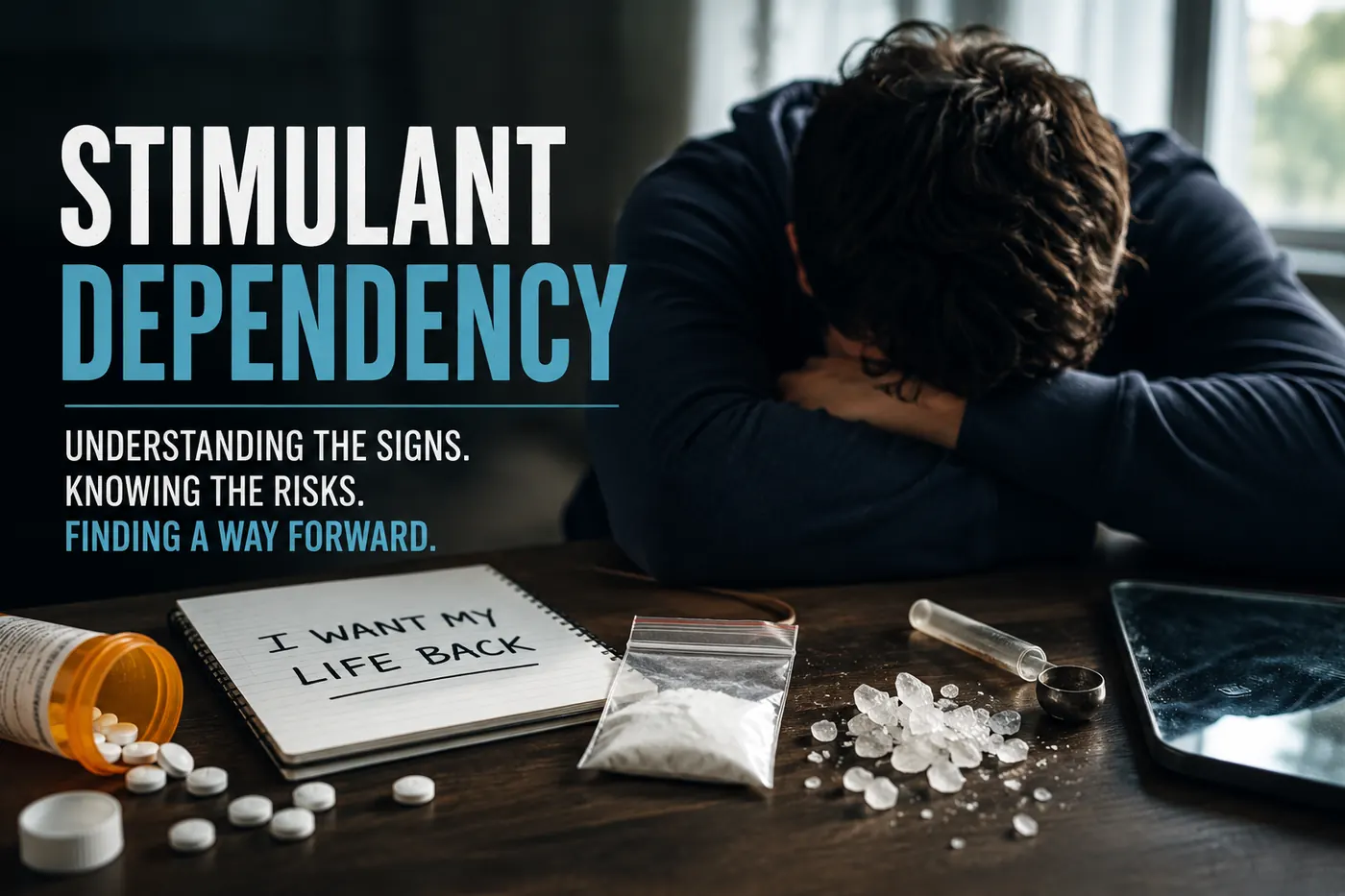


Stimulant dependency can start quietly. A person may take a stimulant to focus, stay awake, lose weight, party longer, or feel more confident. Then the drug starts taking more than it gives. Common stimulant dependence symptoms can include cravings, needing more to feel the same effect, crashing without the drug, mood swings, anxiety, sleep problems, and using even when life is falling apart.
That is the danger. Stimulants can make a person feel powerful at first, but the crash can be brutal. The same drugs that seem to create energy can drain the brain, damage the heart, trigger paranoia, and raise the risk of overdose. In 2024, about 4.3 million people age 12 or older in the United States had a central nervous system stimulant use disorder. Among those whose disorder was tied to stimulant misuse, almost half had a severe disorder.
Navigating This Guide
This hub page serves as the entry point for deeper exploration. Use the links below to dive into specific areas of stimulant addiction:
Russell Brand once wrote that addiction may look irrational until you understand that people can become “completely powerless over their addiction” without structured help. That does not mean people are hopeless. It means they need care, support, and a real plan.
Stimulant Dependence Symptoms and Warning Signs
Stimulant dependence symptoms can show up in the body, mind, and behavior. At first, the signs may be easy to explain away. Someone may say they are just busy, stressed, tired, or trying to keep up. Over time, the pattern becomes harder to hide.
Physical signs may include a racing heart, sweating, shaking, weight loss, jaw clenching, headaches, high blood pressure, and staying awake for long periods. Some people stop eating normally. Others sleep for a very long time after using.
Mental and emotional signs may include anxiety, panic, anger, paranoia, depression, and mood swings. A person may seem wired one day and completely exhausted the next. They may become suspicious, restless, or hard to talk to.
Behavior signs are often what families notice first. A person may miss work, skip school, lie about money, disappear for hours or days, or spend more time with people who use drugs. They may promise to stop but keep going back. They may use stimulants even after a health scare, relationship damage, legal trouble, or job loss.
One of the clearest signs of dependency is feeling unable to function without the drug. The person may believe they need it to wake up, think clearly, work, socialize, or feel normal.
How Stimulant Dependency Develops
Stimulants affect the central nervous system. This includes drugs like cocaine, methamphetamine, amphetamines, and prescription stimulants such as Adderall, Ritalin, and Vyvanse when they are misused. Prescription stimulants can be safe and helpful when used as directed by a doctor. The risk rises when they are taken in higher doses, used without a prescription, crushed, snorted, injected, or taken to get high.
Dependency can build through repeated use. The brain and body start to expect the drug. A person may need more to get the same effect. This is called tolerance. When the drug wears off, they may feel tired, depressed, hungry, anxious, or foggy. That crash can push them to use again.
This cycle can move fast. Use creates a high. The high fades. The crash feels awful. The person uses again to feel better. Soon, the drug is no longer about fun or focus. It becomes about avoiding pain.
Stimulant dependency can happen to people from every background. It can affect students, workers, parents, veterans, athletes, professionals, and people who never thought addiction could happen to them.
The Addicted Brain and Stimulants
The addicted brain is not weak. It is changed by repeated drug use. Stimulants flood the brain with dopamine. Dopamine is tied to pleasure, reward, motivation, and learning. It teaches the brain what to chase again.
When stimulants cause a large dopamine surge, the brain remembers. It may start to rank the drug above normal rewards like food, sleep, love, hobbies, and goals. Over time, everyday life can feel flat. The person may not feel happy, focused, or motivated without the drug.
Stimulants can also affect parts of the brain that help with judgment, impulse control, and decision-making. This helps explain why someone may know the drug is hurting them but still feel pulled back to it. Cravings can become louder than logic.
Triggers also play a major role. Stress, certain friends, old places, cash, music, conflict, or boredom can wake up cravings. The brain remembers the drug as a fast escape. Recovery helps the brain learn new ways to handle pain, stress, and emotion without using.
The brain can heal, but it takes time. Sleep, nutrition, therapy, support groups, treatment, and safe routines can all help the brain rebuild.
Health Risks and When to Seek Help
Stimulant dependency can lead to serious health risks. Stimulants can raise heart rate, blood pressure, and body temperature. They can increase the risk of chest pain, irregular heartbeat, seizure, stroke, overheating, and sudden death. Cocaine and methamphetamine are especially hard on the heart and brain.
Mental health risks can also be severe. Stimulant use can worsen anxiety, depression, insomnia, paranoia, and suicidal thoughts. Heavy use or long periods without sleep can lead to stimulant-induced psychosis, where a person may hear, see, or believe things that are not real.
Overdose is another major danger. In 2024, more than 28,000 overdose deaths involved psychostimulants with abuse potential, and more than 21,000 involved cocaine. Mixing stimulants with opioids, alcohol, benzodiazepines, or other drugs can make the risk even higher.
Seek emergency help if someone has chest pain, trouble breathing, seizures, extreme confusion, severe paranoia, violent behavior, or thoughts of self-harm.
Treatment can help. A person may need detox support, residential treatment, outpatient care, therapy, relapse prevention, mental health treatment, and peer support. The right plan depends on how much they are using, their safety, their home life, and their mental health.
If you love someone with stimulant dependency, try to speak with care and honesty. Say, “I love you. I’m scared. I want to help you get support.” Shame usually pushes people deeper into hiding. Support can open the door to treatment.
Stimulant dependency can convince a person that they are trapped. That is not true. People recover every day. The brain can heal. Families can rebuild trust. Life can feel peaceful again. The first step is asking for help.


