



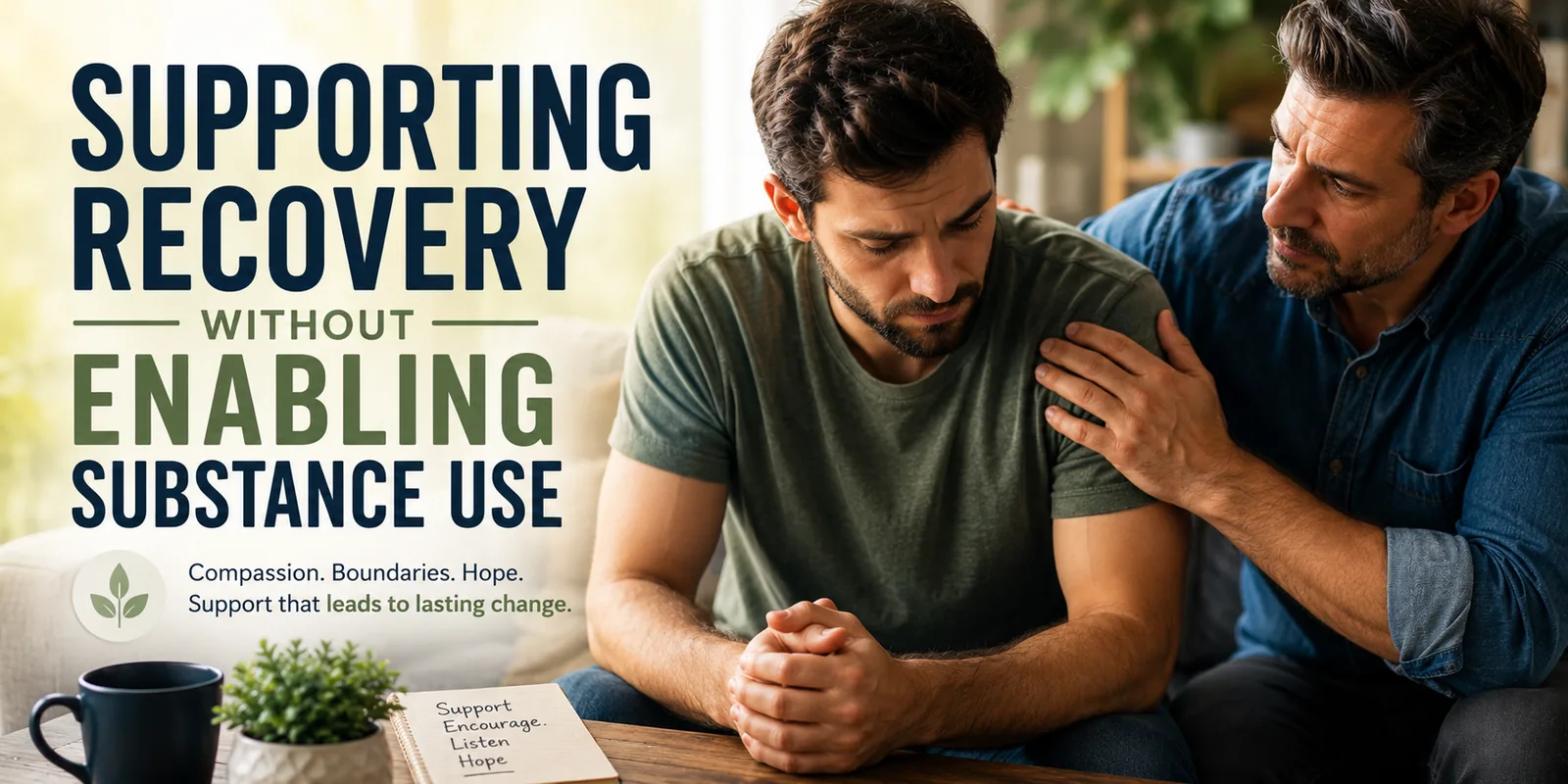


Helping someone you love recover from addiction can be complicated.
You want to support them.
You want to protect them.
You want to believe them when they say things will be different.
But sometimes helping can slowly turn into enabling.
A parent pays another overdue bill.
A spouse calls an employer and makes an excuse.
A friend gives someone cash because they promise it is “just for food.”
A family member allows substance use in the home because they are afraid the person will leave.
These choices often come from love.
But when support repeatedly protects someone from the consequences of substance use, it can make addiction easier to continue.
Learning the difference between supporting recovery and enabling substance use is especially important after a relapse. Families may also need to consider an intervention when repeated conversations, boundaries, and offers of treatment are not enough.
The goal is not to abandon someone.
It is to make sure your help points toward recovery instead of protecting addiction.
What Does Enabling Substance Use Mean?
Enabling generally refers to actions that unintentionally make it easier for someone to continue harmful substance use.
Imagine someone repeatedly misses work because they have been drinking.
Their partner calls the employer and says they have the flu.
That may protect the person from losing their job.
But it also removes one immediate consequence of drinking.
Or imagine someone spends all their money on drugs and then asks a parent for rent money every month.
The parent may feel they are preventing homelessness.
But if the same pattern happens repeatedly, the financial rescue may allow the person to keep spending their own money on substances.
Enabling can include:
- Giving cash when you suspect it may support substance use
- Lying to employers, friends, or relatives
- Paying debts repeatedly caused by addiction
- Allowing drugs or heavy drinking in your home
- Making excuses for destructive behavior
- Taking over responsibilities the person continually neglects
- Hiding the severity of the problem from others
- Repeatedly rescuing someone from consequences without requiring change
Helping someone once during a crisis does not automatically mean you are enabling them.
Look at the pattern.
Is your help making recovery easier?
Or is it making continued substance use easier?
What Healthy Recovery Support Looks Like
Supporting recovery is different.
Healthy support helps someone move toward treatment, stability, responsibility, and safety.
You might say:
“I will drive you to treatment.”
“I will help you find a recovery meeting.”
“I will watch the kids while you attend counseling.”
“I will help you talk with your treatment provider.”
“I will support you while you work on recovery, but I cannot give you money while you are actively using.”
These actions help without removing all responsibility from the person.
Recovery support can also mean listening.
Someone may need to say:
“I’m having cravings.”
“I’m scared I’m going to relapse.”
“I messed up.”
If every confession leads to yelling, the person may begin hiding problems.
You can take addiction seriously while still creating space for honesty.
Boundaries Are Not Punishment
Families sometimes struggle with boundaries because they feel cruel.
They worry:
“What if saying no pushes them away?”
But a boundary is not the same as punishment.
A boundary tells someone what you will or will not participate in.
For example:
“I will not give you cash, but I will buy groceries.”
“You cannot use drugs in my home.”
“I will help you enter treatment, but I will not lie to your employer.”
“I love you, but I will not allow you to drive my children while you are intoxicated.”
Good boundaries should be clear, realistic, and enforceable.
Avoid dramatic threats you do not intend to follow.
If you repeatedly say:
“This is the last time!”
but nothing changes, the boundary loses meaning.
What Happens After a Relapse?
A relapse can make families want to immediately fix everything.
The person may have missed work.
Lost money.
Damaged relationships.
Stopped treatment.
You may feel pressure to clean up every consequence before things get worse.
Some practical help may absolutely be appropriate.
But ask yourself:
“Does this help the person return to recovery, or does it simply protect them from what happened?”
Helping someone call their counselor is support.
Buying them groceries may be support.
Driving them to detox may be support.
Giving them $500 with no accountability when you strongly suspect active drug use may not be.
Relapse should usually lead to a reassessment of the recovery plan.
What happened beforehand?
Did meetings stop?
Did treatment end too early?
Was there a relationship crisis?
Untreated depression?
Poor sleep?
Old friends?
Increasing cravings?
Understanding what led to relapse is more useful than simply cleaning up afterward.
When an Intervention May Be Necessary
Sometimes boundaries and private conversations are not enough.
The person keeps using.
They deny there is a problem.
They refuse treatment.
Their health, finances, relationships, or safety continue getting worse.
This may be when a structured intervention should be considered.
An intervention should not be a family ambush designed to embarrass someone.
The purpose is to clearly communicate concern and offer a path into treatment.
Ideally, family members prepare beforehand.
They agree on what behaviors they will discuss.
They decide what boundaries will change.
Most importantly, they identify treatment options before the intervention begins.
A family member might say:
“We love you, and we cannot keep pretending this is okay. Your drinking has become dangerous. We have treatment available, and we want you to accept help today.”
Whenever possible, families may benefit from guidance from an addiction professional or experienced intervention specialist.
Do Not Confuse Support With Control
One of the hardest truths for families is that they cannot control another person’s recovery.
You cannot attend counseling for them.
You cannot force honesty.
You cannot remove every trigger.
You cannot watch someone every hour.
Trying to control everything can exhaust the family and create constant conflict.
You can control your own decisions.
Your boundaries.
Your home.
Your money.
Your involvement.
The support you are willing to provide.
That can be powerful.
Love the Person Without Supporting the Addiction
You do not have to choose between loving someone and having boundaries.
You can say:
“I love you, and I want you healthy.”
and:
“I will not give you money while you are using.”
You can say:
“I’m here when you are ready for treatment.”
and:
“You cannot bring drugs into this house.”
Both statements can be true.
Supporting recovery without enabling substance use is not about becoming cold or abandoning someone.
It is about making sure your help supports the life they are trying to rebuild rather than the addiction that is tearing it down.
Sometimes that means encouragement.
Sometimes it means treatment.
Sometimes it means boundaries.
Sometimes it means an intervention.
And after a relapse, it may mean refusing to rescue someone from every consequence while still making one thing very clear:
Help is available, and recovery is still possible.


