






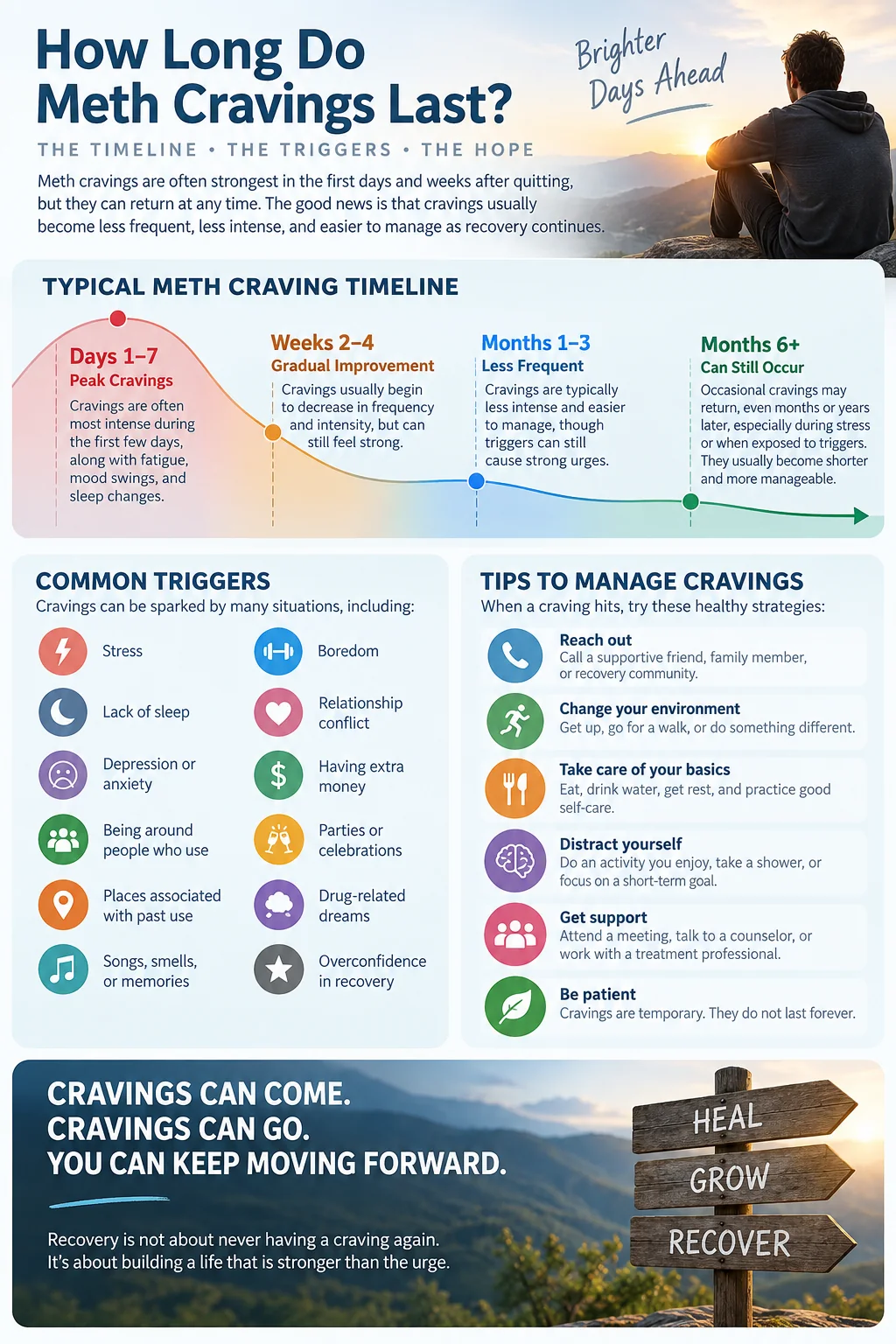
How long do meth cravings last? The strongest cravings often occur during the first days and weeks after quitting methamphetamine, but urges can return unexpectedly months or even years into recovery. The good news is that cravings usually become less frequent, less intense, and easier to manage as recovery continues.
A meth craving can feel overwhelming. Your brain may suddenly tell you that using would give you energy, make you feel happier, help you concentrate, or temporarily erase whatever problem you are facing.
That does not mean you actually need meth.
Cravings are part of the brain adjusting to life without a powerful stimulant. Understanding the larger meth recovery timeline can help you recognize that urges are temporary—even when they feel intense.
A craving can be powerful.
But it does not have to control what happens next.
Why Are Meth Cravings So Strong?
Methamphetamine creates intense stimulation in the brain’s reward system.
Over time, the brain can begin connecting meth with energy, pleasure, confidence, sex, social situations, productivity, or relief from uncomfortable emotions.
Those connections can become deeply learned.
Maybe you used meth whenever you felt tired.
Maybe you used when you were lonely.
Maybe certain friends always used with you.
Maybe meth became connected with work, parties, sex, driving, music, or particular neighborhoods.
After quitting, those situations can still activate memories of using.
Physical withdrawal adds another layer.
During meth withdrawal, someone may experience exhaustion, depression, anxiety, irritability, poor concentration, increased appetite, sleep changes, and intense urges to use again.
Your brain remembers something important:
Meth could temporarily make some of those feelings disappear.
That is one reason early cravings can feel so convincing.
Meth Cravings During the First Few Weeks
The first several days can be especially difficult.
During the meth crash, someone may sleep for long periods and feel physically and emotionally drained.
Then the thought appears:
If I used meth, I wouldn’t feel this tired.
Fatigue can become a major trigger. Our guide to why you feel so tired after quitting meth explains why natural energy may take time to return.
Depression can create another powerful trigger.
Meth once produced stimulation and intense reward. Without it, life can temporarily feel flat, boring, or meaningless.
Someone experiencing depression after quitting meth may begin remembering meth as an easy way to feel something again.
That memory can be dangerous because it focuses on the temporary high while ignoring everything that came afterward.
The crash.
The paranoia.
The lost sleep.
The damaged relationships.
The money.
The health consequences.
The next craving.
Recovery requires remembering the entire cycle—not just the part your craving wants you to remember.
Why Can Meth Cravings Return Months Later?
One of the most confusing parts of recovery is having an intense craving after feeling fine for weeks or months.
You might think:
Where did that come from?
Cravings can be triggered by memories and learned associations long after physical withdrawal has ended.
Common triggers include:
- Stress
- Lack of sleep
- Depression
- Boredom
- Loneliness
- Relationship conflict
- Seeing someone you used with
- Returning to places where you used meth
- Having extra money
- Drug-related dreams
- Certain songs or smells
- Feeling unusually confident about your recovery
Sometimes the trigger is not negative.
Celebrations, getting paid, going to a party, or reconnecting with an old friend can also bring back thoughts of meth.
Brain recovery may still be occurring during this period. Understanding how long the brain takes to heal from meth can help explain why reactions to reward, motivation, stress, and drug-related memories may change gradually.
A craving appearing after several months does not erase your recovery.
It means you encountered a trigger.
What you do next matters.
What Should You Do When a Meth Craving Hits?
First, do not treat the craving like an emergency that must be solved with meth.
Give it time.
Change your environment if possible.
If you are sitting somewhere thinking about using, stand up and go somewhere else.
Call someone who knows you are in recovery.
Eat something.
Drink water.
Take a shower.
Walk.
Exercise if appropriate.
Attend a recovery meeting.
Talk honestly about what you are thinking.
Distract yourself long enough for the intensity to change.
Do not sit alone building an argument for why using “just once” makes sense.
Also take care of the basics.
Being exhausted, hungry, angry, lonely, or stressed can make cravings feel much stronger.
Meth recovery involves rebuilding normal routines so your brain does not constantly feel like it needs a shortcut.
If concentration problems are making recovery harder, understanding how long meth brain fog lasts may help put those symptoms into perspective.
You do not need to feel perfect to stay in recovery.
You only need to get through the craving without turning it into meth use.
When Meth Cravings Become a Relapse Warning Sign
An occasional thought about meth is different from progressively moving closer to using again.
Pay attention when cravings begin changing your behavior.
You start contacting old friends who still use.
You drive past places where you bought meth.
You begin keeping your cravings secret.
You stop attending treatment or meetings.
You start telling yourself that your addiction “wasn’t that bad.”
You remember the high while forgetting everything meth cost you.
Those behaviors can become warning signs of relapse.
Reach out early.
Do not wait until meth is sitting in front of you.
Returning to meth can also bring serious health risks, particularly when today’s illicit drug supply can contain unexpected substances. A meth overdose can cause life-threatening cardiovascular, neurological, and psychological complications.
A craving deserves attention precisely because your life is worth protecting.
Meth Cravings Can Get Easier
So, how long do meth cravings last?
Strong urges may be common during early recovery, while occasional cravings can appear much later.
But cravings can change.
A trigger that once felt impossible to resist can eventually become something you notice and move past.
That happens through repetition.
You get stressed and do not use.
Your brain learns something new.
You feel exhausted and do not use.
Your brain learns something new.
You see someone from your past and walk away.
Your brain learns again.
Every time you experience a craving without returning to meth, you strengthen a different path.
Long-term addiction recovery is not necessarily reaching a point where the thought of meth can never enter your mind again.
It is reaching a point where that thought no longer controls your life.
Cravings can come.
Cravings can go.
And you can still keep moving forward.


