






The meth recovery timeline can feel unpredictable. You may quit methamphetamine expecting to immediately feel healthier, only to spend the first few days exhausted, depressed, hungry, anxious, or unable to enjoy anything. That does not mean quitting was a mistake. It means your brain and body are beginning to adjust after being repeatedly pushed by a powerful stimulant.
Meth can disrupt sleep, appetite, mood, motivation, concentration, and the brain’s reward system. When meth suddenly disappears, your body has to relearn how to function without artificial stimulation.
Some changes happen within days. Others take weeks or months.
Understanding what happens after you quit meth can make the difficult periods feel less frightening—and remind you that recovery is still happening even when you do not feel better yet.
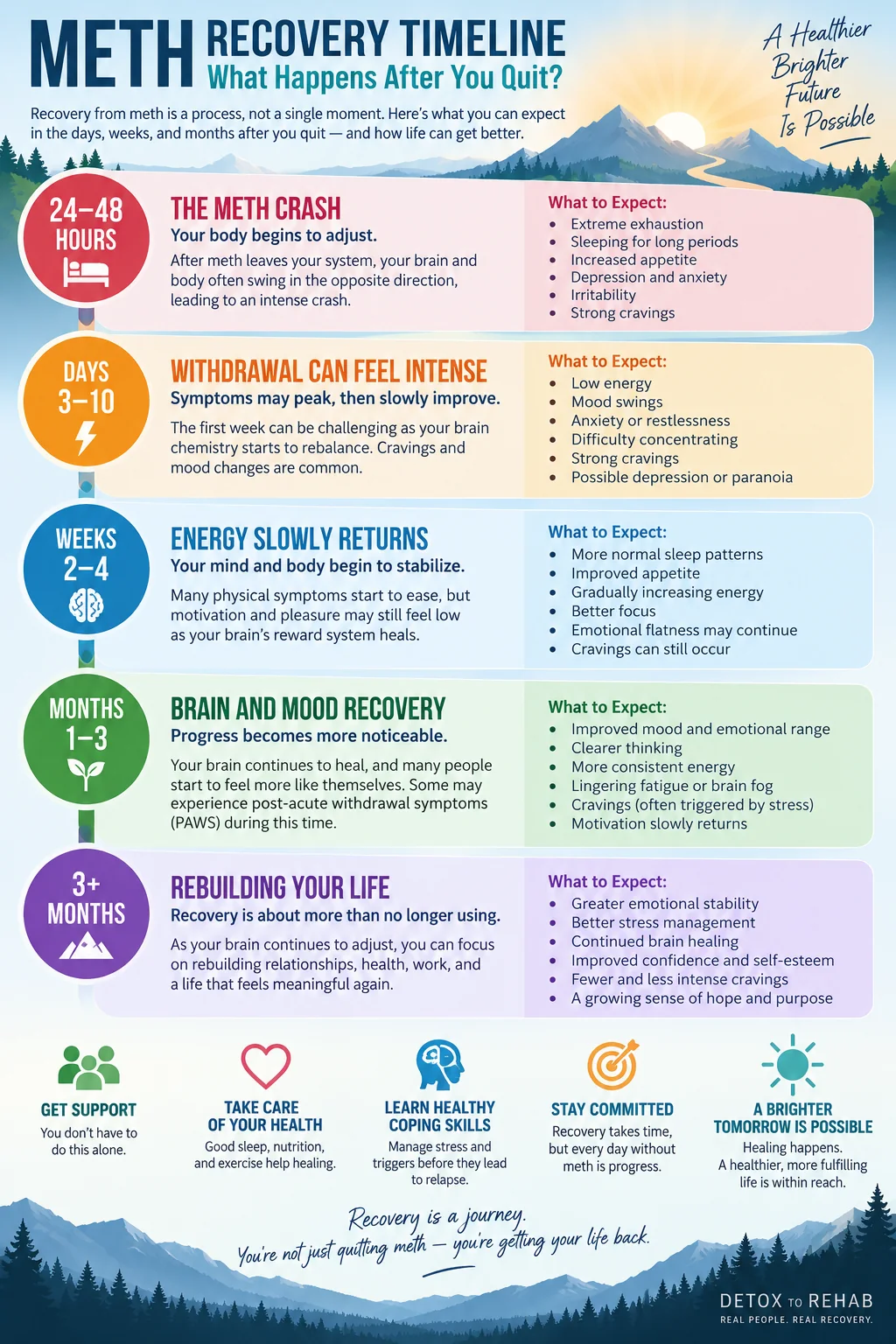
The First 24 to 48 Hours: The Meth Crash
The first stage is often called the meth crash.
After staying stimulated for hours or even days, the body may swing dramatically in the opposite direction.
You may experience:
- Extreme exhaustion
- Sleeping for long periods
- Increased appetite
- Depression
- Anxiety
- Irritability
- Strong meth cravings
- Difficulty concentrating
Some people feel almost incapable of doing anything except sleeping and eating.
This crash can be intense because meth repeatedly stimulates systems involved in energy and reward. Once the drug is gone, the brain cannot immediately recreate the same level of stimulation.
Learning what happens during meth detox and withdrawal can help you prepare for these early changes.
Severe depression, suicidal thoughts, extreme paranoia, hallucinations, chest pain, seizures, or dangerous behavior require immediate professional medical attention.
Days 3 to 10: Withdrawal Can Feel Intense
For many people, the first week remains difficult even after the initial crash.
Energy may still be very low.
Mood can change quickly.
Concentration may feel terrible.
Someone who felt exhausted yesterday may feel restless or anxious today.
Meth cravings can also become powerful during this period. The brain remembers that using meth could temporarily eliminate exhaustion and create energy again.
That creates a dangerous cycle:
Use meth.
Crash.
Feel terrible.
Crave meth to escape the crash.
Use again.
Breaking that cycle is one reason structured meth addiction treatment and rehab can be valuable.
Meth withdrawal is different from withdrawal from alcohol or certain sedatives because it is not usually defined by the same risk of dangerous withdrawal seizures. However, its psychological effects can still become serious, especially when someone experiences severe depression, paranoia, psychosis, or suicidal thinking.
Weeks 2 to 4: Energy Slowly Begins Returning
By the second, third, and fourth weeks, some of the most intense symptoms may begin easing.
Sleep may become more predictable.
Appetite may stabilize.
Energy can slowly return.
Thinking may become clearer.
But this stage can bring a frustrating realization:
You may be physically better while still feeling emotionally flat.
Activities that once felt enjoyable may seem boring.
Motivation may remain low.
You may know you should exercise, look for work, call friends, or work on recovery—but feel very little drive to do those things.
Long-term meth use affects the brain’s reward system, which helps explain why meth dependency can make quitting so difficult.
Recovery during this stage often requires patience.
Your brain is adjusting to ordinary rewards again: food, relationships, exercise, accomplishments, music, hobbies, and simply feeling safe.
Months 1 to 3: Brain and Mood Recovery Continue
The first few months can bring noticeable improvement.
You may begin sleeping more normally.
Your thoughts may feel clearer.
Your emotional range may return.
Energy may become more consistent.
But recovery rarely moves in a perfectly straight line.
You might have several good days followed by a day of exhaustion, anxiety, depression, or intense cravings.
Some people experience lingering symptoms often described as meth post-acute withdrawal symptoms, or PAWS.
These can include:
Fatigue. Your energy may still feel lower than expected.
Depression. Pleasure and motivation can take time to return.
Sleep problems. You may sleep too much, too little, or at unusual times.
Brain fog. Memory and concentration may remain frustrating.
Cravings. Meth thoughts can return suddenly, particularly during stress.
Cravings do not necessarily mean you are about to relapse. Understanding how long drug cravings can continue after quitting can make them easier to recognize as part of recovery rather than proof that treatment is failing.
Three Months and Beyond: Rebuilding Your Life
Long-term meth recovery becomes less about surviving withdrawal and more about rebuilding.
The brain may continue adjusting for months or longer. There is no single date when everyone suddenly feels completely normal.
Our guide to how long the brain takes to heal from addiction explains why recovery depends on factors such as duration of use, amount used, overall health, sleep, nutrition, mental health, and continued substance use.
This stage is also when everyday life becomes important again.
You may need to rebuild:
- Relationships
- Employment
- Finances
- Physical health
- Sleep habits
- Trust
- Confidence
- Hobbies
- Daily routines
Small improvements matter.
Getting through a stressful day without using matters.
Enjoying something naturally again matters.
Sleeping through the night matters.
Laughing with someone matters.
Those moments are signs that life is becoming bigger than meth.
Protecting Your Recovery From Meth Relapse
Feeling better can sometimes create a new risk.
You may begin thinking:
Maybe I wasn’t really addicted.
Maybe I can use once.
Maybe this time will be different.
Pay attention to changes in sleep, isolation, romanticizing past meth use, reconnecting with people who use, skipping treatment, or increasingly thinking about getting high.
These can become warning signs of a meth relapse.
If cravings start becoming stronger, do not wait until you are holding meth to ask for help.
Call someone.
Return to treatment.
Go to a meeting.
Change your environment.
Tell someone exactly what you are thinking.
The meth recovery timeline does not end after detox. Healing can continue for months and years.
The first days may be about sleeping and surviving the crash. The first weeks may be about managing depression, cravings, and low motivation. The following months become about rebuilding your brain, health, relationships, and life.
Recovery from meth does not happen overnight.
But it does happen.
Every day you remain away from meth gives your brain and body another opportunity to recover—and gives you another opportunity to build a life you no longer need meth to escape from.


