



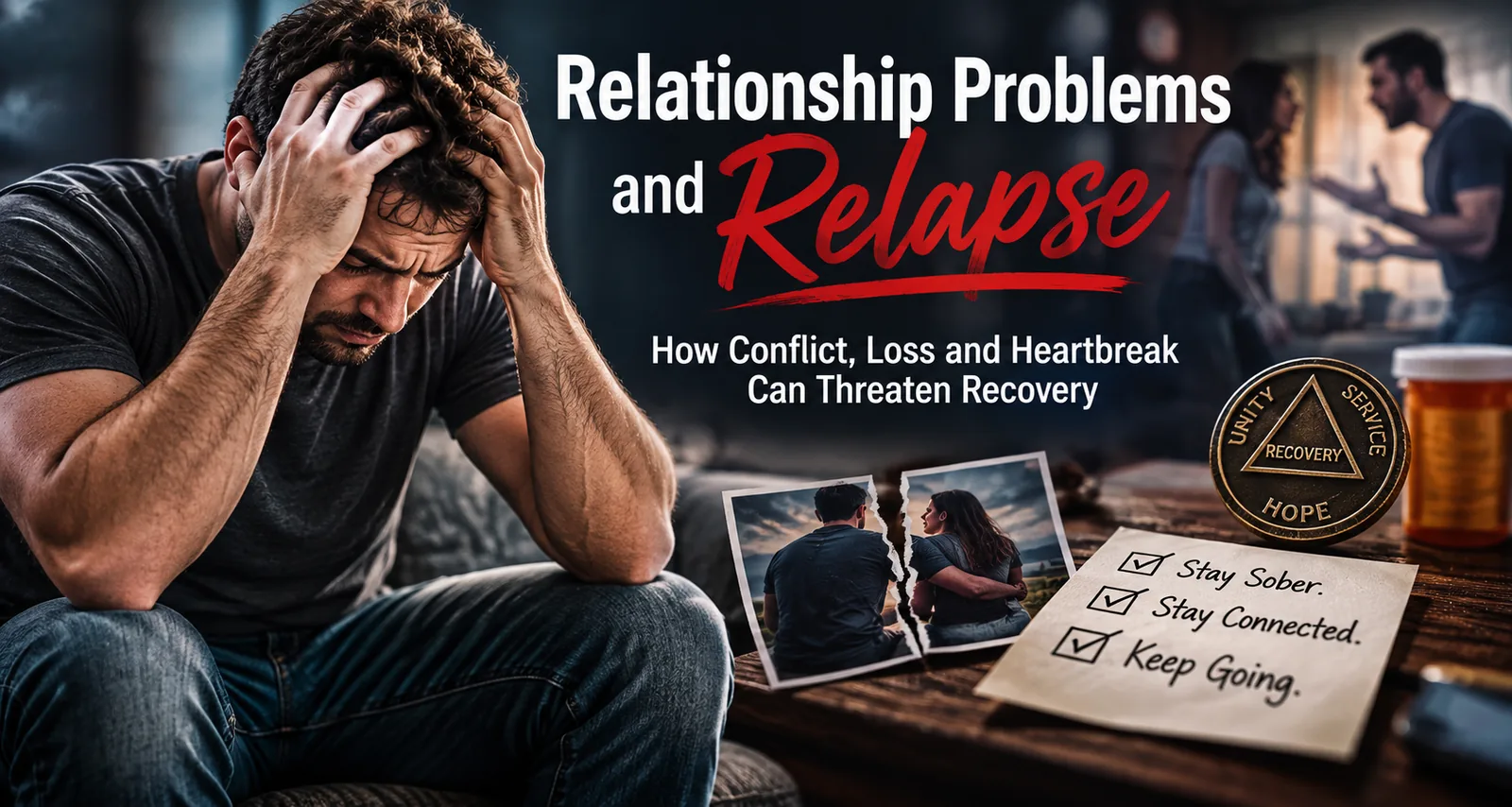


Relationship problems can become powerful relapse triggers, especially when conflict, rejection, jealousy, separation, or loneliness begins to overwhelm the coping skills that protect recovery. A person may have been sober for months or years and feel stable until a relationship suddenly falls apart.
An argument with a spouse.
A breakup.
Infidelity.
Divorce.
Custody problems.
Feeling ignored or rejected.
Suddenly, emotions that once led to drinking or drug use are back.
The thought may appear quickly:
“I just need something to make me stop thinking about this.”
Relationship problems do not automatically cause relapse. But when emotional pain combines with stress, isolation, poor sleep, and anger, returning to an old substance can begin to look like an easy escape.
Recognizing that pattern early can help protect recovery before a difficult relationship becomes a return to addiction.
Why Relationship Conflict Can Trigger Old Addiction Patterns
Many people used alcohol or drugs to change how they felt.
Alcohol might have made someone feel less anxious.
Opioids may have created emotional comfort.
Benzodiazepines may have calmed panic.
Cocaine or meth may have temporarily increased confidence or energy.
Marijuana may have helped someone disconnect from painful thoughts.
When a relationship becomes stressful, the brain can remember those effects.
Imagine someone who has been sober for a year. Their partner tells them the relationship may be ending.
Suddenly, they cannot sleep.
They replay every argument.
They feel rejected.
They become angry.
After several difficult nights, the thought appears:
“A drink would calm me down.”
The person may not actually want to return to addiction. They want relief.
That distinction is important because relapse prevention often means finding another way to handle the emotion underneath the craving.
Breakups, Divorce and Rejection Can Be Especially Difficult
The end of a relationship can change almost every part of someone’s daily life.
Where they live may change.
Finances may change.
Children may be involved.
Friend groups may split.
Daily routines disappear.
Someone who was used to sleeping next to another person may suddenly be alone every night.
That combination of grief, loneliness, anger, and uncertainty can destabilize recovery.
A person may begin thinking:
“What does staying sober even matter now?”
That thought deserves immediate attention.
Recovery should never depend entirely on another person.
A partner can support recovery, but sobriety needs a foundation that remains even if the relationship changes.
This is why having multiple sources of support matters.
Counselors.
Friends.
Family.
Sponsors.
Peer-support groups.
Recovery coaches.
When one relationship falls apart, the entire recovery system should not disappear with it.
Arguments Can Lead to Impulsive Relapse
Not every relationship-related relapse follows weeks of emotional pain.
Sometimes it happens within minutes.
A couple has an intense argument.
Someone storms out.
Their heart is racing.
They feel furious and misunderstood.
While driving, they pass the liquor store.
Or they call someone they used to buy drugs from.
The thought is:
“I don’t care anymore.”
That is an emotional decision being made during a highly stressful moment.
One useful relapse-prevention rule is to avoid making major decisions while extremely angry or upset.
Before doing anything:
Leave the argument safely.
Call someone.
Walk.
Go somewhere supportive.
Give your body time to calm down.
The goal is not to solve the relationship immediately.
The goal is to avoid creating an addiction crisis on top of a relationship crisis.
Watch for Relationship Problems Turning Into Isolation
Conflict often pushes people away from each other.
Someone may feel embarrassed about what is happening at home and stop talking to friends.
They skip meetings.
They cancel counseling.
They tell everyone:
“Everything is fine.”
Meanwhile, they are spending hours alone thinking about the relationship.
That isolation can become dangerous.
The person loses outside perspective.
Thoughts become more extreme.
“Nobody cares about me.”
“I’m completely alone.”
“Nothing matters anymore.”
“Using once wouldn’t make things any worse.”
This is exactly when connection matters most.
You do not need to tell everyone every detail about your relationship.
But someone should know that you are struggling.
Do Not Turn Your Partner Into Your Entire Recovery Plan
Partners can play an important role in recovery, but they cannot be responsible for keeping another person sober.
Statements such as:
“If you leave me, I’ll relapse.”
place an unhealthy burden on the relationship.
Your partner cannot control your recovery.
They cannot remove every trigger.
They cannot prevent every craving.
They cannot monitor you every hour.
Recovery works better when responsibility remains with the person recovering while support comes from several places.
Likewise, a partner should not feel responsible for causing someone’s relapse simply because the relationship had problems.
Conflict may be a trigger.
Using the substance is still a behavior that needs to be addressed through treatment and recovery support.
What to Do When Relationship Stress Threatens Recovery
Start by separating the two problems.
You have a relationship problem.
You also have a recovery that needs protection.
You do not have to solve both in the same hour.
If cravings appear, focus first on staying safe.
Tell someone:
“Things are bad in my relationship, and I’m starting to think about using.”
Then strengthen your recovery routine.
That may include:
- Returning to counseling
- Attending more recovery meetings
- Calling supportive people regularly
- Protecting your sleep
- Exercising
- Avoiding alcohol and drug-related environments
- Staying somewhere supportive after a major argument
- Addressing anxiety or depression
- Creating boundaries with unhealthy relationships
Individual or couples counseling may also be helpful when appropriate.
Sometimes the relationship can be repaired.
Sometimes it cannot.
Recovery has to survive either outcome.
A Relationship Crisis Does Not Have to Become an Addiction Crisis
Relationships can bring some of life’s greatest happiness.
They can also create extraordinary emotional pain.
Recovery does not protect you from heartbreak, betrayal, arguments, divorce, or loneliness.
It gives you another way to survive those experiences.
If relationship problems are making alcohol or drugs look attractive again, take that warning seriously.
Do not isolate.
Do not romanticize what substances once did for you.
Do not turn one painful night into months of addiction.
Reach out.
Protect your recovery routines.
Get help with the relationship separately from the addiction.
A relationship may change or even end. Your recovery does not have to end with it.
The goal is not to avoid emotional pain forever. It is learning that you can experience pain, conflict, rejection, and loss without returning to the substances that once made your life even harder.


