



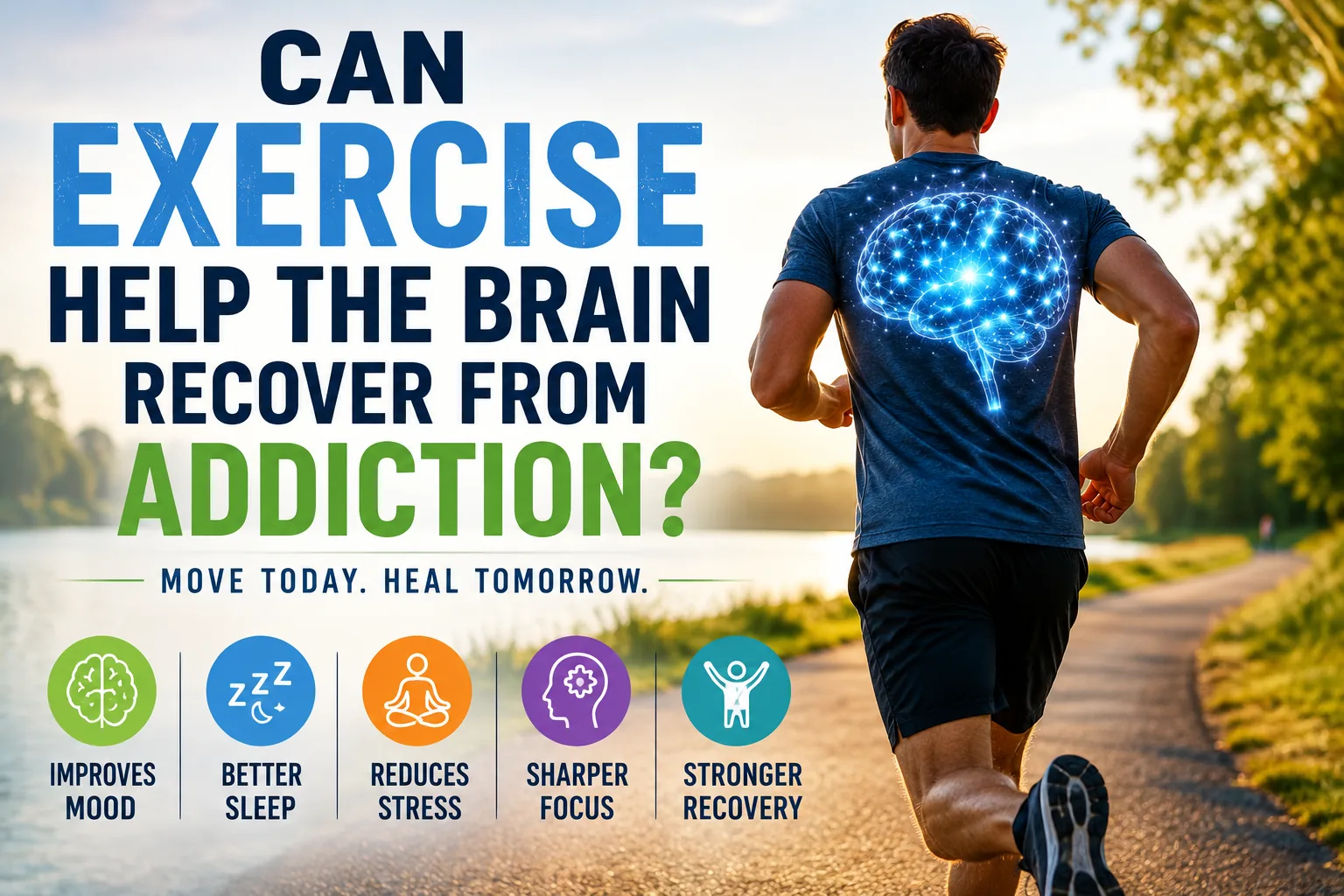


Can exercise help the brain recover from addiction? For many people in recovery, the answer is encouraging: regular physical activity can support brain health, mood, sleep, stress control, and overall well-being while the brain adjusts to life without drugs or alcohol.
Exercise is not a cure for addiction.
It does not erase years of substance use overnight.
But it can become a powerful part of recovery because it gives the brain and body something healthy to respond to.
After addiction, people often struggle with low motivation, poor sleep, anxiety, depression, brain fog, cravings, and difficulty feeling pleasure. Exercise can support several of these areas at the same time.
Even a short walk can be a meaningful starting point.
How Addiction Changes the Brain
Addiction can affect brain systems involved in:
- Reward
- Motivation
- Stress
- Memory
- Decision-making
- Emotional regulation
- Sleep
- Impulse control
Over time, repeated substance use can teach the brain to place an unusually high value on drugs or alcohol.
Normal rewards may feel weaker.
Exercise may seem boring.
Food may feel less satisfying.
Relationships may not produce the same emotional response.
The addicted brain can become focused on the immediate reward or relief associated with substance use.
When someone gets sober, the brain has to adjust.
That process can take time.
Exercise gives the brain repeated opportunities to experience healthy effort, reward, routine, and accomplishment.
Exercise Can Support the Brain’s Reward System
Physical activity affects many brain chemicals involved in mood and motivation.
Exercise can influence dopamine, serotonin, endorphins, and other systems that help regulate pleasure, stress, and emotional balance.
That matters during recovery.
Someone who recently stopped using drugs may feel like nothing is rewarding anymore.
A workout may not produce instant happiness.
But over time, regular movement can become something the brain learns to associate with feeling better.
You finish a walk.
You feel calmer.
You sleep better.
You notice progress.
You become stronger.
These small rewards can help create healthier patterns.
The goal is not to replace one intense high with another.
The goal is to teach the brain that healthy activities can provide satisfaction too.
Exercise May Help With Low Mood and Anxiety
Depression and anxiety are common during addiction recovery.
Sometimes these symptoms existed before the addiction.
Sometimes they become more noticeable once substances are removed.
Exercise can support mood and reduce stress for many people.
That does not mean someone with severe depression should simply “go exercise.”
Mental health conditions may require professional treatment.
But regular physical activity can be one useful part of a larger treatment plan.
A 20-minute walk may reduce tension.
Strength training may provide structure and confidence.
Yoga may help someone slow down and reconnect with their body.
The best exercise is often the one you can realistically continue.
Exercise Can Help Improve Sleep
Sleep problems are common after quitting drugs or alcohol.
Some people struggle to fall asleep.
Others wake frequently.
Some sleep for long periods and still feel tired.
Regular exercise can support better sleep quality and help the body rebuild a healthier daily rhythm.
Better sleep can then support:
- Memory
- Concentration
- Emotional regulation
- Energy
- Decision-making
- Stress tolerance
This creates a positive cycle.
You exercise.
You sleep better.
You have more energy.
You think more clearly.
You are better able to manage cravings.
That can strengthen recovery.
Exercise Can Reduce Stress and Cravings
Stress is one of the most common relapse triggers.
After addiction, the brain may still associate stress with substance use.
A hard day happens.
The addicted brain remembers:
“This is when we used.”
Exercise gives you another response.
Take a walk.
Lift weights.
Ride a bike.
Swim.
Go hiking.
Stretch.
The goal is not to pretend stress is gone.
The goal is to give the body somewhere healthy to put that energy.
Physical activity can also create distance between a craving and an action.
If you feel a craving building, a short walk may give you enough time for the intensity to decrease.
That does not replace treatment or a relapse prevention plan.
But it can become one tool in your recovery toolbox.
Exercise Helps Rebuild Routine
Addiction can destroy structure.
Sleep becomes irregular.
Meals become unpredictable.
Work suffers.
Appointments are missed.
Days revolve around using, obtaining substances, or recovering from them.
Exercise can become an anchor.
Walk every morning.
Go to the gym after work.
Take a fitness class on Tuesdays and Thursdays.
Stretch before bed.
The specific activity matters less than the consistency.
Routine can help the brain learn predictability again.
That matters because early recovery can feel chaotic even after the substances are gone.
Exercise Can Improve Confidence
Addiction can damage the way someone sees themselves.
You may have broken promises.
Lost relationships.
Missed opportunities.
Stopped trusting yourself.
Exercise can provide small, visible wins.
You walked farther.
You lifted more weight.
You showed up three times this week.
You finished something difficult.
These accomplishments may seem simple, but they help rebuild confidence.
Recovery often starts with proving to yourself that you can follow through.
Exercise provides repeated opportunities to do exactly that.
You Do Not Need an Extreme Workout
One mistake people make is assuming exercise only counts if it is intense.
It does not.
You do not need to run five miles.
You do not need to lift heavy weights.
You do not need a gym membership.
Walking counts.
Stretching counts.
Gardening counts.
Swimming counts.
Dancing counts.
Hiking counts.
Start where you are.
If you have been inactive for a long time, even ten minutes of movement can be meaningful.
Consistency is more important than perfection.
Do Not Turn Exercise Into Another Obsession
Exercise can be healthy, but balance still matters.
Some people in recovery become overly focused on exercise, weight, appearance, supplements, or performance.
That can create another unhealthy pattern.
Exercise should support your life.
It should not control it.
Rest days matter.
Nutrition matters.
Relationships matter.
Treatment matters.
Sleep matters.
Recovery works best when health becomes balanced rather than extreme.
Exercise Is One Part of Brain Recovery
So, can exercise help the brain recover from addiction?
Yes, it can support the process.
Exercise can improve sleep, reduce stress, support mood, create structure, strengthen confidence, and provide healthy rewards.
But brain recovery is bigger than exercise alone.
It also depends on time.
Nutrition.
Sleep.
Treatment.
Mental health care.
Relationships.
Stress management.
And continued freedom from harmful substance use.
The brain adapted to addiction over time.
Recovery gives it repeated opportunities to adapt in a healthier direction.
Every walk.
Every workout.
Every night of better sleep.
Every sober day.
They all matter.
Exercise cannot erase addiction, but it can help build the physical and mental foundation your brain needs to keep healing.


