



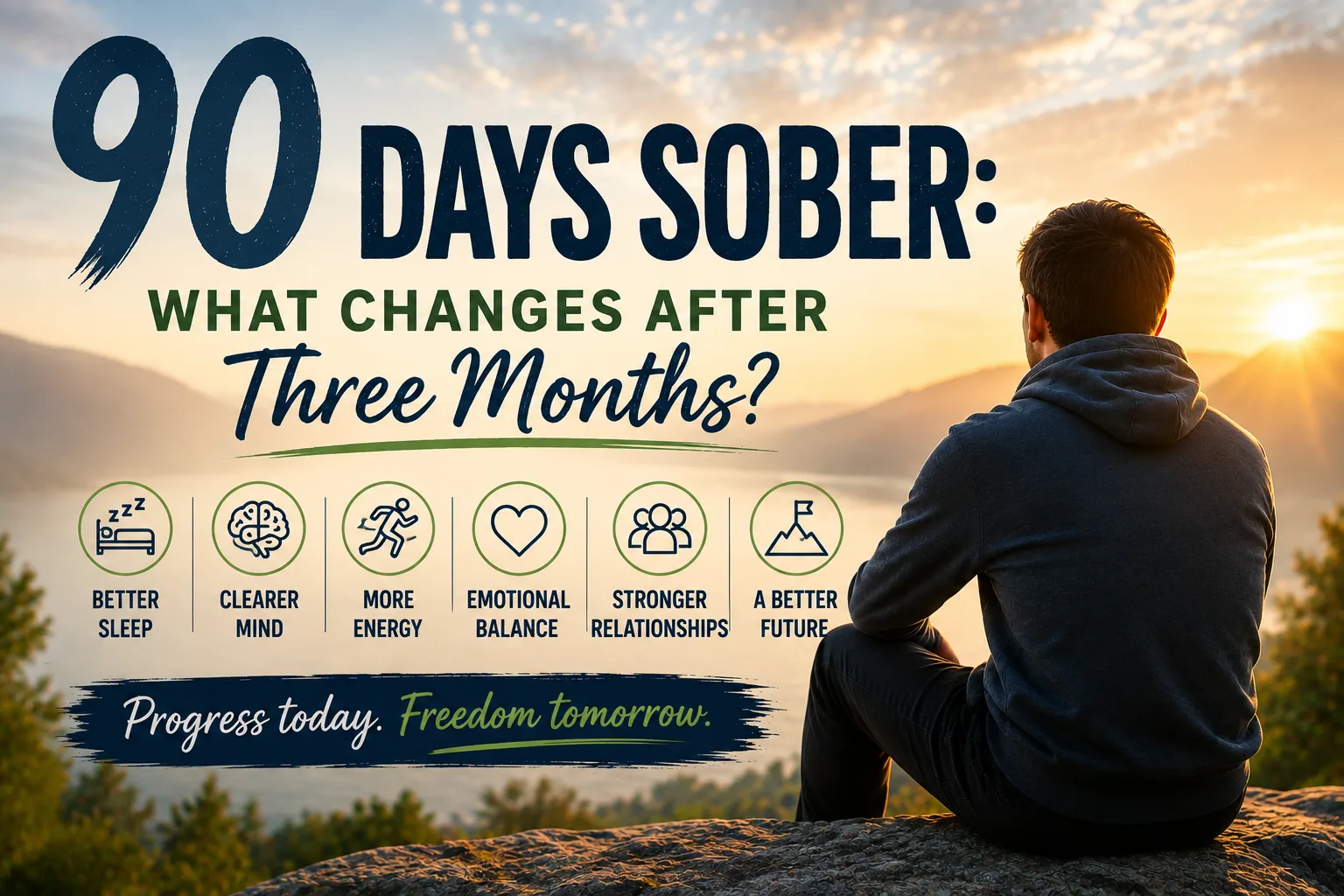


Reaching 90 days sober is a major milestone in addiction recovery. Three months without drugs or alcohol gives your body, brain, and daily life more time to adjust than the first few weeks of sobriety.
By this point, many people are no longer focused only on withdrawal or getting through the next few hours. Recovery may start to feel more stable.
Sleep may be improving.
Thinking may feel clearer.
Energy may be more predictable.
Relationships may begin changing.
At the same time, 90 days of sobriety does not mean every problem has disappeared. Cravings can still happen. Emotions may still feel intense. Trust may still need to be rebuilt. Some people even experience a new challenge around this point: feeling confident enough to believe they no longer need as much recovery support.
Three months sober is progress.
It is also a time to keep building.
Physical Changes After 90 Days Sober
During the first few days of sobriety, the body may be dealing with withdrawal and physical stabilization.
By three months, many people are in a very different place.
Depending on the substance used and the person’s health, physical improvements may include:
- More consistent sleep
- Better appetite
- Increased energy
- Improved hydration
- Better digestion
- Fewer hangovers or withdrawal symptoms
- Improved ability to exercise
- Clearer skin or appearance
- Better concentration
- More predictable daily energy
Someone who once spent mornings recovering from drinking or drug use may now be getting up for work, exercising, eating breakfast, or handling responsibilities.
These changes can feel dramatic.
But physical healing does not happen on a fixed schedule.
Long-term substance use can affect many parts of the body, and some health problems may take months or longer to improve. Others may require medical treatment even after substance use stops.
That is why sobriety should not replace healthcare.
Recovery works best when physical health becomes part of the plan.
Your Brain and Emotions Are Still Recovering
At 60 days sober, many people begin noticing that their thoughts and emotions are changing.
At 90 days, that process continues.
Repeated substance use can affect the brain systems involved in motivation, pleasure, stress, decision-making, memory, and emotional control.
After three months, you may notice:
- Better focus
- Improved memory
- More motivation
- Less mental fog
- Better emotional awareness
- Greater ability to manage stress
But you may also experience periods of anxiety, irritability, boredom, sadness, or low motivation.
Recovery is not always a straight upward line.
You might feel incredible one week and emotionally exhausted the next.
That does not automatically mean something is wrong.
For many people, getting sober means learning how to experience emotions without immediately changing them with drugs or alcohol.
That skill takes practice.
Counseling, peer support, exercise, healthy sleep, and a strong recovery support system can help emotions become easier to manage over time.
Life Starts Becoming More Normal
One of the biggest changes after three months is that sobriety may begin feeling less unusual.
During the first 30 days sober, recovery can dominate almost every part of the day.
Treatment.
Meetings.
Appointments.
Cravings.
Withdrawal.
Planning.
By 90 days, some healthy behaviors may be turning into habits.
You may no longer have to remind yourself to eat breakfast or go to bed at a reasonable time.
Exercise may become part of your week.
Work may feel more manageable.
Recovery meetings or counseling appointments may simply become part of your schedule.
This is why a daily routine in addiction recovery matters.
Healthy routines reduce chaos.
And less chaos can make it easier to handle stress without returning to old behaviors.
The ordinary parts of life may begin feeling rewarding again.
That is a powerful sign of progress.
Relationships May Begin to Heal
Three months of consistent behavior can start changing how other people see you.
Family members may begin noticing that you are showing up.
You may be answering calls.
Keeping appointments.
Returning home when you said you would.
Following through on promises.
But not everyone will trust you immediately.
That can be frustrating.
You may feel that 90 days should be enough to prove things are different.
For someone who experienced years of addiction-related behavior, however, three months may still feel very new.
Try not to demand trust.
Build it.
Honesty, consistency, patience, and respecting boundaries can do more than repeated promises.
This is part of rebuilding your life after addiction.
Some relationships may grow stronger.
Others may end.
Recovery sometimes means recognizing that certain people or social situations no longer fit the life you are trying to create.
The 90-Day Confidence Trap
One challenge can appear when someone starts feeling much better.
The thought may be:
“I think I’m good now.”
That confidence is understandable.
You may be healthier, working again, sleeping better, and experiencing fewer cravings.
But confidence can sometimes become complacency.
Someone may stop attending meetings.
They may skip counseling.
They reconnect with old friends.
They begin going back to places connected with substance use.
Eventually, they may start thinking:
“Maybe I can drink normally now.”
or
“One time won’t hurt.”
This is why a relapse prevention plan remains important after 90 days.
Feeling better does not mean the tools that helped you get better are no longer useful.
In many cases, the healthiest approach is to continue doing what is working.
Your Recovery Capital May Be Growing
By three months, you may also have more recovery capital than when you started.
Recovery capital includes the resources that support long-term recovery.
That might mean:
A sober friend.
A sponsor.
A job.
Stable housing.
Transportation.
A healthier family relationship.
Savings.
A daily routine.
Coping skills.
Purpose.
Each of these makes recovery stronger.
Maybe 90 days ago, your entire support system consisted of one treatment provider.
Now you may have several people you can call.
That is meaningful progress.
Ninety Days Is a Beginning, Not an Ending
Three months sober can feel completely different from day one.
You may be physically healthier.
Your thinking may be clearer.
Your routines may feel more natural.
Relationships may be improving.
You may finally begin believing that long-term recovery is possible.
Celebrate that.
But keep going.
Continue treatment or aftercare when needed.
Stay connected to supportive people.
Watch for relapse warning signs.
Keep building healthy routines.
Ninety days does not mean recovery is complete.
It means you have had three months to practice a different way of living.
Those first 90 days can become six months.
Six months can become a year.
And eventually, sobriety can become something much bigger than counting days.
It can become your normal life.


