



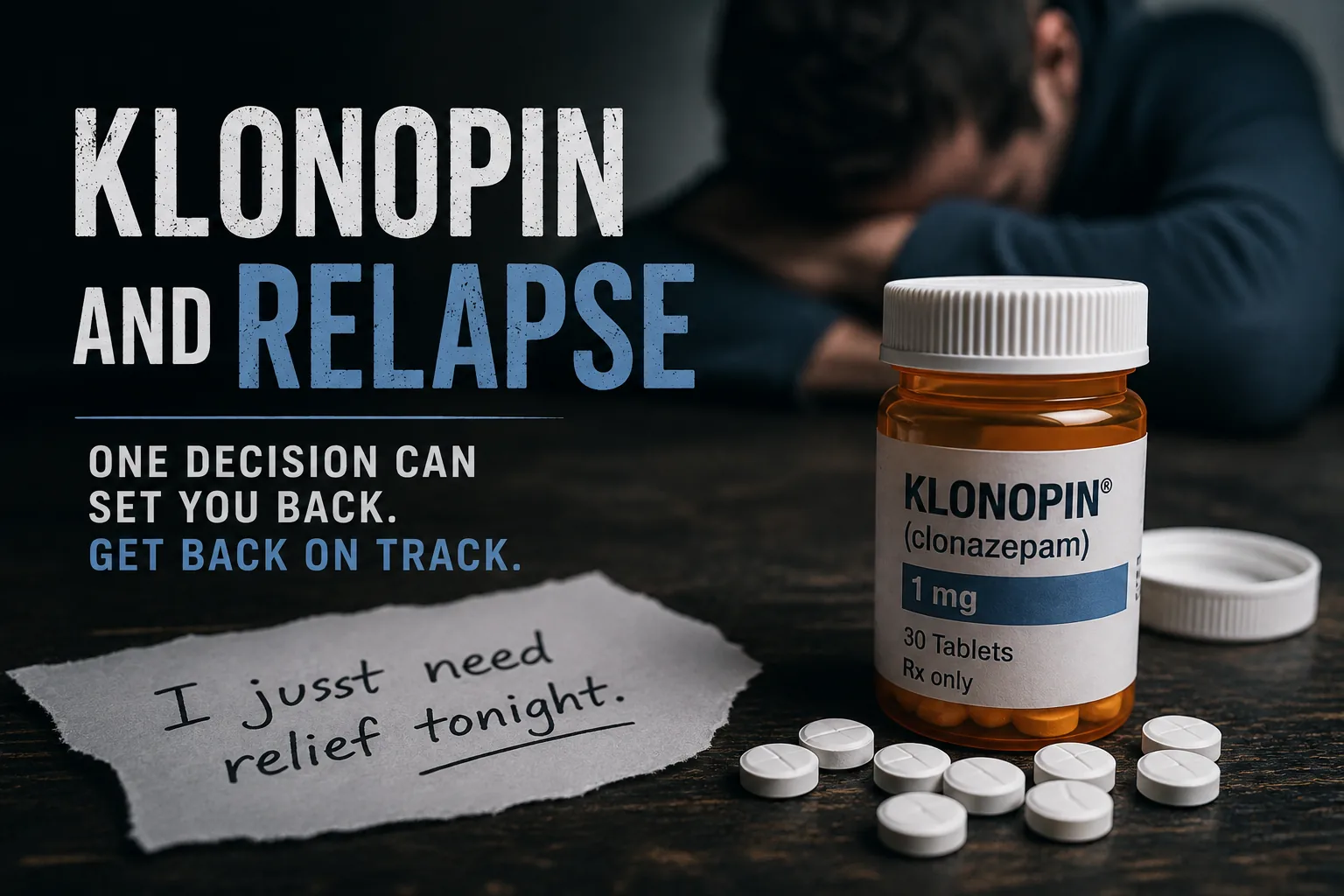


A Klonopin relapse can begin quietly. Someone who has been off benzodiazepines for months may experience a panic attack, sleepless night, major loss, or overwhelming stress and decide to take clonazepam again. At first, it may feel like relief rather than relapse.
That is part of what can make the situation dangerous.
Klonopin is the brand name for clonazepam, a benzodiazepine prescribed for certain seizure disorders and panic disorder. Like other benzodiazepines, it slows activity in the central nervous system. FDA-approved clonazepam carries a boxed warning covering abuse, misuse, addiction, physical dependence, withdrawal, and dangerous interactions with opioids.
For someone with a history of addiction, returning to Klonopin deserves attention early. What begins as one pill for anxiety can sometimes become repeated use, increasing tolerance, physical dependence, or a return to other substances.
Why a Klonopin Relapse Can Escalate
Klonopin can provide rapid relief from anxiety and panic.
That relief can become psychologically powerful.
Someone may think:
“I finally feel normal again.”
Then:
“I only need it when things get really bad.”
But stressful days become more frequent. One dose becomes several days of use. Eventually, the person may begin taking Klonopin before anxiety even starts because they are afraid of how they will feel without it.
The warning signs may include:
- Taking Klonopin more often than intended
- Increasing the amount used
- Running out of medication early
- Thinking frequently about the next dose
- Seeking prescriptions from multiple sources
- Hiding medication or use from family
- Using Klonopin specifically to feel numb
- Missing counseling or recovery meetings
- Returning to people associated with past drug use
- Mixing Klonopin with alcohol or other substances
Physical dependence is another concern. Benzodiazepine dependence can develop even when these medications are taken as prescribed. ASAM advises that people who have taken benzodiazepines regularly for longer than about a month generally should not suddenly discontinue them and instead should be evaluated for a gradual, supervised taper.
Dependence does not automatically mean addiction, but it can make a relapse harder to stop.
Suddenly Stopping Klonopin Can Be Dangerous
Someone who realizes they have returned to regular Klonopin use may panic and decide:
“I’m throwing everything away tonight.”
That may not be safe.
Benzodiazepine withdrawal can become serious when a physically dependent person stops suddenly or reduces the dose too quickly. FDA warns that abrupt discontinuation can produce severe withdrawal reactions, including seizures that can be life-threatening.
Withdrawal symptoms may include:
- Severe anxiety
- Panic
- Insomnia
- Trembling
- Sweating
- Irritability
- Restlessness
- Problems concentrating
- Muscle discomfort
- Confusion
- Hallucinations
- Seizures
How much risk someone faces depends on factors such as the dose, frequency of use, how long they have been taking Klonopin, previous benzodiazepine exposure, medical history, and whether other substances are involved.
That is why someone who has returned to regular Klonopin use should talk with a healthcare professional instead of trying to design a withdrawal schedule alone.
A medically supervised taper can be individualized. Some people may be treated safely as outpatients, while others with severe dependence, previous withdrawal complications, seizures, or significant polysubstance use may need a higher level of care.
Mixing Klonopin With Alcohol or Opioids Raises the Risk
One of the greatest dangers during a Klonopin relapse is adding other depressant drugs.
Alcohol may seem like an obvious companion to Klonopin because both can reduce anxiety and inhibition.
But combining them can intensify sedation, confusion, poor coordination, memory problems, and impaired judgment.
Opioids create an even more serious overdose concern.
Benzodiazepines and opioids both suppress the central nervous system. Taking them together can cause profound sedation and dangerously slow breathing. FDA warns that combining opioids with benzodiazepines can result in extreme sleepiness, respiratory depression, coma, and death.
This becomes particularly important for someone whose addiction history involved fentanyl, heroin, or prescription opioids.
A Klonopin relapse can also weaken recovery boundaries.
Someone may begin thinking:
“I’ve already used Klonopin, so having a drink doesn’t matter.”
Later:
“I’ve already broken my sobriety. One pain pill won’t change anything.”
Klonopin does not automatically lead to another drug. But returning to benzodiazepines can sometimes reopen patterns of using substances to escape emotions, anxiety, stress, or insomnia.
Call 911 if someone who has taken Klonopin cannot be awakened, has very slow or difficult breathing, collapses, experiences a seizure, or becomes severely confused.
What to Do After a Klonopin Relapse
First, do not hide what happened.
Tell your doctor, addiction counselor, sponsor, recovery coach, treatment program, or someone you trust.
Be specific about:
- How much Klonopin you have been taking
- How frequently you are using it
- How long the relapse has lasted
- Whether alcohol or other drugs are involved
- Whether you have experienced benzodiazepine withdrawal before
- Whether you have ever had a seizure
Then look at what caused the return to Klonopin.
Was anxiety getting worse?
Were panic attacks returning?
Were you unable to sleep?
Did something traumatic happen?
Were you overwhelmed by work or relationships?
Did you stop attending treatment?
Was Klonopin simply available during a weak moment?
Removing the drug without addressing the reason someone wanted it can leave the biggest relapse trigger untouched.
Treatment may include medical management of benzodiazepine dependence, behavioral treatment, psychiatric care, support for anxiety or panic disorder, relapse-prevention planning, peer support, or a more structured addiction treatment program.
A Klonopin Relapse Does Not Erase Your Recovery
Returning to Klonopin does not mean everything you accomplished while sober disappeared.
But it is a warning worth taking seriously.
If occasional use is becoming frequent, if you are hiding pills, if you need Klonopin to feel normal, or if alcohol and other drugs are beginning to return, get help before the pattern becomes more difficult to stop.
And if physical dependence may have returned, do not suddenly stop Klonopin on your own simply because you are ashamed of the relapse.
Get medical guidance. Address the anxiety or stress underneath the use. Reconnect with the people who support your recovery.
A Klonopin relapse can become dangerous, but recognizing what is happening early gives you a chance to interrupt the cycle before it becomes a full return to addiction.


