



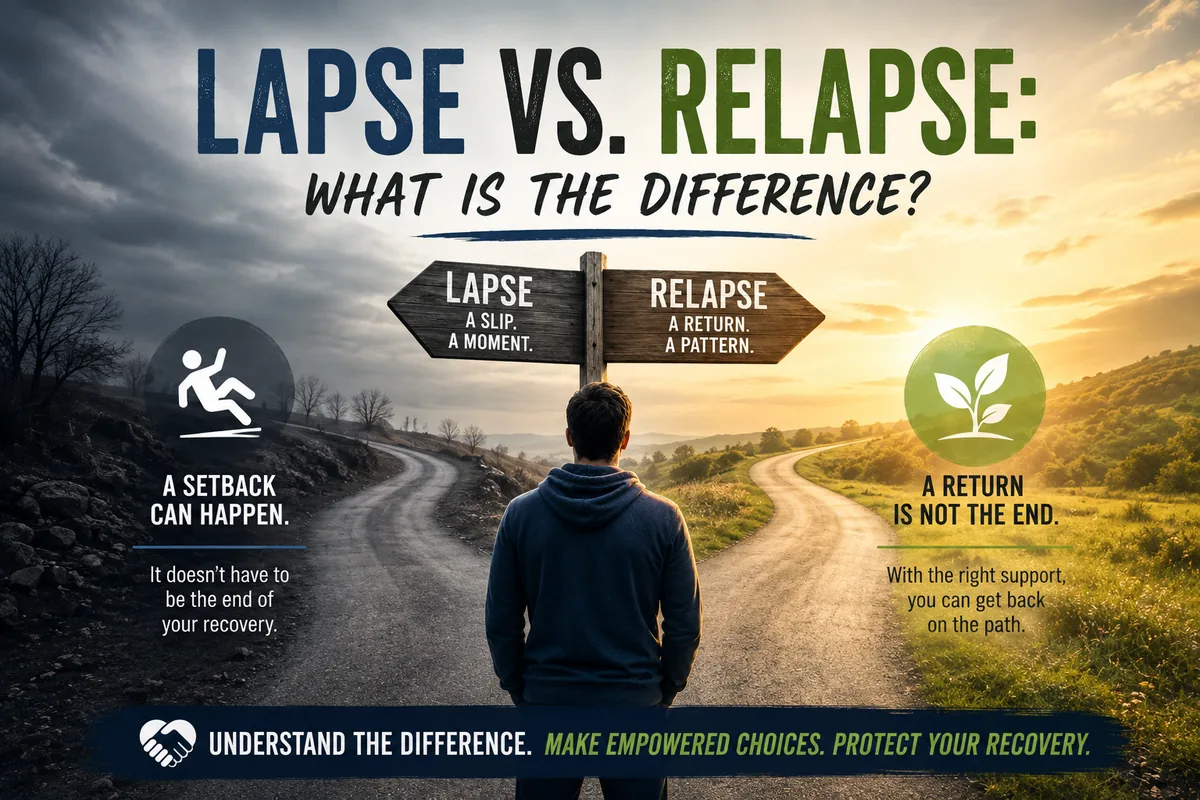


Understanding lapse vs. relapse can change how someone responds after returning to alcohol or drugs. A lapse is usually a brief or isolated episode of substance use. A relapse is a broader return to repeated use or an earlier pattern of addiction.
The difference matters because one mistake does not have to become a long-term return to substance use. Quick action after a lapse can protect a person’s safety, interrupt shame and help them reconnect with recovery.
However, these terms are not formal diagnoses with one definition used by every treatment program. Their meaning may depend on the person’s goals, substance use pattern and recovery plan. The most important question is not what the episode is called. It is what the person does next.
What Is a Lapse?
A lapse generally means a brief return to alcohol or drug use after someone has decided to stop. It may involve one drink, one dose or one short period of use.
For example, a person who has not consumed alcohol for six months may drink at a wedding, recognize the danger and contact their counselor the next morning. This may be described as a lapse because the person did not continue drinking or return to their previous lifestyle.
Relapse-prevention research often treats a lapse as an initial episode that can either be stopped or develop into a longer relapse. Early action may prevent further substance use.
A lapse should still be taken seriously. Even one episode can result in overdose, impaired driving, injury, unsafe sex or other harmful consequences. It may also reveal that the person was facing triggers their recovery plan did not fully address.
A lapse can be a warning that something needs to change, such as:
- Attending treatment more often
- Avoiding a high-risk person or location
- Reviewing addiction medications
- Treating worsening anxiety or depression
- Rebuilding sleep and daily routines
- Asking for more support
The goal is not to pretend the lapse did not happen. The goal is to stop it from continuing.
What Is a Relapse?
A relapse generally means a more sustained return to substance use or addictive behavior. The person may begin using regularly again, lose control over the amount used or return to many of the habits that existed before recovery.
A relapse might involve:
- Drinking or using for several days
- Returning to daily substance use
- Hiding use from family or treatment providers
- Missing work or appointments
- Spending time with people connected to past use
- Stopping medication or counseling
- Experiencing withdrawal when trying to stop
Relapse is often a process rather than one sudden event. Emotional changes, isolation, cravings, secrecy and planning may begin before physical substance use occurs.
NIDA describes addiction as a chronic, treatable disorder. A return to substance use does not prove that treatment has failed. It may mean treatment should be restarted, changed or made more intensive.
Someone experiencing a relapse may need a new assessment. Outpatient counseling may still be appropriate, or the person may require intensive outpatient treatment, medical detoxification, residential care, medication or recovery housing.
Why the Difference Between Lapse and Relapse Matters
The distinction can help prevent all-or-nothing thinking.
After a lapse, a person may tell themselves:
- “I ruined everything.”
- “My sober time no longer counts.”
- “Everyone will think I failed.”
- “I might as well keep using.”
This reaction is known as the abstinence violation effect. It happens when someone views one episode as proof of personal failure. Guilt and reduced confidence may then increase the risk of continued use.
A healthier response is:
“I made a dangerous choice, but I can stop now and learn from what happened.”
This does not excuse the lapse. It separates responsibility from shame. Responsibility encourages action, while shame often encourages secrecy and isolation.
A lapse may provide important information. Perhaps the person attended an event without support, stopped taking medication, experienced a major loss or became overconfident. Identifying the cause can make the relapse-prevention plan more specific.
The difference between lapse and relapse can also depend on treatment goals. For someone pursuing total abstinence, one drink may be considered a lapse. For someone following a harm-reduction plan, the concern may be whether substance use caused harm or moved beyond agreed limits.
Neither term should be used to minimize danger. One episode of opioid use can be fatal after a period of abstinence because tolerance may have decreased. Returning to a previously used dose can raise the risk of overdose.
What to Do After a Lapse or Relapse
The first priority is safety.
Do not drive or remain alone while heavily intoxicated. Avoid combining substances or taking more drugs to manage the effects of the first one. Call 911 if the person cannot be awakened, has slow or stopped breathing, experiences a seizure, develops chest pain or shows signs of another medical emergency.
Give naloxone when an opioid overdose may be involved.
Tell someone immediately. Contact a counselor, sponsor, recovery coach, family member or trusted friend. A simple message can break the secrecy:
“I used again, and I need help stopping this now.”
Contact the treatment team. Explain what was used, how much was used, when it happened and whether other substances were involved. Treatment may need to be changed or increased.
Remove access. Get away from the substance, dealer, location or people involved. Do not keep drugs or alcohol nearby as a test of willpower.
Review the warning signs. Ask what happened before the episode. Look at sleep, mood, cravings, stress, relationships, medication and treatment attendance.
Return to recovery quickly. Attend the next meeting or appointment rather than waiting until embarrassment passes. SAMHSA describes recovery as an ongoing process of improving health, wellness and the ability to live a self-directed life.
A lapse is not harmless, and a relapse is not hopeless. Both require an honest response. One episode does not erase the skills, relationships and progress developed during recovery.
The next decision still matters. Reaching out, returning to treatment and creating a stronger plan can turn a dangerous setback into a step back toward recovery.


