



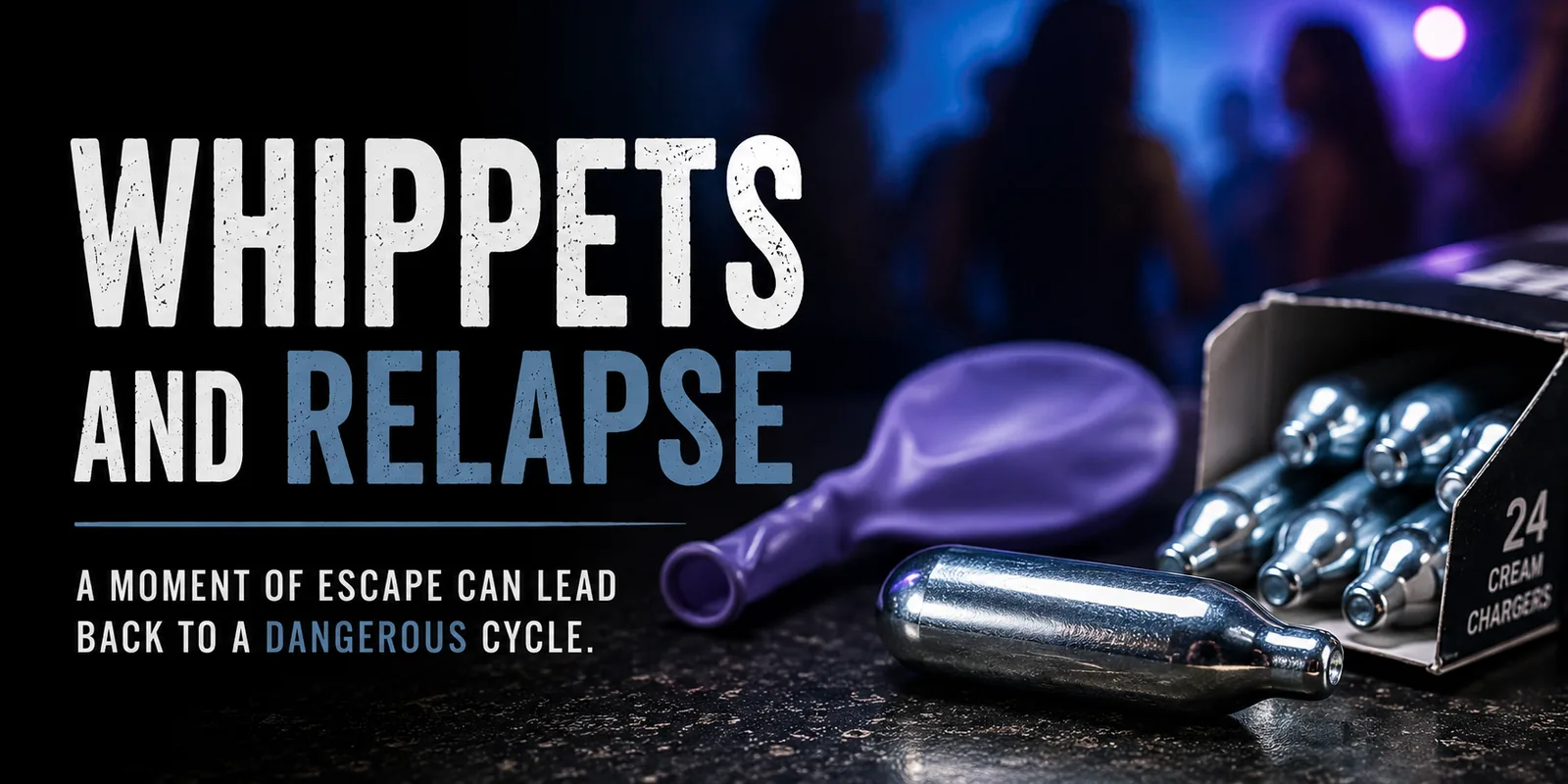


A whippets relapse can be easy to dismiss. Nitrous oxide may not carry the same reputation as heroin, fentanyl, meth, or cocaine. It is sometimes called “laughing gas,” it has legitimate medical and culinary uses, and its effects may last only a few minutes.
That can create the dangerous idea that using whippets is not really a relapse.
For someone recovering from substance misuse, however, returning to nitrous oxide can restart compulsive drug-seeking patterns and expose the body to serious risks. The FDA has specifically warned consumers not to recreationally inhale nitrous oxide from chargers, canisters, or tanks because misuse has been associated with severe injuries, neurological problems, and death.
Whippets may look harmless at a party, but repeated nitrous oxide use can become anything but harmless.
What Are Whippets?
“Whippets” commonly refers to nitrous oxide cartridges or chargers originally designed for whipped-cream dispensers. Recreational users release the gas and inhale it to produce a short-lived high.
Nitrous oxide can cause euphoria, relaxation, dizziness, changes in perception, and a feeling of being disconnected from the surroundings. The effects often disappear within minutes.
That short high can create its own problem.
Someone may think:
“It only lasts a minute. I’ll do another.”
Then another.
And another.
A person who intended to use once at a party may spend the night repeatedly inhaling nitrous oxide.
For someone in recovery, that behavior can feel very familiar: chasing a high, losing track of how much has been used, and continuing even after deciding to stop.
Why Whippets Relapse Can Become Dangerous Quickly
Nitrous oxide affects awareness, coordination, balance, and judgment.
Even relatively small amounts can cause dizziness, drowsiness, tingling, nausea, headaches, and balance problems. Larger exposures may cause loss of consciousness.
That creates an immediate risk of:
- Falls
- Head injuries
- Car accidents
- Burns
- Loss of consciousness
- Choking or vomiting while impaired
- Dangerous decisions involving other substances
Nitrous oxide can also reduce oxygen availability during inhalation. The FDA lists asphyxiation among the serious complications reported with recreational nitrous oxide use.
Using nitrous oxide in enclosed spaces or in ways that prevent normal breathing can be particularly dangerous.
Direct contact with extremely cold gas or pressurized containers can also cause frostbite and tissue injury.
A drug does not have to produce a long high to cause a serious medical emergency.
Repeated Whippet Use Can Damage the Nervous System
One of the most important dangers of repeated nitrous oxide use involves vitamin B12.
Nitrous oxide interferes with the body’s ability to use vitamin B12 normally. Vitamin B12 is essential for healthy nerves and blood cells.
With heavy or repeated nitrous oxide use, neurological problems can develop.
Early warning signs may include:
- Tingling in the hands or feet
- Numbness
- Muscle weakness
- Balance problems
- Trouble walking
- Unusual sensations in the arms or legs
- Problems controlling the bladder or bowels
More serious cases can involve damage to the spinal cord, peripheral nerves, or brain. FDA warns that some people who regularly misuse nitrous oxide may experience prolonged neurological effects even after they stop using it.
This is one reason someone should not ignore numbness or tingling after repeated whippet use.
Those symptoms are not simply part of a hangover.
They may be warning signs that the nervous system has been affected.
Whippets Can Become Part of an Addiction Pattern
The question of physical dependence on nitrous oxide is different from substances such as alcohol, benzodiazepines, or opioids.
It is not clear that nitrous oxide consistently produces the same kind of physical withdrawal syndrome. However, repeated use can become psychologically compulsive, and inhalant use more broadly can involve cravings, tolerance, and addiction-like behavior.
Someone may begin using only at parties.
Then they buy their own chargers.
Soon they are using at home.
They may start using alone, purchasing larger tanks, hiding containers, or spending increasing amounts of money on nitrous oxide.
Warning signs can include:
- Thinking about whippets frequently
- Using more than planned
- Repeatedly trying to stop and returning to use
- Buying large quantities
- Using alone
- Hiding use from family
- Continuing despite numbness or other health problems
- Missing responsibilities because of drug use
- Returning to other party drugs
At that point, the issue is no longer simply experimenting with laughing gas.
It is a substance-use pattern that deserves treatment.
A Whippets Relapse Can Lead Back to Other Drugs
Nitrous oxide is often used in environments where alcohol, marijuana, psychedelics, stimulants, ecstasy, ketamine, and other substances may also be available. Recreational nitrous oxide use has long been associated with parties, clubs, festivals, and other social settings.
For someone recovering from addiction, returning to those environments can reactivate old triggers.
A person may begin the night with whippets and think:
“This isn’t my drug of choice.”
After becoming intoxicated:
“I’ve already used something. A drink won’t matter.”
Then:
“I might as well take what everyone else is taking.”
Nitrous oxide does not automatically cause someone to use another drug. The problem is that returning to intoxication may weaken the boundaries that were helping protect recovery.
What to Do After a Whippets Relapse
Do not treat the relapse as proof that recovery is over.
Tell someone what happened.
Contact your counselor, sponsor, recovery coach, doctor, treatment program, or another person you trust.
Then look honestly at the trigger.
Was it a party?
Boredom?
Old friends?
Stress?
Wanting a quick escape?
Missing the feeling of getting high?
Alcohol lowering your judgment?
Next, remove easy access to nitrous oxide and temporarily step away from environments where it is being used.
If you have been using heavily or repeatedly, especially if you develop numbness, tingling, weakness, trouble walking, confusion, bladder or bowel problems, or other neurological symptoms, contact a healthcare professional promptly. The FDA specifically advises people concerned about symptoms after nitrous oxide use to seek medical care.
Call 911 for loss of consciousness, severe breathing problems, seizures, or another apparent medical emergency.
Whippets may produce a short high, but the consequences of repeated nitrous oxide use can last much longer.
A relapse does not erase recovery. But recognizing the danger early can prevent a few minutes of intoxication from becoming another cycle of addiction—and may protect your brain, nerves, and life.


