



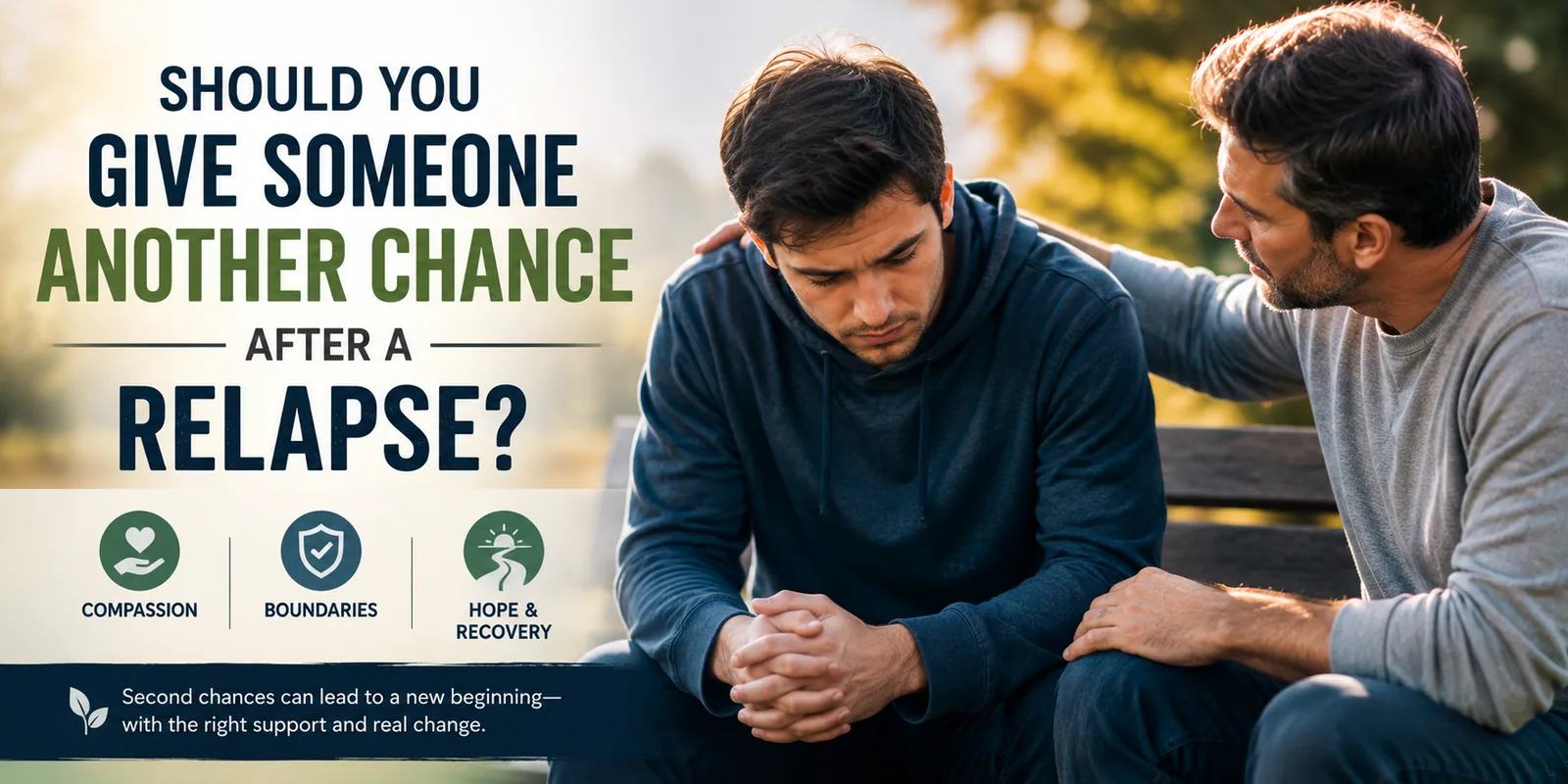


When someone you love has a relapse, one of the hardest questions is often:
“Should I give them another chance?”
Maybe they promised they would never use again.
Maybe you helped them get into treatment.
Maybe trust was finally starting to come back.
Then the drinking or drug use returned.
Now you feel torn between compassion and self-protection.
Part of you wants to believe they can recover.
Another part is exhausted from broken promises, lies, financial problems, or repeated crises.
There is no single answer that works for every family or relationship. Giving someone another chance after relapse does not have to mean returning everything to the way it was before.
A second chance should usually come with something else:
change.
Sometimes that means treatment.
Sometimes it means boundaries.
Sometimes it means an intervention.
And sometimes it means loving someone while refusing to participate in the chaos caused by their addiction.
Relapse Does Not Automatically Mean Recovery Is Over
A relapse can be serious.
It can also be a sign that something in the recovery plan needs attention.
Maybe the person stopped attending treatment.
Maybe they became isolated.
Maybe stress increased.
Maybe they returned to old friends or environments.
Maybe untreated depression or anxiety became overwhelming.
Maybe they became overconfident and stopped protecting their recovery.
Understanding what happened does not excuse the relapse.
It helps determine what needs to change.
Someone who immediately acknowledges what happened, asks for help, returns to treatment, and takes responsibility is showing something very different from someone who repeatedly lies, denies the problem, and expects everyone else to clean up the consequences.
That difference matters when deciding whether to give another chance.
Another Chance Does Not Mean Another Blank Check
Families often confuse forgiveness with removing consequences.
They are not the same.
You can forgive someone and still say:
“You cannot live here while actively using.”
You can care about someone and still say:
“I will not give you money.”
You can believe in recovery and still say:
“Trust has to be rebuilt.”
A healthy second chance is not:
“Pretend nothing happened and start over.”
It is more like:
“I am willing to support your recovery, but things need to change.”
That may mean regular treatment.
Medication management when appropriate.
Recovery meetings.
Drug or alcohol testing if agreed upon as part of a treatment plan.
Financial boundaries.
No substances in the home.
Honest communication.
Couples or family counseling.
Different living arrangements.
The exact boundaries depend on the situation.
The important part is that the second chance includes accountability.
Look at Actions, Not Promises
After relapse, people sometimes make emotional promises.
“I swear I’ll never do it again.”
“I learned my lesson.”
“You have to trust me.”
They may genuinely mean those things in the moment.
But recovery is demonstrated through behavior.
Ask yourself:
Are they returning to treatment?
Are they being honest about what happened?
Are they willing to discuss triggers?
Are they following professional recommendations?
Are they accepting reasonable boundaries?
Are they taking responsibility for damaged trust?
Are they making changes before another crisis happens?
Promises can feel reassuring.
Actions tell you whether recovery is becoming a priority again.
When Repeated Relapse Changes the Conversation
Giving someone another chance after one relapse can feel different from dealing with a long pattern of repeated relapse, dishonesty, and refusal of help.
Perhaps the family has already paid debts.
Covered missed work.
Taken care of children.
Repaired damaged property.
Arranged treatment.
Provided transportation.
Accepted repeated apologies.
And nothing changes.
At some point, the question may no longer be:
“Should I give them another chance?”
It may become:
“What does another chance actually look like?”
If another chance simply means returning to the same environment with the same behaviors and the same lack of treatment, the result may also be the same.
A meaningful second chance should create a path toward recovery, not another opportunity to continue substance use without consequences.
When an Intervention May Help
Sometimes the person refuses to acknowledge the seriousness of the relapse.
They deny using.
Blame everyone else.
Refuse treatment.
Become increasingly unstable.
Continue driving intoxicated or placing themselves in dangerous situations.
That may be a time to consider a structured intervention.
An intervention should not be revenge.
It should not be a room full of people yelling:
“This is your last chance!”
A good intervention communicates concern, specific consequences, clear boundaries, and an available treatment plan.
For example:
“We love you. Your relapse has become dangerous. We are willing to support treatment, but we cannot continue supporting active substance use. We have help available today.”
Whenever possible, families may benefit from working with an addiction professional or intervention specialist.
Preparation matters.
If the person agrees to treatment, the family should know what happens next.
Protect Yourself Too
Giving someone another chance should not require sacrificing your own safety.
If there is violence, threats, dangerous driving, theft, child endangerment, or other unsafe behavior, protecting yourself and others must come first.
Addiction can explain behavior.
It does not make every behavior acceptable.
You are allowed to have limits.
You are allowed to protect your finances.
Your home.
Your children.
Your emotional health.
Supporting recovery does not require allowing yourself to be repeatedly harmed.
Trust May Need to Be Rebuilt Slowly
After relapse, a person may say:
“Why don’t you trust me?”
Because trust is not automatically restored when drug or alcohol use stops.
Trust may have been damaged by lying, disappearing, hidden spending, broken promises, or dangerous behavior.
It can return.
But it often returns through consistency.
Days become weeks.
Weeks become months.
Appointments are kept.
Money is accounted for.
Promises match actions.
Honesty becomes normal again.
Someone deserves the opportunity to rebuild trust.
That does not mean everyone around them must instantly provide it.
So, Should You Give Them Another Chance?
Possibly.
But give a chance to recovery, not to continued addiction.
You can say:
“I believe you can recover, and I am willing to support that. But I cannot go back to how things were.”
That is not cruel.
It is clear.
A relapse does not automatically mean someone is incapable of lasting recovery.
It also does not mean loved ones must ignore what happened.
Another chance can include compassion and consequences.
Hope and boundaries.
Support and accountability.
Treatment and, when needed, intervention.
The goal is not to decide whether someone “deserves” another chance.
The better question is:
“What would need to change for another chance to be healthy for everyone involved?”
That answer can become the beginning of a stronger recovery plan—for the person who relapsed and for the people who love them.


